A majlis is not measured in seats. It is measured in guests: how many people the family receives on an ordinary evening, and how many at Eid or a wedding. That number sets the run length, and the run length sets everything else. It is also why majlis seating is almost never a catalogue purchase — the room is a specific shape, the guest count is a specific number, and no showroom stocks the answer.
Start with guests, then walls
Allow 65–70 cm of seat run per guest — slightly more than a living-room sofa, because majlis seating is used upright, for long sittings, often by people in kandura or abaya. A majlis receiving twelve guests needs about 8 m of run; twenty guests need 13–14 m.
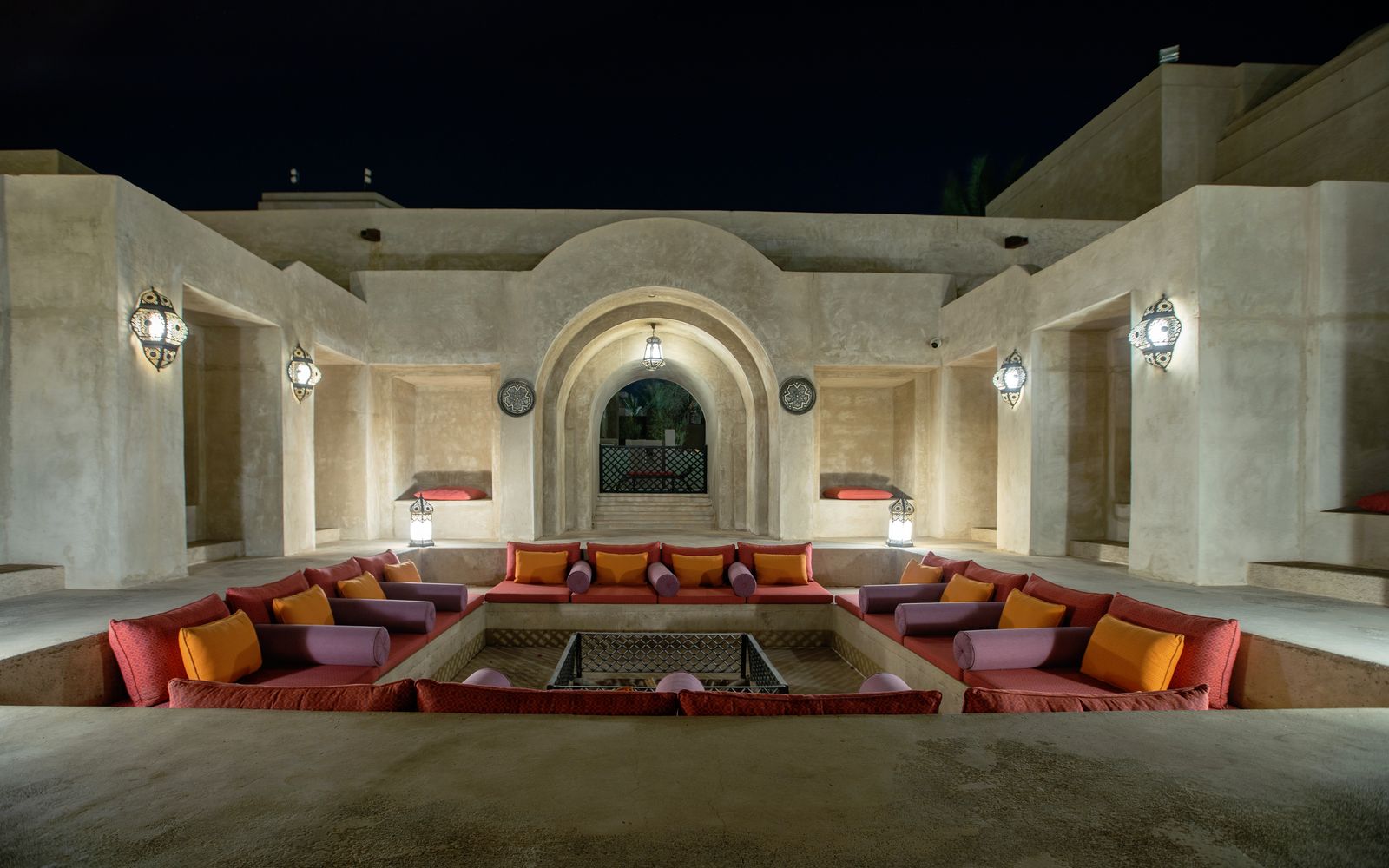
Then measure what the room can give. Take the perimeter and subtract the doorways, the entrance approach (leave 1.2 m clear so guests are not squeezing past knees), any window that runs to the floor, and the wall where the majlis television or display unit sits. What remains is the usable run. If the usable run is shorter than the guest count needs, the options are a deeper corner return, a second facing run through the middle of the room, or accepting that the largest occasions overflow into the adjoining space.
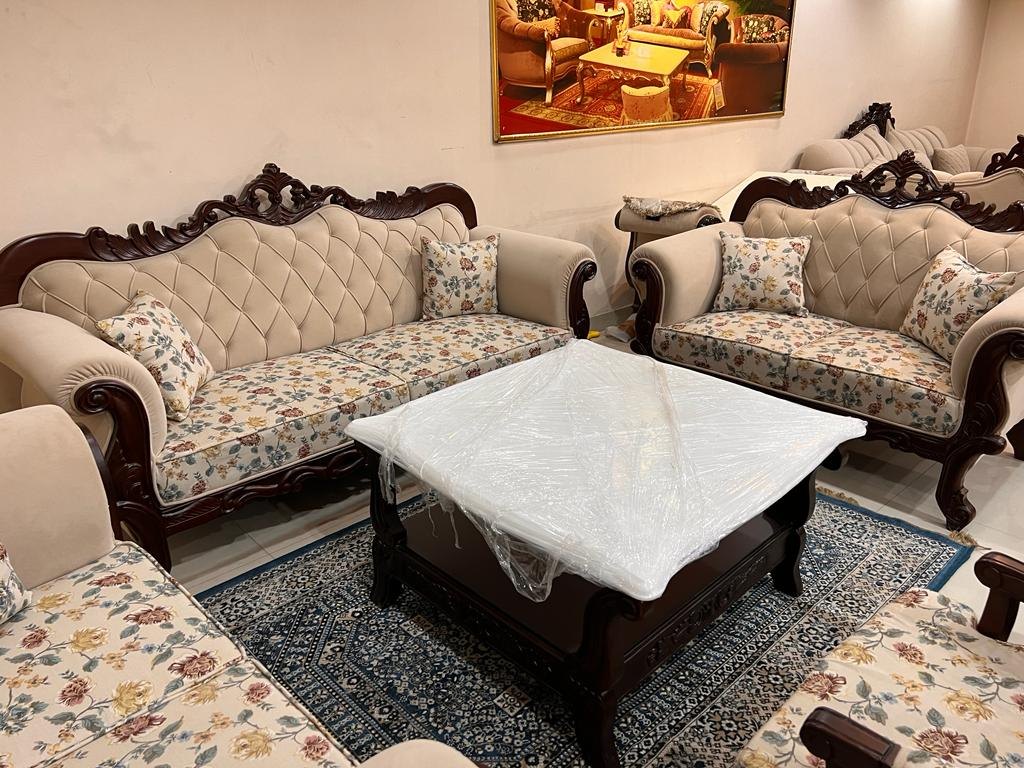
The dimensions that make a majlis comfortable
- Seat height 42–45 cm. Low seating looks dramatic and is hard to rise from; this range suits every age of guest.
- Seat depth 60–65 cm. Upright, not lounging. Deeper seats push guests into a reclining posture that is wrong for the room's purpose.
- Back height 75–90 cm, with the top rail clear of any window sill or dado behind.
- Overall depth 85–95 cm including back cushions — and check it against the walkway; 90 cm clear in front of the run is the target.
- Sections of 180–240 cm, bolted together. Long runs must be built in sections so they can be carried in, and so that one damaged section can be re-upholstered later without the whole room going to the workshop.
- Corner returns of 90–100 cm square, mitred or with a dedicated corner unit so the fabric pattern turns cleanly.
Frames: what carries twenty guests
Majlis seating takes more load than any other furniture in a house — more people, more often, for longer. The frame specification matters accordingly: kiln-dried solid hardwood, mortise-and-tenon or dowelled joints with glued corner blocks, and sinuous springs or webbing over a braced base rather than foam sitting directly on a board. Seat foam should be high-resilience at 40–45 kg/m³, firmer than a living-room sofa, because guests sit upright and get up frequently. Back cushions can be softer, at 24–28 kg/m³, or fibre-filled if you want the plumped look that suits a traditional room.
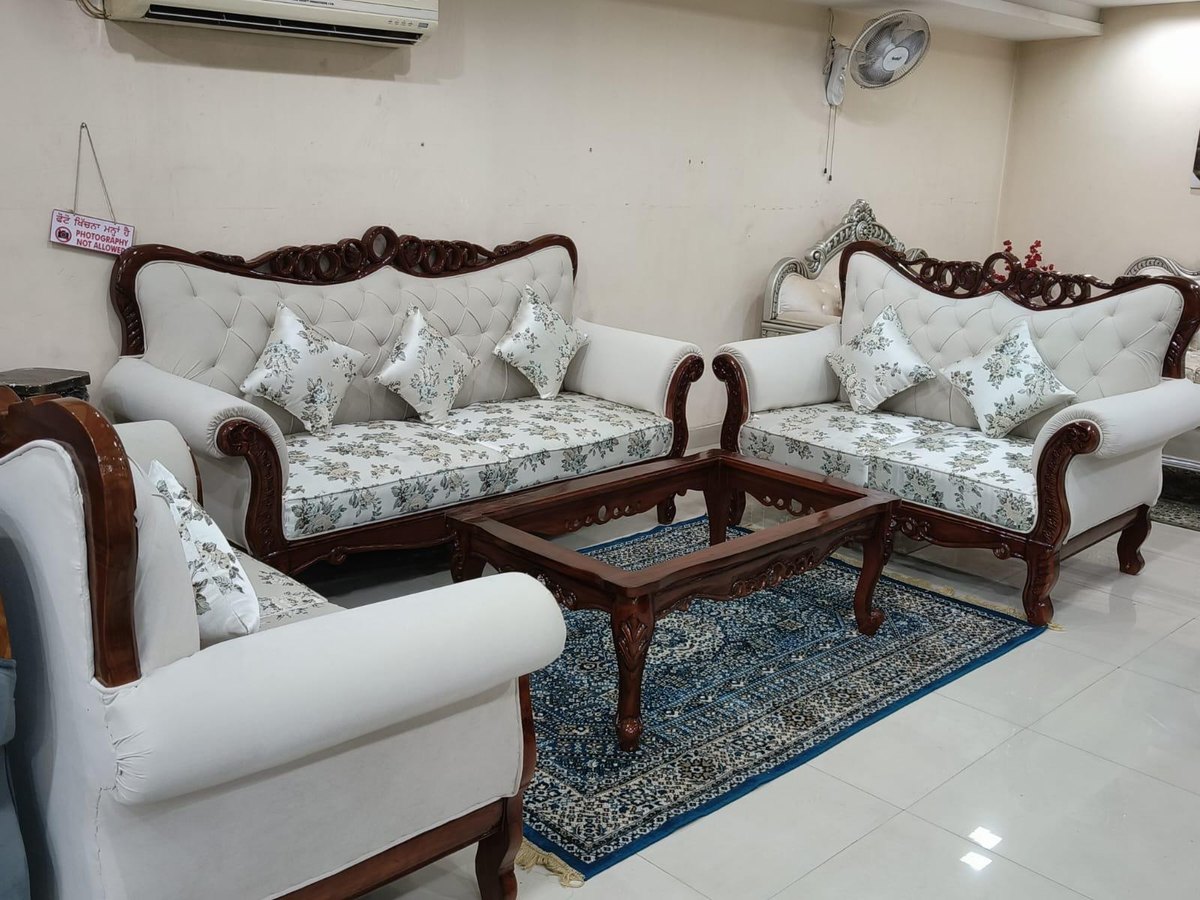
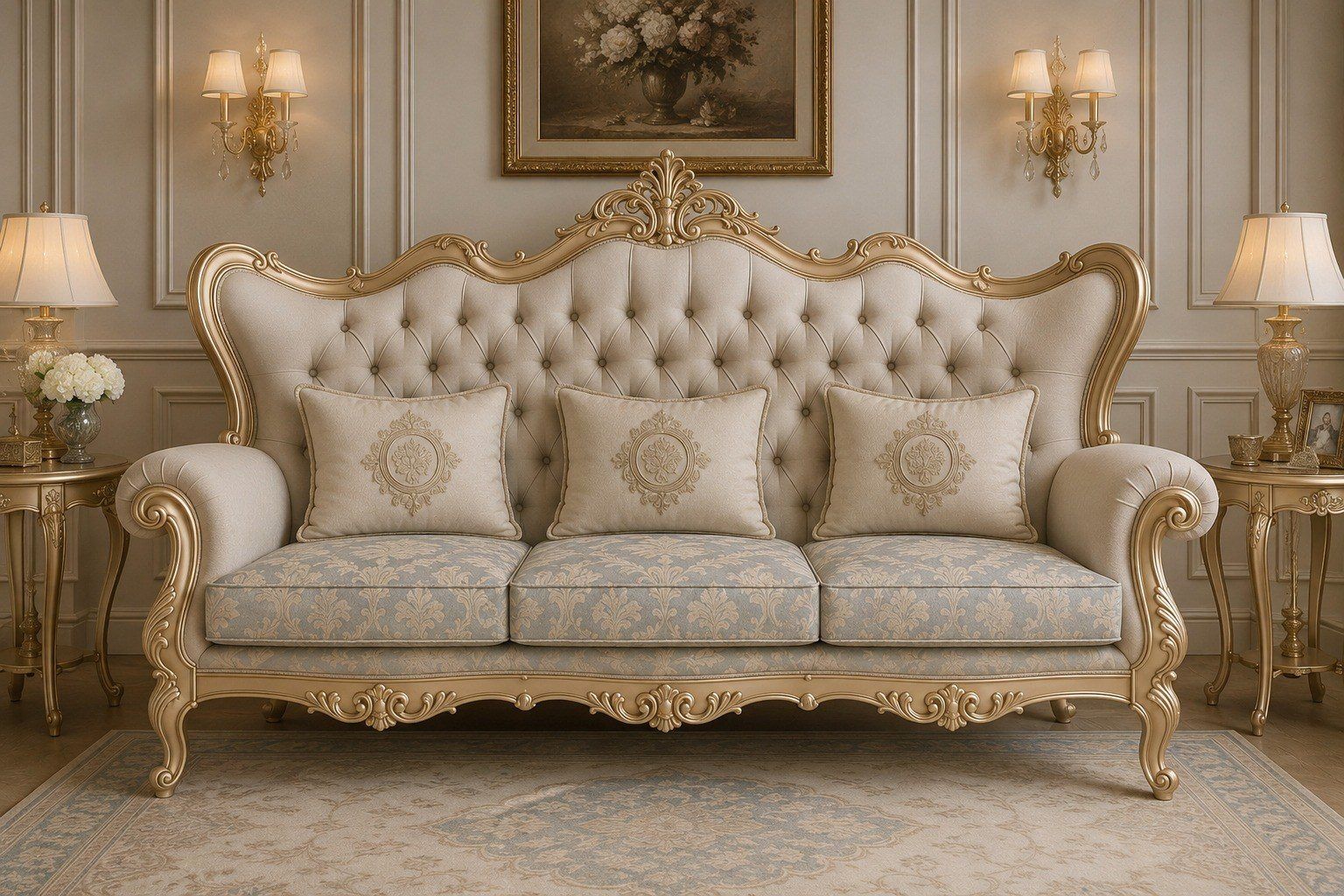
For classical majlis furniture in a carved and gilded frame, the timber choice becomes structural as well as decorative; teak or sheesham rosewood covers how we choose between them, and the workshop article shows the carving stages.
Fabric: the decision that ages fastest
Specify at least 30,000 Martindale rubs, and 40,000 for a majlis that receives guests several times a week. Ask for the lightfastness grade too, because majlis rooms in Dubai villas usually have tall windows and an unrated fabric on the sun side will fade within two seasons. Then think about cleaning: coffee, cardamom, dates and oud all end up on majlis seating eventually, so a performance weave or a treated velvet earns its price.
Two practical specifications worth asking for: loose seat-cushion covers, which can be laundered or replaced without re-upholstering the run, and an extra 10–15 metres of the same fabric bolt kept in storage, so a repair in year six matches. Our three collections — Éclat, Nuance and Héritage — all publish abrasion and lightfastness figures, and this guide covers pattern against plain on long runs, where a repeat that is wrong for the section length becomes obvious.
What else the room needs
Centre or coffee tables sized to reach from the seating: 40–45 cm clear in front of the run, with a table height 5–10 cm below the seat. Side tables at the ends of each run for coffee cups. Floor cushions if the household seats younger guests traditionally. A rug that sits under the whole seating arrangement, not floating in the middle. And power: sockets for phone charging within reach of the seating are the single most appreciated practical detail in a modern majlis.
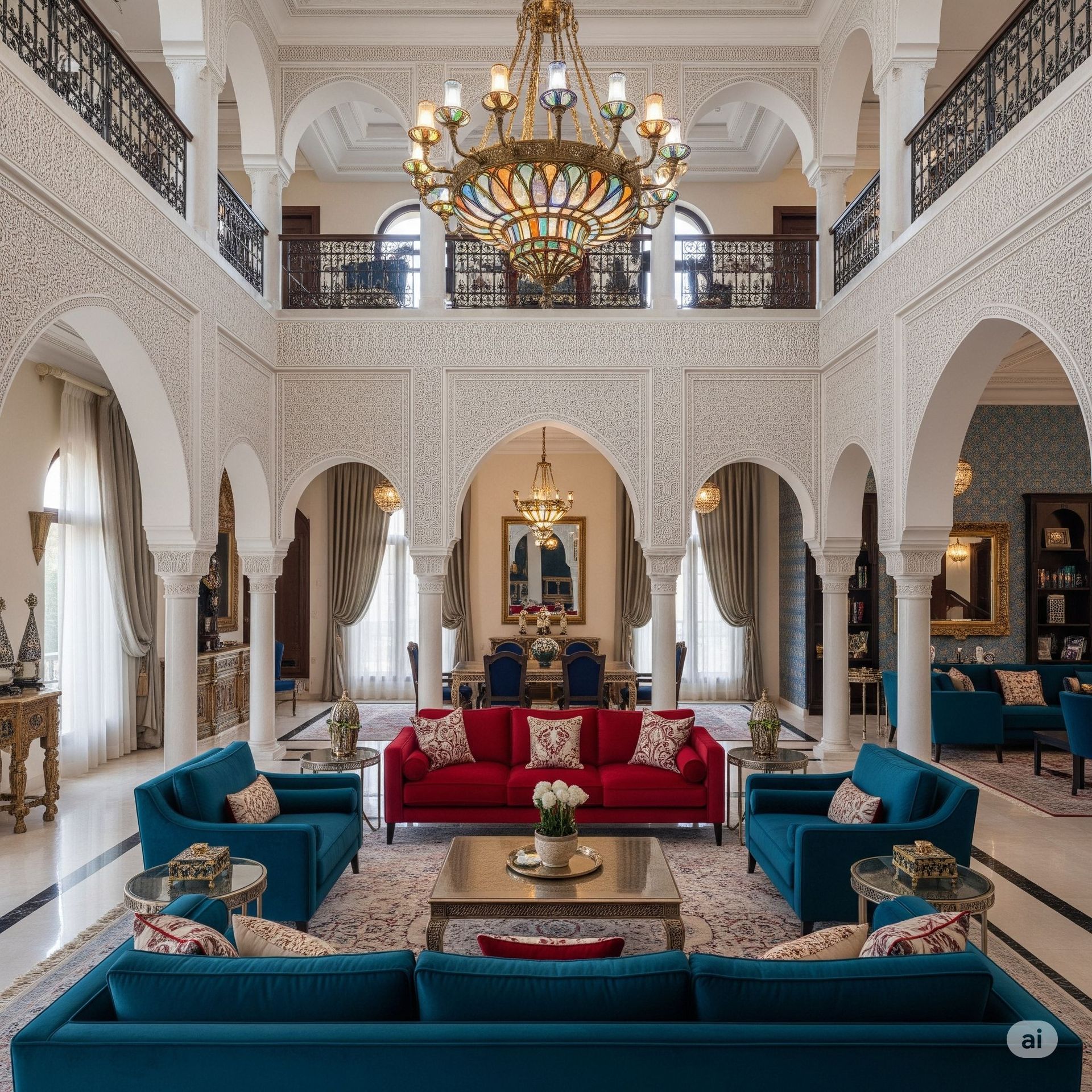
For the room design around the furniture, see our guides to majlis layouts, traditional against modern styling and Khaleeji heritage detailing.
Cost and lead time
Plain upholstered majlis runs start around AED 2,500–4,000 per linear metre depending on fabric and frame, so a twelve-guest room at 8 m of run is roughly AED 20,000–32,000, with tables quoted separately. Hand-carved and gilded classical seating is priced by carving hours and sits well above that. Lead time is eight to ten weeks from approved drawings for plain upholstery, ten to twelve for carved frames — against four to six months for anything imported, which is the practical reason most majlis seating in Dubai is made here.
Send the room dimensions and the guest count and we will draw the run into the plan before quoting. The pieces are on the custom furniture page.
Planning a majlis?
Send the room dimensions and the number of guests you receive. We will return a seating plan with run lengths and corner returns drawn, fabric options and a fixed price.
Book a Consultation