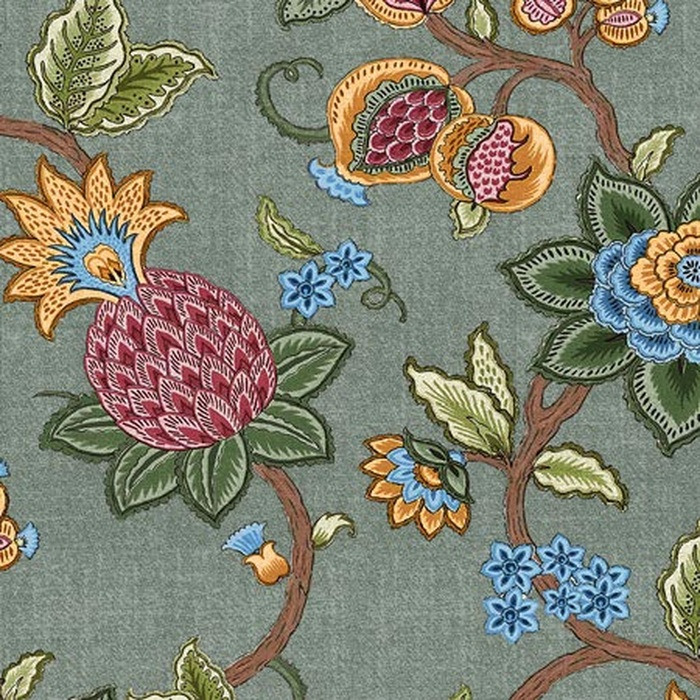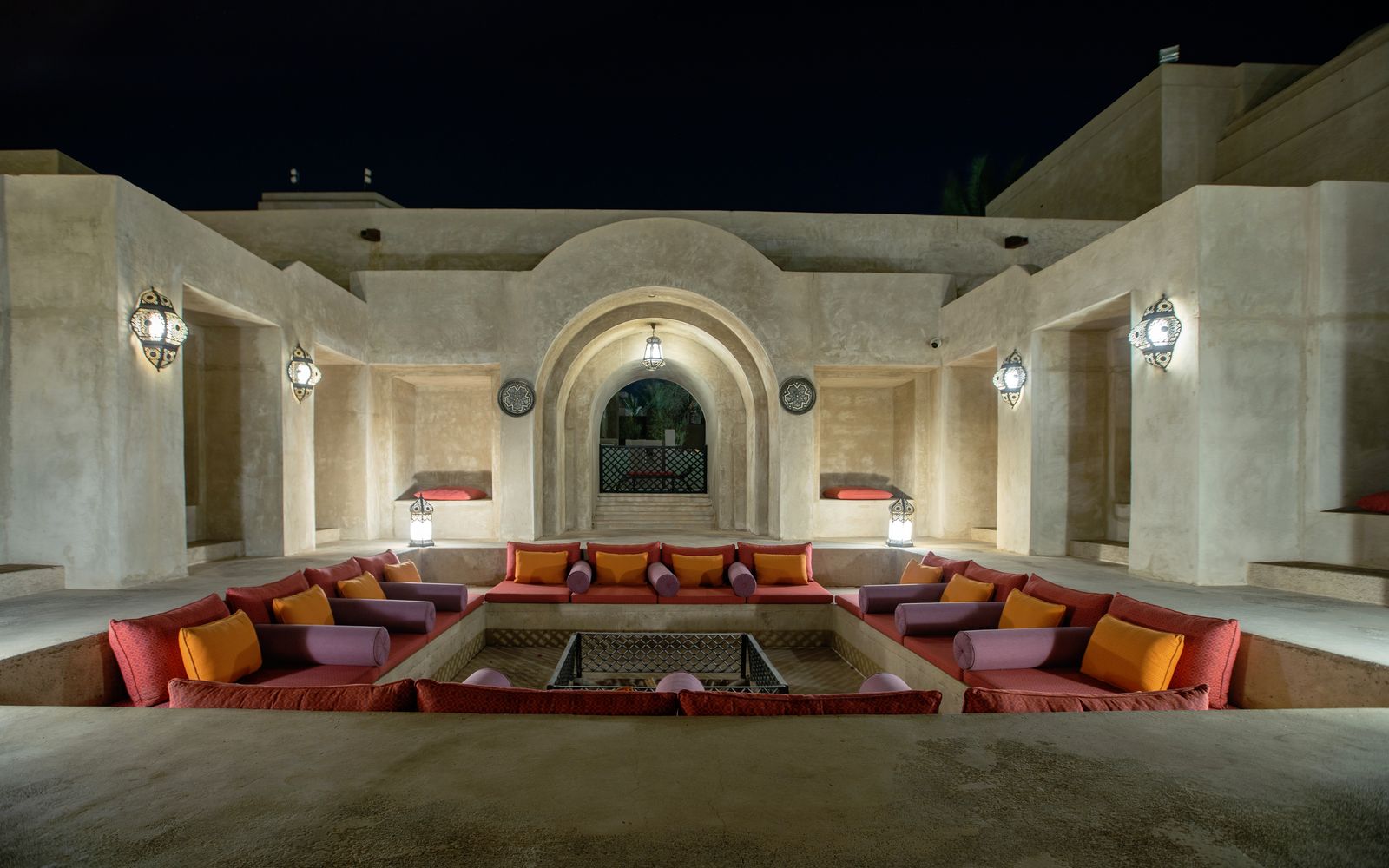
Take one cloth — say a medallion suzani in burgundy — and put it on two pieces of furniture. On a single high-backed armchair it looks deliberate, almost architectural. On a three-seater sofa it looks like the sofa is wearing something it borrowed. Same fabric, same room, same light. The difference is scale, and scale is most of what separates a scheme that works from one that is merely expensive.
Start with the size of the plane
Upholstery is fabric stretched over surfaces, and the size of the surface decides what pattern can do on it.
A three-seater sofa presents roughly two metres of continuous back and another two of seat — a large, flat, unavoidable plane at the centre of the room. A pattern drawn to be read at cushion scale repeats across that plane a dozen times and turns restless. The eye cannot settle, and the shape of the sofa — which you paid for — disappears behind the busyness.
An armchair is the opposite: a compact object with a back panel about the size of a large painting. It gives a big repeat exactly one clean surface to be read on. That is why the same design that overwhelms a sofa can look tailored on a chair.
The arrangement that reliably works
Plain on the large piece, pattern on the small ones. A Nuance sofa in charcoal or sand, two Éclat armchairs in a floral or a suzani, cushions picking up a third note. The pattern gets a frame that suits it, the sofa stays furniture, and the room has a focal point without a fight.
Reverse it only on purpose. A patterned sofa can be magnificent in a small sitting room where it is meant to be the single event and everything else is quiet — but it is a decision, not a default, and it needs the rest of the room to step back.
One statement per room
The most common failure we are asked to fix is not a bad fabric. It is three good fabrics, all interesting, all at the same volume. Nothing recedes, so nothing reads.
The discipline:
- Choose the statement first. One large-scale pattern — the floral, the suzani, the deco arch. Everything else is chosen after it and because of it.
- Pull the plains out of the pattern. Take the sofa colour from a shade already inside the statement fabric rather than matching swatches to each other. This is the single most useful trick in upholstery, and it is why we run Nuance across twenty-three tones — the supporting colour is almost always already there.
- Vary the scale deliberately. One large pattern, one small geometric or check, plains for the rest. Two large patterns at the same scale compete; a large pattern and a small check converse.
- Let something be quiet. A room with nothing plain in it has nowhere for the eye to rest.
Where checks and small geometrics earn their place
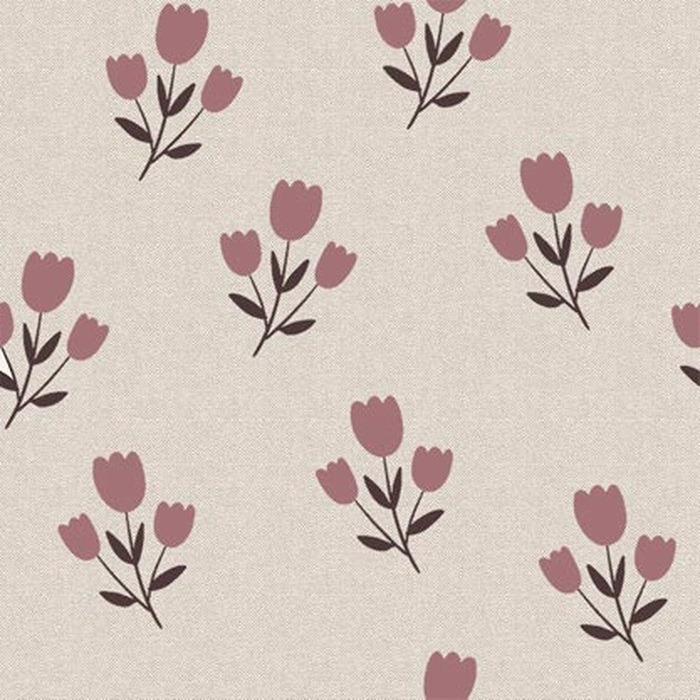
Houndstooth, tartan, hexagon tiles and tulip sprigs — the Héritage territory — occupy a useful middle ground. They read as texture from across a room and as pattern up close, which means they can go on pieces where a large repeat would fail: dining chairs, ottomans, bench seating, a tight-upholstered wingback.
They are also the natural bridge in a mixed scheme. A plain sofa, a large floral armchair and a houndstooth ottoman is a complete arrangement, because each element sits at a different scale and the middle term stops the jump from plain to bold feeling abrupt.
The repeat, and what it costs
Two practical consequences of choosing pattern that people meet late.
Placement. A pattern has to be centred on a back panel and aligned across seat cushions, or the piece looks like it was cut from offcuts. This is craft rather than difficulty, but it means the maker has to plan the cut, which is one reason bespoke upholstery is not the same trade as reupholstering to a template.
Meterage. Aligning a repeat wastes cloth — commonly 20–30% more for a large-scale design, and checks and stripes carry a similar penalty because seams have to match. Compare fabrics on the meterage your actual piece needs, not on price per metre. Our guide to specifying upholstery has the working figures.
Dubai-specific: pattern hides more than plain
A practical note for this city. Fine airborne dust settles on everything, and it shows most on flat, dark, plain cloth. Textured weaves and patterns disguise it almost completely. On a piece in constant family use, a mid-tone with some visual activity will look clean for considerably longer between cleans than a flat charcoal will — worth weighing if the sofa is the one everyone actually sits on. The same logic applies to fading: a pattern with several colours in it disguises uneven sun exposure far better than a single flat tone.
The short version
Match the pattern to the size of the surface, not to how much you like it on the cutting. Put plain on the biggest piece and save the statement for a chair, where it has one clean plane to be read on. Choose the statement first and draw the plains out of it. Vary scale on purpose, keep one thing quiet, and ask what the repeat does to your meterage before you commit.
See all three collections at upholstery fabrics, or book a consultation and we will work the scheme out with you in your own light.
Working out a scheme?
Book a consultation. We'll bring the full library, look at your room's light, and specify the whole set of pieces together.
Book a Consultation