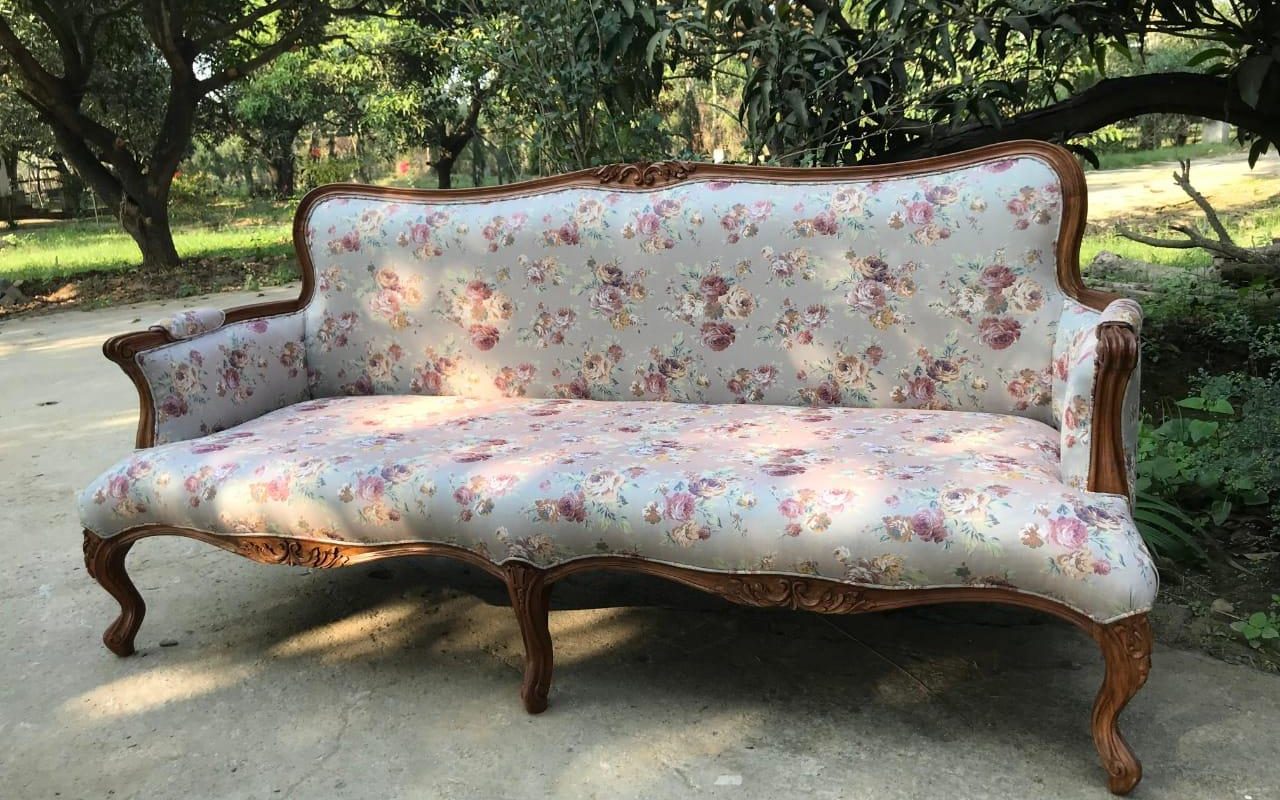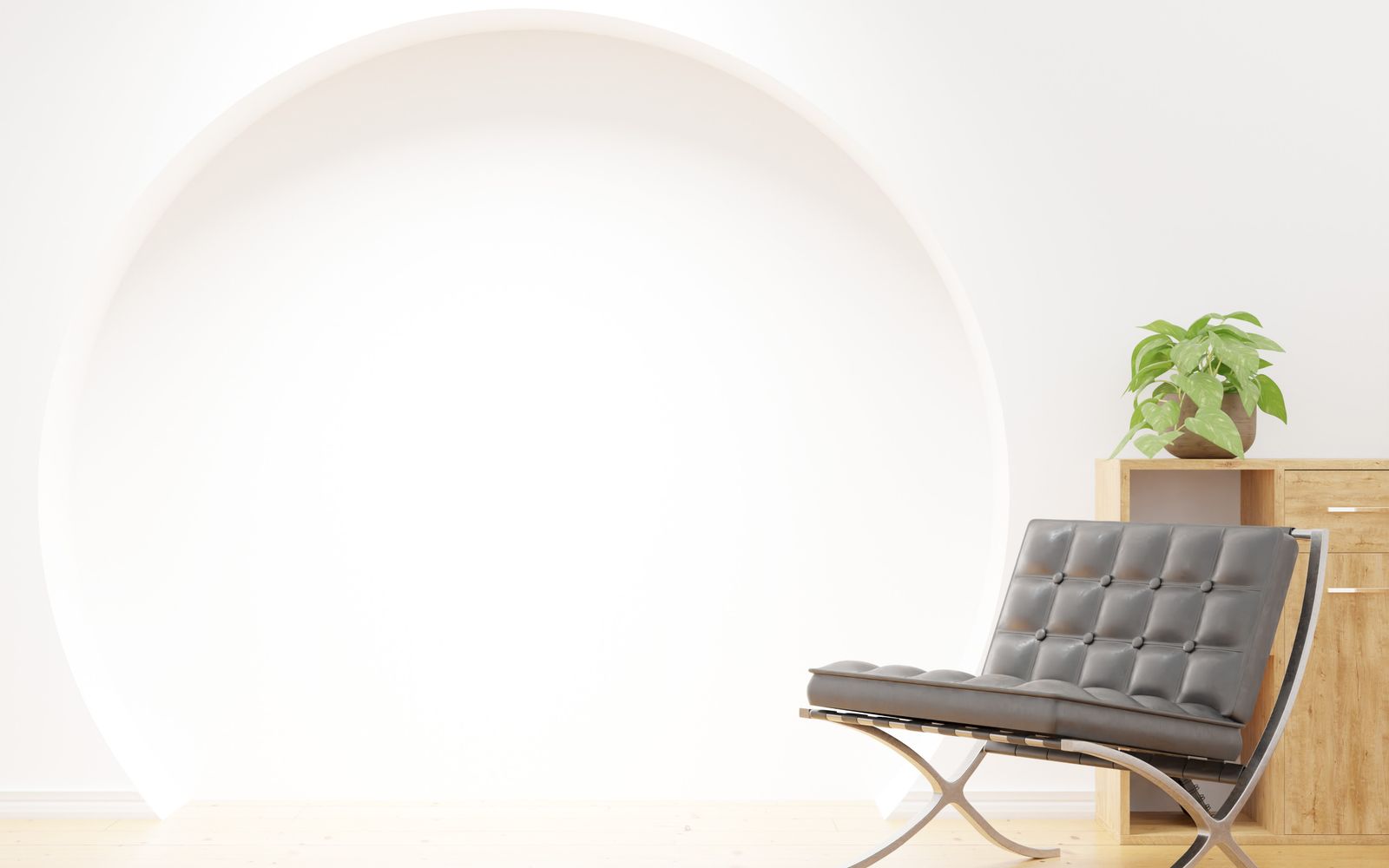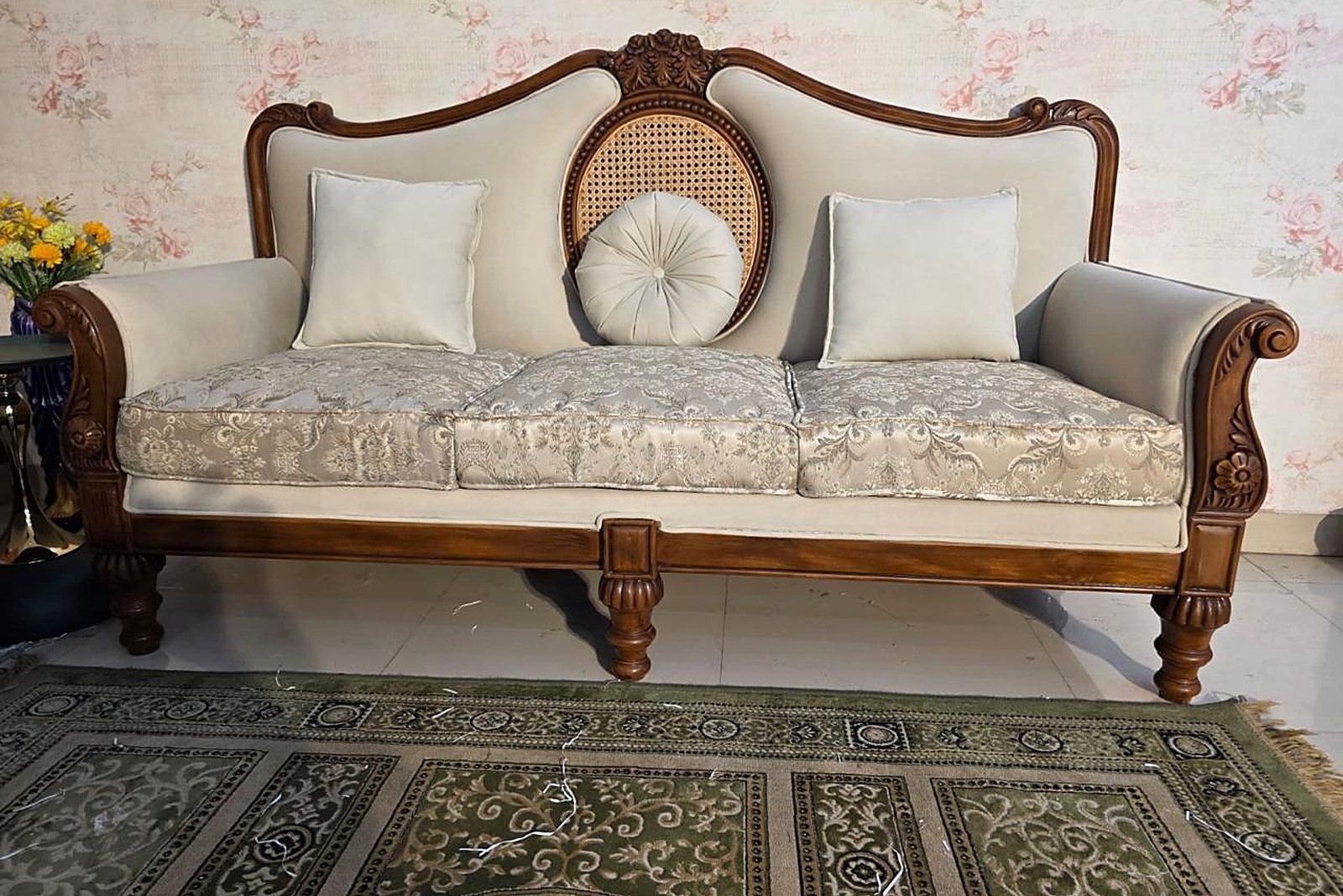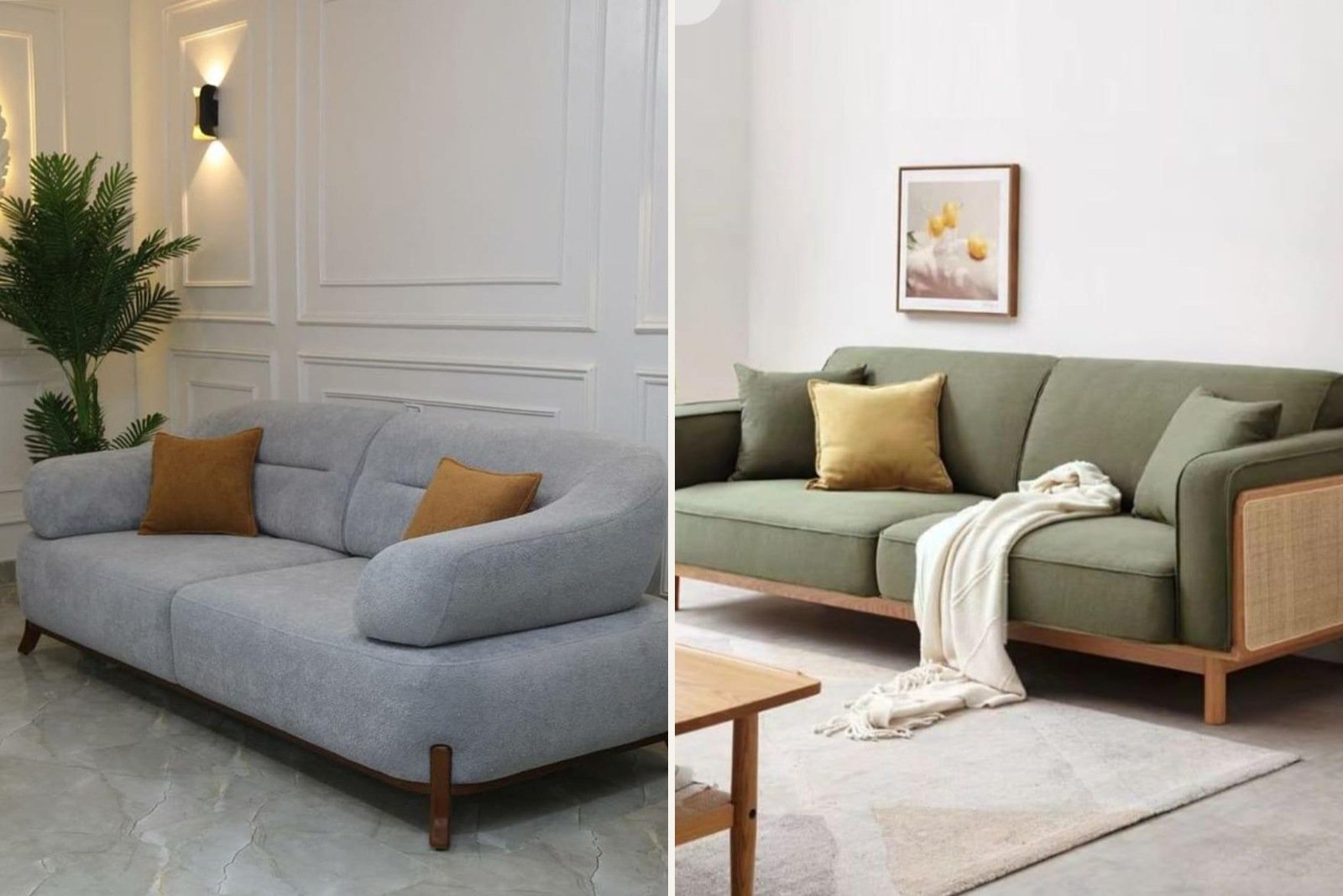
Some of the most memorable homes we work in are not classic or contemporary. They are both: a pair of hand-carved fauteuils facing a low modern sofa, a gilded console under a large abstract canvas, a carved teak bed made up with crisp, plain linen. Done well, the mix looks collected and personal. Done badly, it looks like two houses moved into one. Here is how to get it right.
The short answer
Keep the backdrop calm and modern, let one or two carved pieces be the statement in each room, give classic frames contemporary fabrics and finishes, repeat a colour or material between old and new, and leave the classic pieces enough space to be seen.
Start with a quiet backdrop
Classic furniture needs something plain to stand against. Large-format stone or porcelain floors, plain or softly limewashed walls, simple wall panelling and clean ceiling lines all let carving read clearly. Busy wallpaper, heavy cornices and patterned rugs everywhere compete with the furniture rather than frame it.
One statement per room
The single most effective rule is restraint. Rather than a full matching classic suite, choose one hero:
- Living room: a pair of carved armchairs facing a contemporary sofa, or a carved canapé against a plain wall.
- Entrance: a gilded or carved console with a modern mirror or artwork above it. Our guide to entrance and foyer furniture covers proportions.
- Dining room: carved host chairs at the ends of a modern stone table, or a classic buffet against a minimal room.
- Bedroom: a carved bed with plain, contemporary bedside tables and lighting, or the reverse.
Contemporary fabrics on classic frames
Fabric changes the age of a piece faster than anything else. The same carved frame that looks traditional in a heavy damask looks fresh and modern in a plain velvet, a textured bouclé, a linen or a subtle stripe. Deep buttoning in a solid colour reads more contemporary than buttoning in a pattern. If you already own a classic piece, this is the easiest way to bring it up to date; see re-upholstery in Dubai.
Choose the finish for the room
- Natural teak or rosewood polish: warm and grounded, beautiful against white walls and pale stone.
- Ivory or soft grey lacquer: lighter and more contemporary, and it lets the carving show as shadow rather than colour.
- Gilding: best used as a highlight on the carving rather than all over. A little gold goes a long way in a modern room.
Build bridges between old and new
Old and new pieces should share something. It might be a colour (the brass of a classic mount repeated in a modern lamp base), a material (the teak of a carved chair repeated in a contemporary coffee table), or a shape (the curve of a cabriole leg echoed in a rounded modern sofa). Metal details are an easy bridge; bronze or champagne PVD stainless steel sits comfortably beside both carving and clean modern lines.
Scale and space
Carved pieces have strong silhouettes and need room around them. Give a classic armchair space to be seen from more than one side, and do not push a carved console into a corner. Mixing heights also helps: a tall carved headboard or cabinet balances low, modern seating.
The mistakes we see most
- Matching everything: a full carved sofa, two chairs, coffee table and side tables in one room leaves no contrast.
- Too much gold: gilding on every surface flattens the effect of each piece.
- Too many woods: stick to one or two timbers and finishes across a room.
- Dark on dark: deep rosewood on a dark floor against a dark wall disappears.
- Lighting only from above: a lamp or a picture light beside a carved piece brings the relief to life.
The bottom line
A calm modern room with one carved classic piece looks more luxurious than a room full of matching ornament. Pick the hero, give it space, update the fabric and finish, and connect it to the rest of the room with one shared colour or material. To recognise the classic styles you are working with, see our field guide to classic French furniture.
Want a classic piece for a modern room?
Send us a photograph of the room. We will suggest the piece, the scale, the finish and the fabric that will make it work.
Book a Consultation