Most furniture in Dubai is thrown away for the wrong reason. The fabric has gone tired, the seat has flattened, the colour no longer suits a redecorated room — and underneath all of that sits a hardwood frame with another twenty years in it. Meanwhile pieces that genuinely are finished, with board frames coming apart at the staples, get re-covered at real expense and fail again within two years. Knowing which is which takes about five minutes.
The five-minute test
- Rock it. Hold an arm and push the piece side to side. A sound frame moves as one object; a failing one has a delay and a faint creak as joints take up slack.
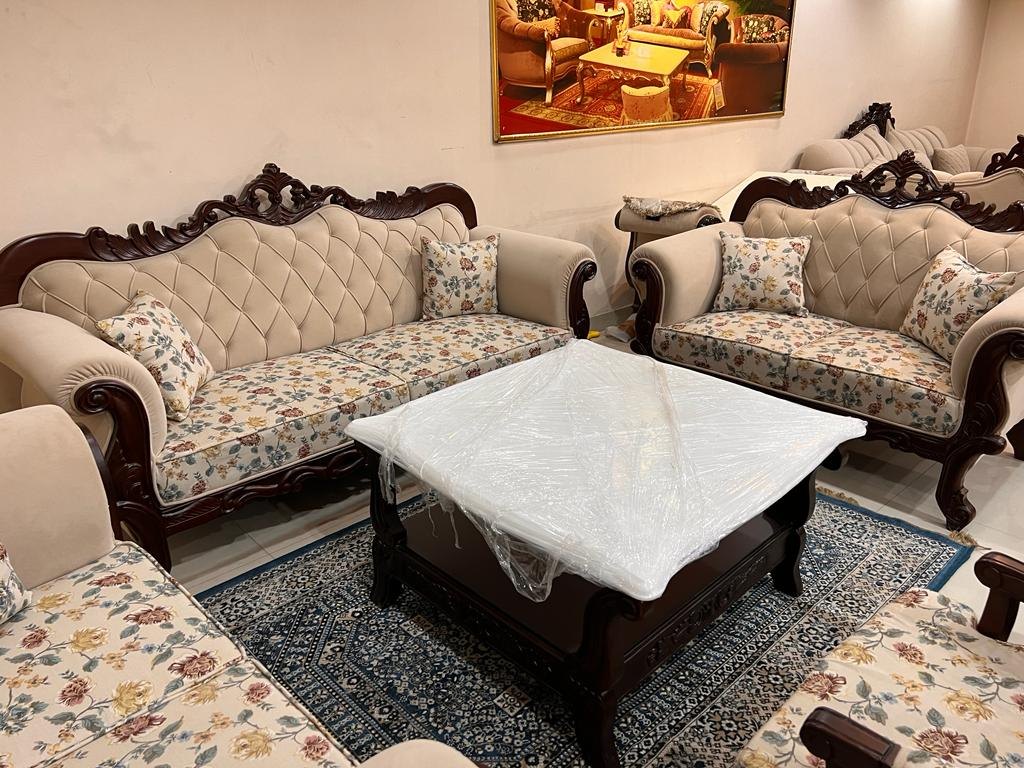
- Look underneath. Lift the dust cover at one corner. You want to see solid timber and joints that are cut into each other, with glued corner blocks. Chipboard edges, staples through the structure and metal L-brackets holding legs on are the signs of a frame not worth investing in.
- Press the seat deck. Under the cushion there should be springs or webbing under tension. If your hand meets a flat board, or webbing that sags to the floor, the suspension needs rebuilding — which is worth doing on a good frame and pointless on a poor one.
- Check the cushions. Foam that no longer recovers its shape after you stand up is simply due for replacement; it says nothing about the frame.
- Look at the show-wood. Scratches, sun-bleaching and dents in carved or polished timber can all be refinished. Cracks that follow the grain through a leg or a rail are structural and need repair before any new fabric goes on.
The short rule: a good frame with tired fabric is worth restoring; a tired frame with good fabric never is.
What re-upholstery actually involves
Done properly it is not a re-covering job. The piece is collected and stripped back to the bare frame, which is when hidden problems appear. Loose joints are knocked apart, cleaned and re-glued; broken springs are replaced and webbing re-stretched; the frame is repaired where timber has split. Show-wood is sanded and refinished, or regilded where it was gilded. New foam and wadding are cut to the seat and back profiles — this is the moment to change the comfort, firmer or softer, deeper or shallower, if the old piece never quite sat right. Then the new fabric is cut, sewn and fitted, and the piece is finished with new dust covers and, if you want, new feet.
Two decisions are worth making deliberately at the strip stage: whether to change the seat depth or height (a few centimetres transforms an old sofa), and whether to add loose cushion covers so future cleaning does not mean another full re-upholstery.
Choosing the fabric second time round
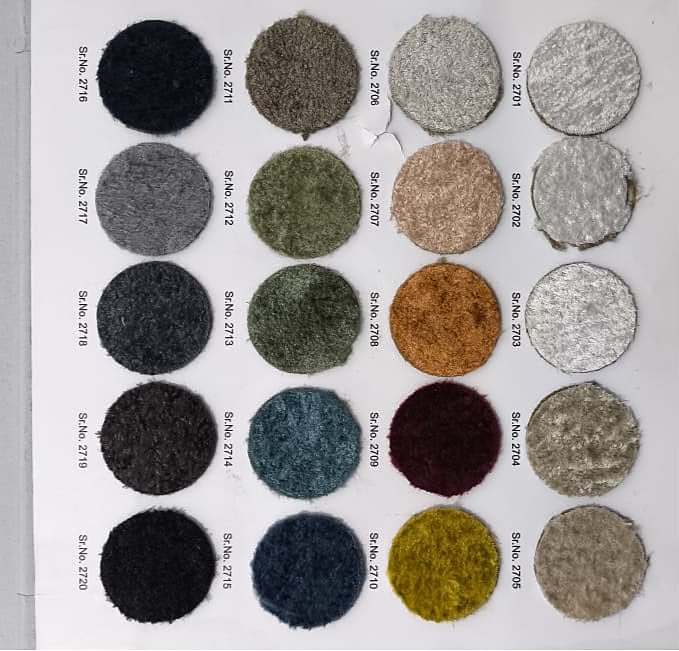
You already know how the piece gets used, which is an advantage you did not have when it was new. If the old fabric wore through on the arms, specify a higher abrasion rating: 30,000 Martindale rubs or more for a family sofa, 40,000 for majlis or dining seating. If it faded on the window side, ask for the lightfastness grade this time. If the household has changed — children, or a home that now receives guests weekly — a performance weave or treated velvet will serve better than the cloth that suited a quieter phase.
Metreage matters for the budget. As a guide: 12–16 metres of 140 cm plain fabric for a three-seater, 7–10 for a two-seater, 4–6 for an armchair and about 0.7 per dining chair seat. Large-repeat patterns add 20–30% because the pattern must be matched across cushions and panels — this guide explains where that matters. Our three collections publish the performance figures on every cloth, and you can also supply your own.
Cost, and the arithmetic against buying new
- Three-seater sofa: roughly AED 3,500–6,000 in a house-collection fabric; AED 6,000–9,000 with full foam replacement and a premium cloth or leather.
- Armchair: AED 1,500–3,000.
- Dining chairs: AED 250–600 each, depending on seat-only or full cover.
- Majlis runs: quoted per linear metre, usually well below the cost of new seating because the frames and structure remain.
- Headboards: AED 1,500–4,000 depending on size and detailing.
Set that against a comparable new piece. A tailored three-seater made to measure runs AED 12,000–18,000, so restoring a sound frame costs roughly a third to a half and buys another ten to fifteen years — while keeping a size and shape that already fit the room, which is worth more than most people credit. Where it does not add up is on a board-framed import: spending AED 5,000 of fabric on a frame with four years left in it is the one outcome to avoid, and it is why we say no to some enquiries.
Timing, and what to send us
Two to four weeks for a sofa or a set of dining chairs once the fabric is in, longer if cloth is being imported or the frame needs significant repair. We collect and deliver in Dubai and the northern Emirates.
To get an honest answer before committing: send photographs of the piece from the front, the side, the underside with the dust cover lifted at one corner, and a close-up of a joint, plus the overall dimensions. We will tell you whether the frame is worth the work. If it is, you get a quotation with fabric options and metreage; if it is not, we will say so, and this guide explains what to specify so the replacement is the last one you buy.
Thinking about re-upholstering?
Send photographs of the piece, including the underside and a close-up of a joint, and we will tell you honestly whether it is worth restoring — and quote the work if it is.
Book a Consultation