Most people arrive at a design conversation with a folder of saved images and a slight sense of contradiction — a stark Scandinavian kitchen next to an ornate majlis next to a coastal bedroom. That is not a failure of taste; it is what happens when you collect beautiful rooms without asking which ones your house can actually support. Style is not chosen in the abstract. It follows from the architecture you already own, the quality of light you get, and the way you genuinely live and entertain. Here are the directions that work in Dubai, and what each one demands.
Modern / contemporary
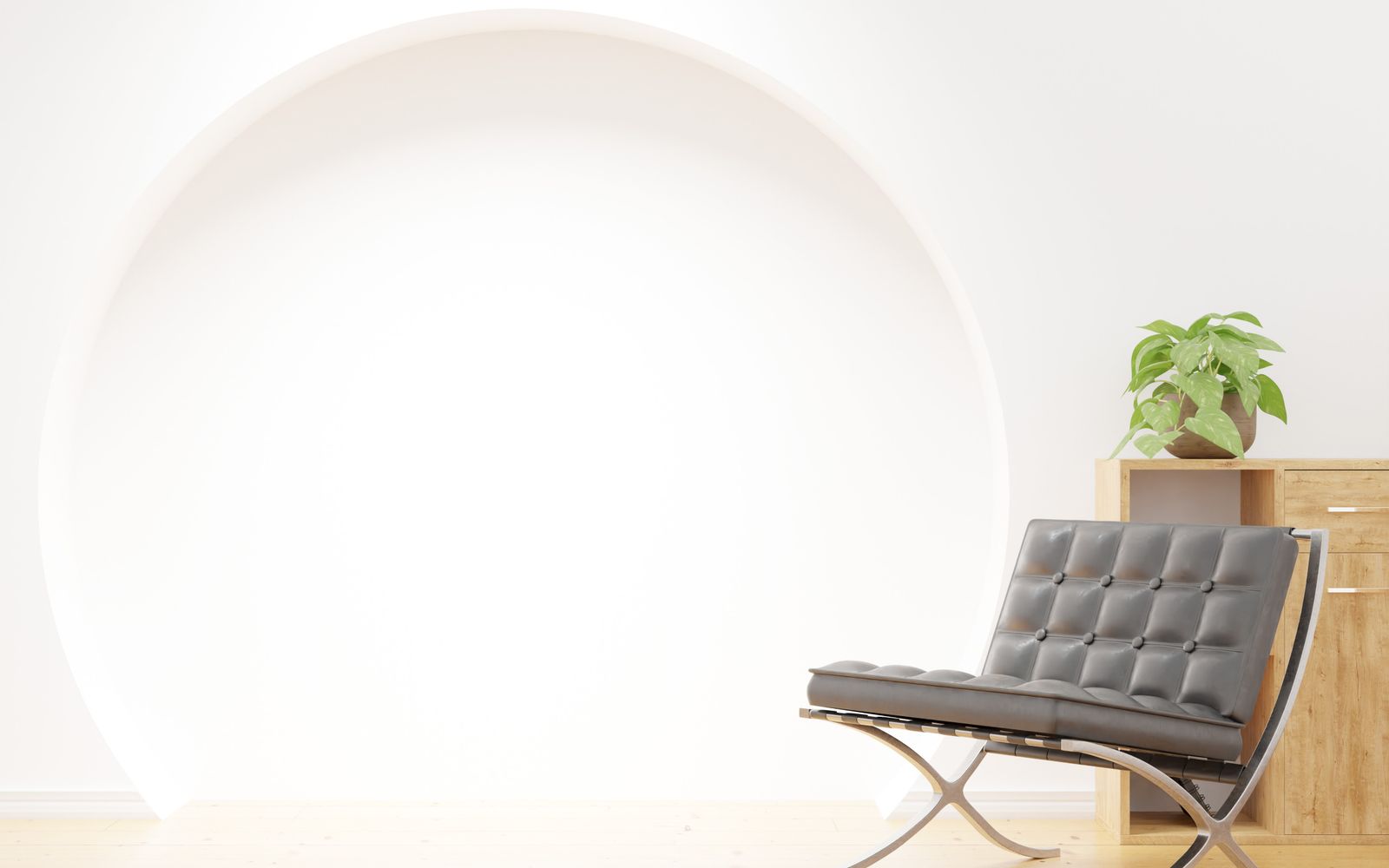
The default, and the most common style in real Dubai homes for a reason: it is what the architecture asks for. Clean lines, open-plan living, large glazing, restrained palettes, flush joinery and an absence of applied ornament.
It suits: almost every villa and apartment built here in the last fifteen years. It demands: precision. With no mouldings to hide behind, every shadow gap, every junction and every reveal is visible — modern is unforgiving of poor joinery. Watch for: coldness. Dubai's hard floors and big volumes can make a purely modern scheme feel like a lobby. Warmth comes from timber, textured fabrics, layered lighting and rugs.
Modern Arabic
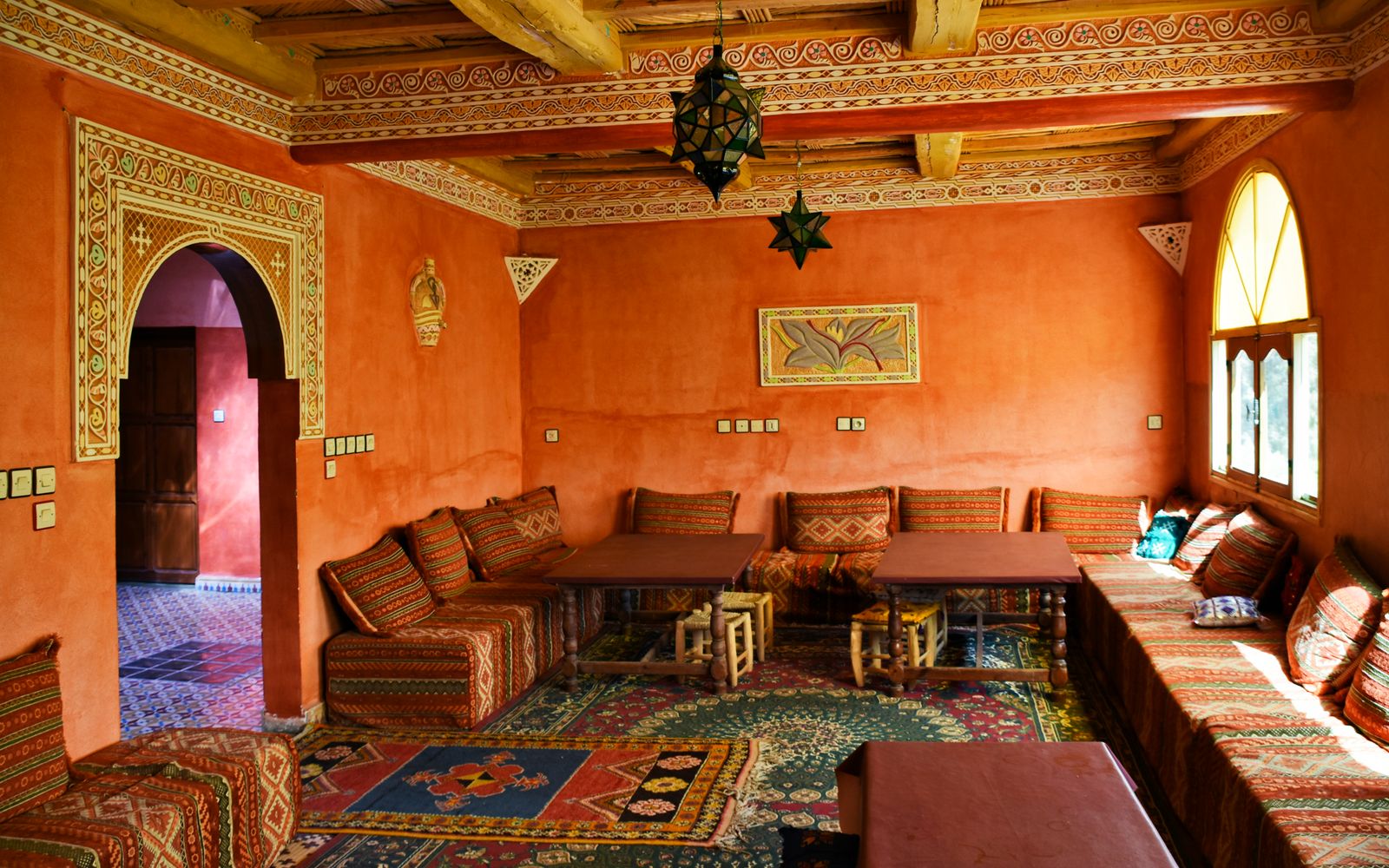
The style with the strongest regional identity, and increasingly the most requested. It takes a contemporary framework and layers in regional character: mashrabiya-inspired screening, geometric pattern used sparingly, arched openings, richer stone, brass detailing, and — critically — a properly conceived majlis rather than a Western living room with cushions added.
It suits: households who entertain in the regional way, with separate reception for guests and a distinction between formal and family space. It demands: restraint. The difference between elegant and theme-park is the ratio of pattern to plain. One carved screen against calm walls is powerful; four competing motifs is not. Do it well by: treating heritage detail as punctuation, not wallpaper. Our guides to Khaleeji heritage majlis design and traditional versus modern majlis go deeper.
Warm minimalism / quiet luxury
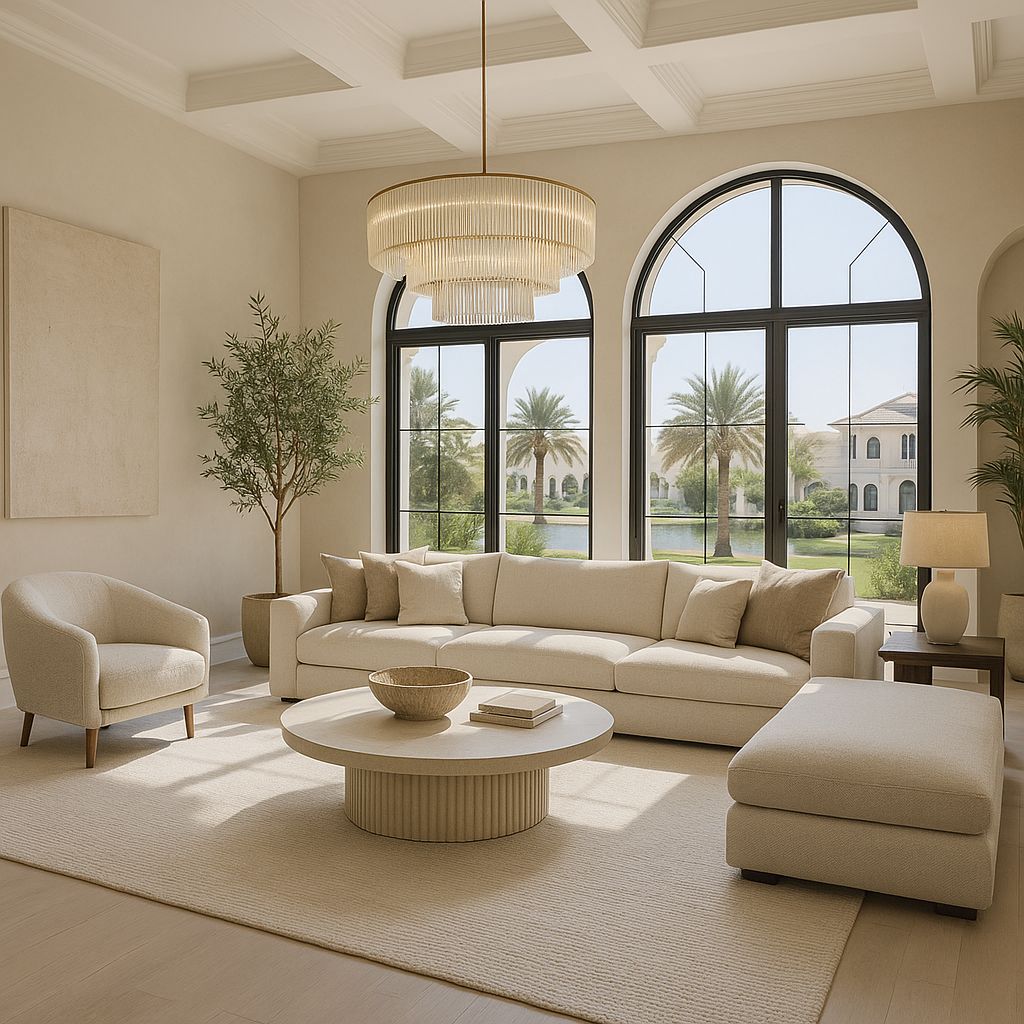
The strongest current direction, and the one we are asked for most often by clients who have lived in Dubai a while. Minimal in ornament, generous in texture: layered neutrals, natural timber, plaster and stone, linen and wool, very few pieces but each properly made. No visible branding, no statement for its own sake — the quality reads through material and proportion.
It suits: large-volume villas that need calming, and anyone who wants a home that will not look dated in five years. It demands: real material quality and excellent execution, because there is nothing to distract the eye from a bad junction. The economics: generally the most budget-efficient of the styles here, since it uses fewer elements — but only if executed well. Cheap minimalism just looks empty.
Contemporary classic
Panelled walls, considered mouldings, symmetry, a formal plan, classical proportion — but furnished with a contemporary hand and a modern palette rather than reproduction pieces. Not the heavy gilt-and-marble look that once dominated the emirate; something quieter and better tailored.
It suits: larger villas with formal entertaining, generous ceiling heights and a symmetrical plan. It is very well matched to the way many Dubai homes separate formal and family zones. It demands: volume of joinery. Panelling, cornices and detailed millwork are labour-intensive, which makes this one of the more expensive routes. Watch for: pastiche. Proportion is everything — mouldings that are the wrong scale for the ceiling height read as costume.
Resort coastal
Light woods, off-whites and sands, rattan and natural weaves, deep comfortable seating, an easy indoor-outdoor relationship. It works beautifully in Palm Jumeirah, Jumeirah Bay, Tilal Al Ghaf and anywhere with water, a pool terrace or a genuine outlook.
It suits: waterfront and garden villas, and households that live outward toward a terrace. It demands: serious material performance, because the same sun and salt that make the setting also destroy the wrong specification. Solution-dyed fabrics, UV-stable finishes and proper outdoor timbers are non-negotiable — see terrace and pool deck design. The economics: along with elegant contemporary, typically the highest cost per square metre, because it leans on large-format natural materials and extensive bespoke joinery.
Art deco and glamour
Strong geometry, fluted and channelled surfaces, lacquer, brass, marble, deep jewel tones. Currently enjoying a genuine revival in Dubai apartments and penthouses.
It suits: apartments and penthouses more than family villas — particularly evening-oriented spaces, bars and dining rooms with a skyline view. It demands: commitment. Deco half-done looks like an accident; it wants confident materials and precise detailing. Watch for: fatigue. What is thrilling in a dining room can be exhausting in a bedroom, so zone it.
How to actually choose
- Start with the architecture. A flat-roofed, floor-to-ceiling-glazed contemporary villa will fight classical panelling, and a symmetrical formal plan will feel undressed in stark minimalism. Work with the shell you have.
- Look at the light. North-facing rooms take warmer, deeper palettes well. Rooms taking hard west light need cooler tones and serious shading, whatever the style.
- Be honest about how you entertain. Frequent formal hosting with separate guest reception points toward Modern Arabic or contemporary classic. Casual family living points to warm minimalism or coastal.
- Decide your time horizon. Staying ten years? Choose the direction that dates slowest — warm minimalism and well-judged modern age best. Selling or letting in three? Choose broad appeal and neutral bones.
- Test it at material scale. A palette that works on a screen can fail as three large samples on a wall. Always view finishes in the actual room, in daylight and at night.
Mixing styles without making a mess
The best homes here are rarely pure, and they should not be. The discipline that makes mixing work:
- One dominant style at 70–80%, a second used as accent.
- One palette running through the whole house.
- One flooring language, or at most two with a deliberate transition.
- One metal finish as the lead — brass, blackened steel or nickel — used consistently.
- Layer, do not partition. A modern shell with Arabic detailing works. A modern kitchen next to a Deco majlis next to a coastal bedroom does not.
The bottom line
Choose the style your building is already asking for, then bend it toward how you live. In Dubai that most often means a modern framework warmed with texture, or a modern framework layered with regional character — which is precisely why Modern and Modern Arabic dominate the emirate's real interiors rather than its mood boards. Whatever the direction, the quality of the joinery, the materials and the lighting will matter more to how the house feels than the label you put on it.
Working out which direction suits your home? Talk to our team — ELEVÉ designs, makes and installs complete interiors from our Al Qusais workshop. Our guide to briefing an interior designer is a good place to start.
Not sure which direction is right?
Book a complimentary consultation. We'll assess your architecture and how you live, and propose a direction with materials and budget.
Book a Consultation