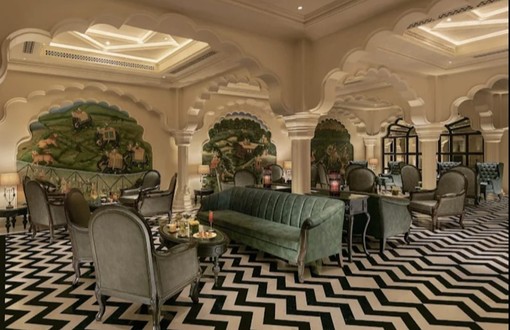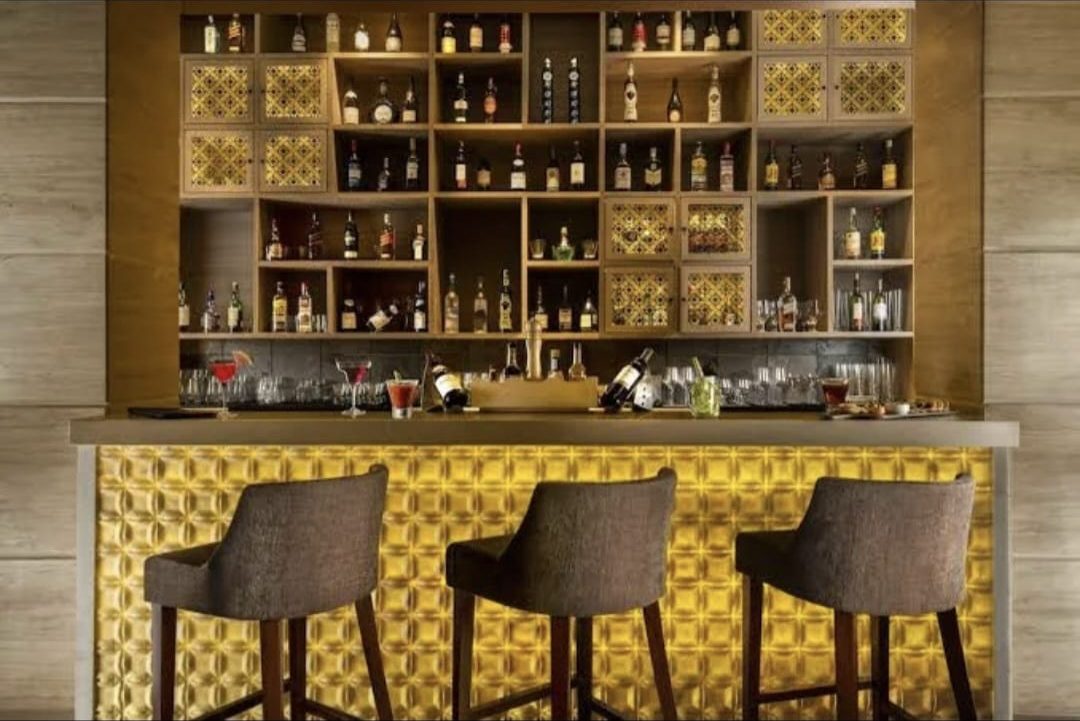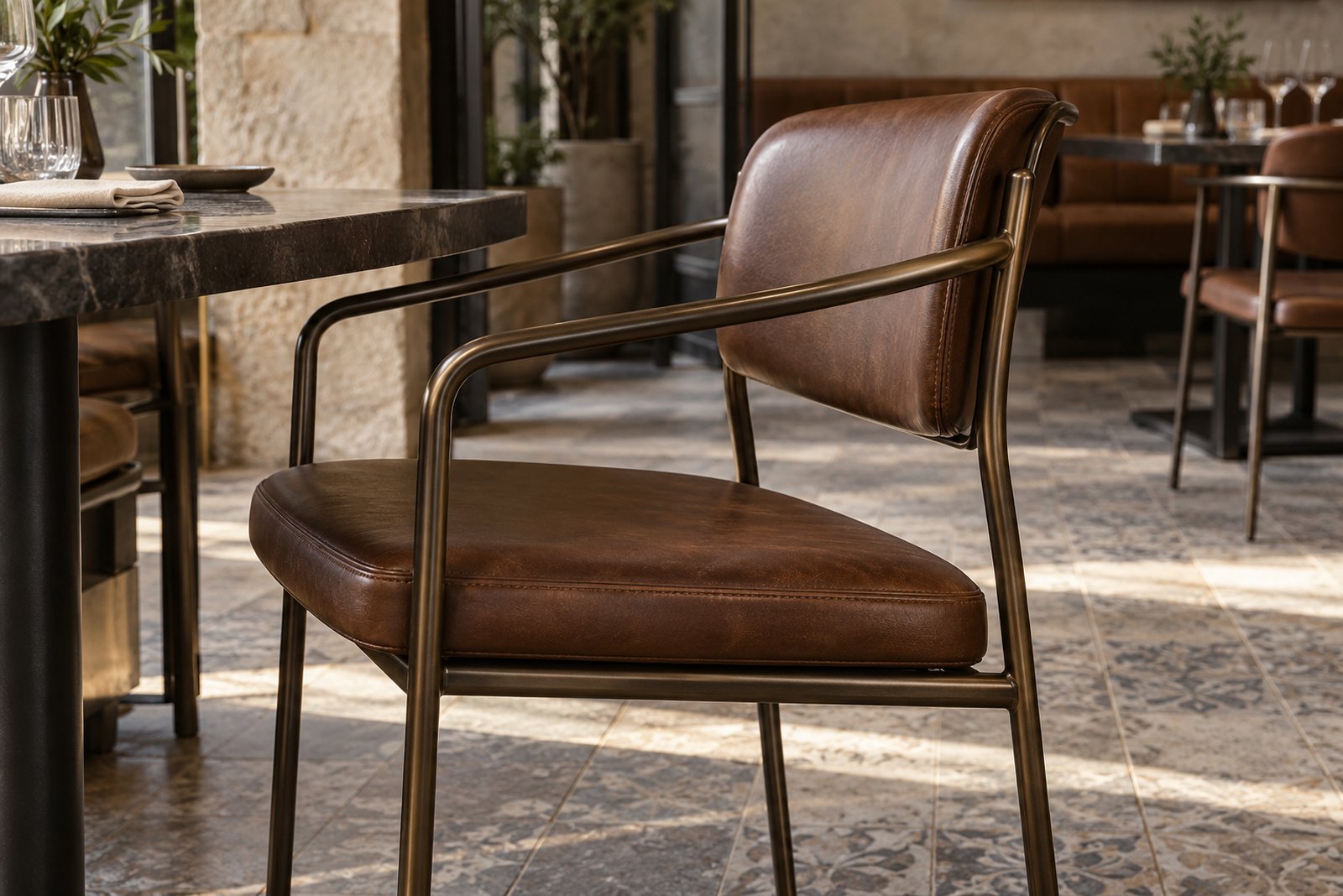
Look closely at the gold table bases, the bronze chair frames and the black trims in Dubai’s restaurants, hotel lobbies and villas, and most of them are not brass or bronze at all. They are stainless steel with a PVD coating. It is one of the most useful finishes in modern furniture, and one of the least understood. Here is what it is, how it wears, and what to put in the specification.
The short answer
PVD gives stainless steel a hard, thin and colourfast metallic finish. Specify grade 304 steel indoors and grade 316 outdoors or near the sea, a brushed or satin finish for anything that gets touched, and order every piece in a project in one coating batch. Clean it with mild soap and water, never with abrasives.
What PVD is
Physical vapour deposition is a process carried out in a vacuum chamber: a metal such as titanium or zirconium is vaporised and combined with gases so that a very thin ceramic layer, on decorative finishes typically only 0.2 to 0.5 microns thick, bonds to the surface of the steel. The colour comes from the chemistry of that layer, not from a pigment. The result is far harder than paint, does not tarnish like real brass and does not chip like powder coating.
It is not the same as electroplating, an older wet process that deposits a softer metal layer, or powder coating, a thicker baked-on paint that gives flat colours and textured finishes rather than metallic ones.
The colours
- Gold and champagne: the classic hospitality finish, from bright yellow gold to a softer, paler champagne that sits well with marble and cream upholstery.
- Rose gold: warmer and pinker, popular in bars and boutique retail.
- Bronze and dark bronze: brown, muted metallics that suit leather, walnut and teak. Currently the most requested finish for restaurant chair frames.
- Black and gunmetal: deep, slightly metallic darks for a crisp, modern look.
Colours vary between coaters and between batches. Approve a physical sample of the actual finish on the actual steel, and coat every piece of a project together so the chairs, bases and trims match.
304 or 316 underneath
The coating is only as good as the steel. Grade 304 stainless steel is the standard for indoor furniture. Grade 316 contains molybdenum, which makes it far more resistant to chlorides from sea air and pool water. For terraces, beach clubs and anything near the coast, specify 316. Where the coating is scratched through, the steel underneath is exposed, so the grade still matters.
Mirror, brushed or bead-blasted
PVD follows the surface beneath it exactly. A mirror polish gives a jewel-like gold or black but shows every fingerprint and fine scratch. A brushed or hairline finish has fine parallel lines that hide fingerprints and light wear, which is why we recommend it for chair frames, handles and table bases. A bead-blasted satin finish gives a soft, matt metallic look. Many coaters can also add an anti-fingerprint layer, useful on large flat panels.
How it is made well
- Welds ground and polished before coating. PVD shows every flaw underneath; it does not fill or hide.
- Coated after fabrication, never before. Cutting, drilling or welding coated steel destroys the finish around the work.
- Hidden fixings. Bolts and screws that are also PVD-coated, or concealed, so silver heads do not show.
- Felt or nylon glides under chair feet and bases, so the coating does not grind against stone floors.
What damages it, and how to care for it
PVD is hard but thin. It resists fading, tarnishing and normal cleaning, but it can be scratched through by keys, rings, buckles, sand and abrasive pads, and stripped by harsh acids. Once scratched through, it cannot be touched up invisibly; the part has to be re-coated.
- Clean with a soft microfibre cloth and mild soap and water, then dry.
- Never use scouring pads, steel wool, abrasive creams, bleach or descalers.
- Avoid strong solvents and acidic cleaners, and rinse off any spilled cleaning chemical promptly.
- Outdoors, rinse with fresh water regularly to remove salt and sand.
Metal and wood together
Many of our pieces combine PVD stainless steel with solid wood and stone: bronze frames with tobacco leather, champagne bases under marble tops, black trims on teak and sheesham joinery. The metal is fabricated and coated by specialist partners in Dubai to our drawings, and finished and assembled in our workshop with the timber and upholstery.
The bottom line
PVD stainless steel gives you the warmth of brass or bronze without the tarnish, and colours that stay true for years. Choose the right grade for the setting, a brushed finish for anything handled, one coating batch for the whole project and a gentle cleaning routine. For bar and counter seating, read our guide to bar stool heights and spacing.
Planning furniture with PVD metal details?
Send us your drawings or reference images. We will advise on grade, finish and colour, and send physical finish samples for approval before anything is coated.
Book a Consultation