Walk into the formal reception room of many Gulf villas and you will find some version of eighteenth-century France: carved canapés, gilded frames, silk damask and a commode with a curving front. The taste is a long-standing one in the region, and for good reason. The furniture was designed for receiving guests with ceremony, which is exactly what a majlis or a formal sitting room is for. But “French classic” covers a century and a half of quite different styles, and knowing which is which makes it much easier to brief a maker, mix pieces well and judge quality.
Louis XIV: Baroque grandeur (to about 1715)
The style of Versailles: large, symmetrical and heavy, built to impress. Look for massive carved frames, generous gilding, high rectangular chair backs, and straight or baluster-turned legs, often joined low down by stretchers in an H or X shape. In a villa, a Louis XIV influence usually appears in grand pieces such as console tables, mirrors and ceremonial chairs rather than in everyday seating.
Régence: the transition (about 1715–1730)
During the regency that followed Louis XIV's death, furniture became lighter. Curves began to appear, the cabriole leg arrived (at first still with stretchers), and shell motifs softened the carving. Pieces from this period sit between the two great styles and blend easily with both.
Louis XV: Rococo curves (about 1730–1760)
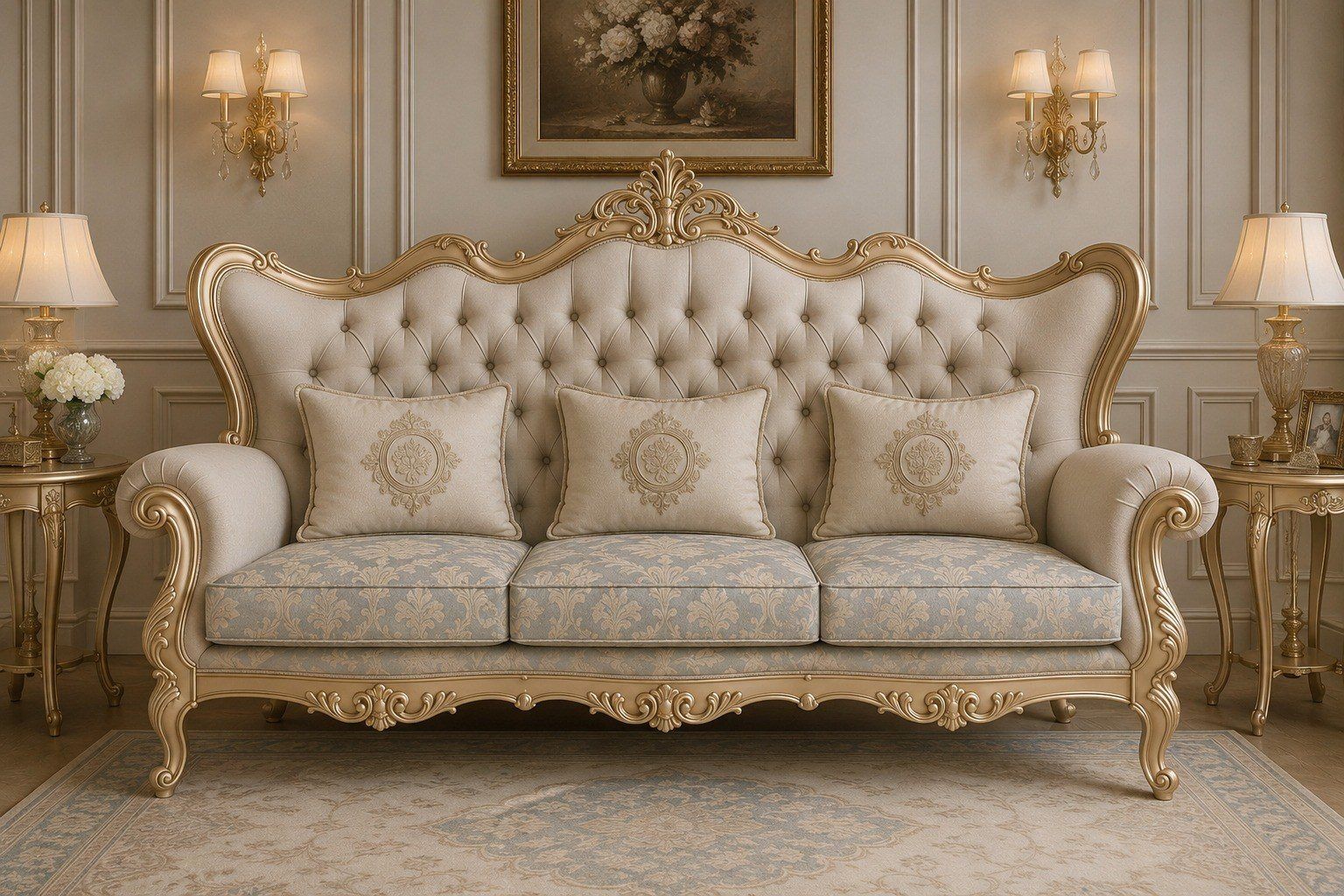
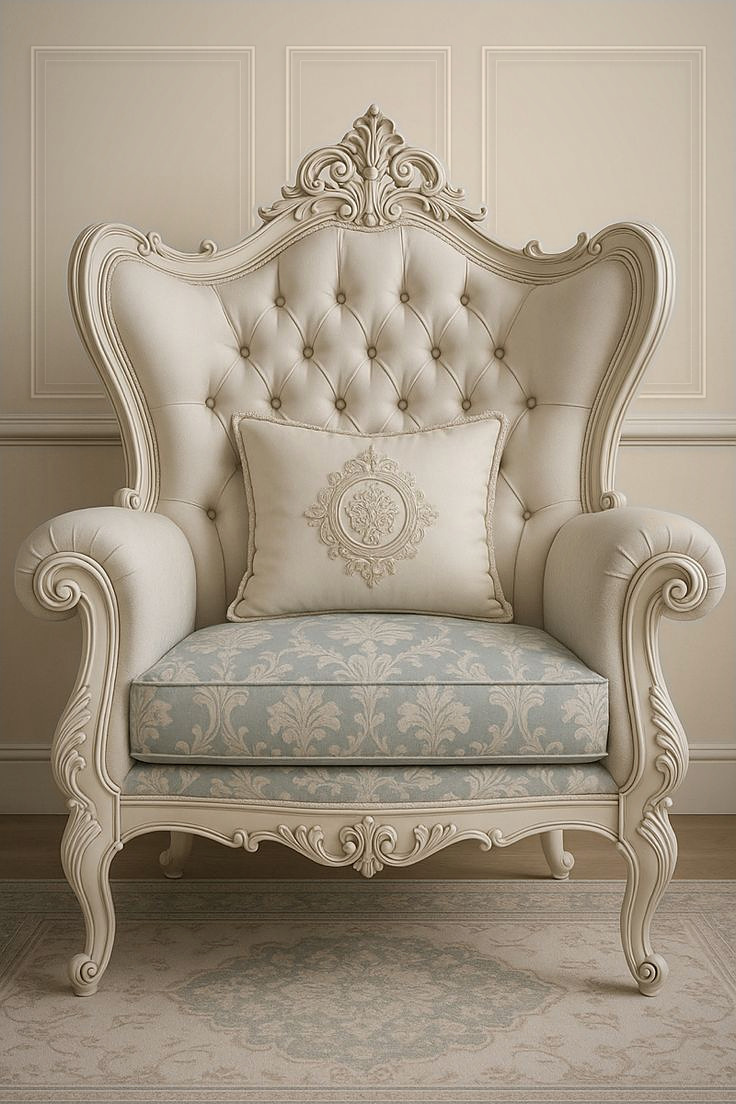
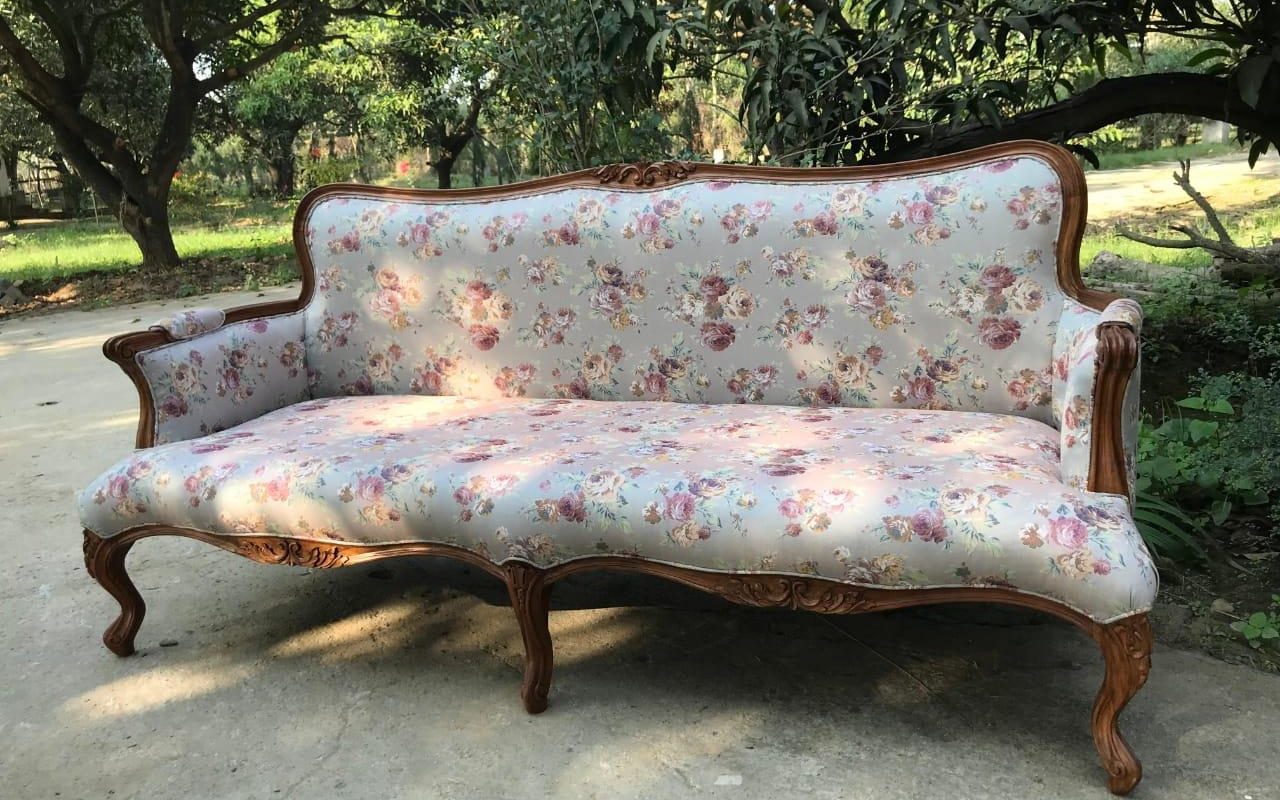
This is the style most people picture when they say French furniture. Almost nothing is straight: cabriole legs without stretchers ending in scrolled feet, serpentine top rails, carved shells (the rocaille that gave Rococo its name), flowers and deliberate asymmetry. Seating became more comfortable, and the period gave us the forms still made today: the bergère with enclosed sides, the open-armed fauteuil, and the canapé, the sofa in the photograph above. Case furniture followed suit, with commodes whose fronts and sides swell outward, dressed in gilt-bronze mounts.
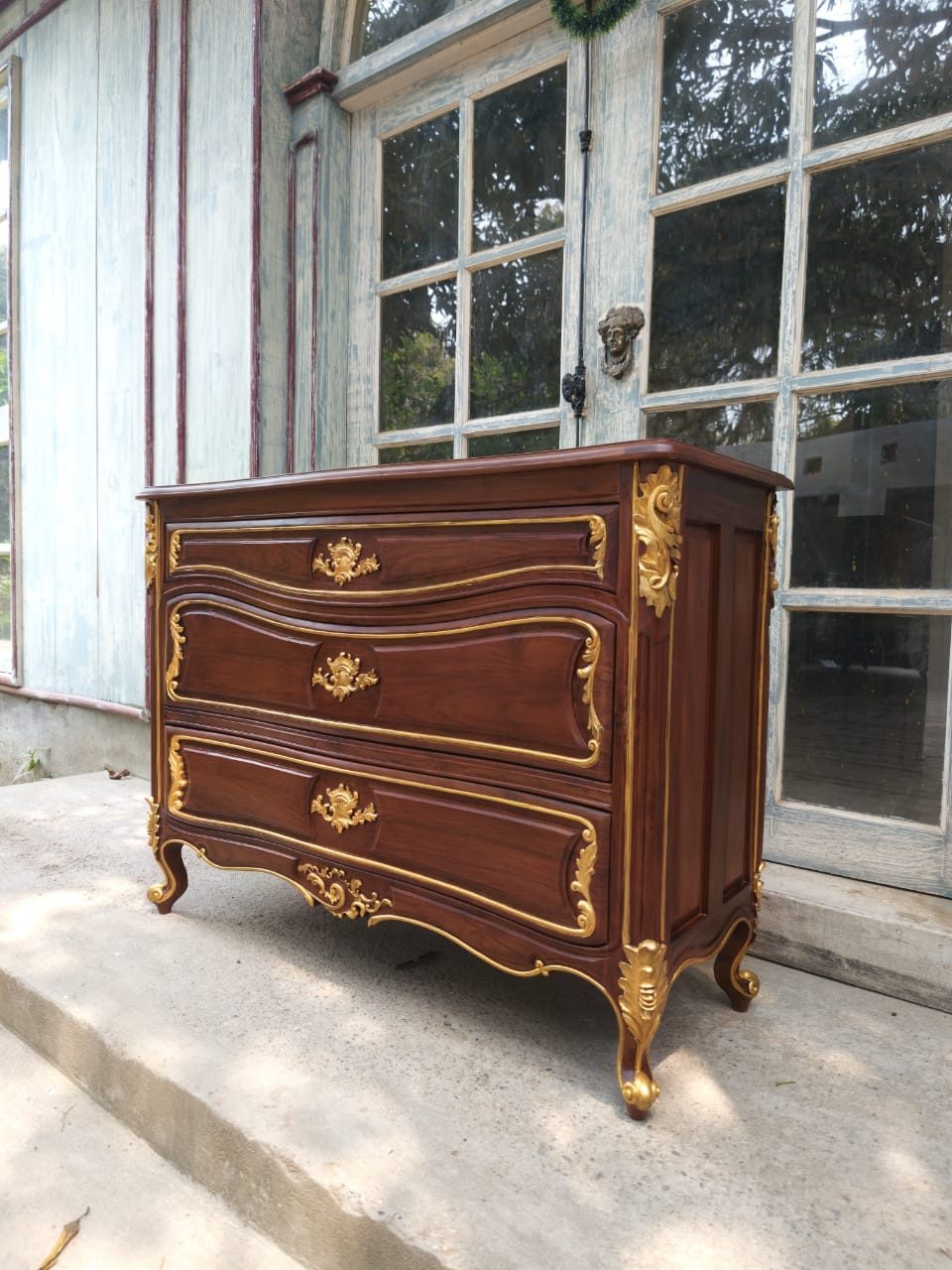
Louis XVI: Neoclassical restraint (about 1760–1790)
Fashion swung back towards order, partly inspired by the excavations at Pompeii and Herculaneum. Legs became straight, tapered and fluted, often topped with a small carved rosette block where they meet the seat rail. Chair backs became oval medallions or neat rectangles. Carving turned to laurel, ribbons and bows, beading and urns, applied symmetrically. The effect is lighter and calmer than Louis XV, and it suits contemporary rooms particularly well, which is why painted Louis XVI chairs appear so often in otherwise modern interiors.
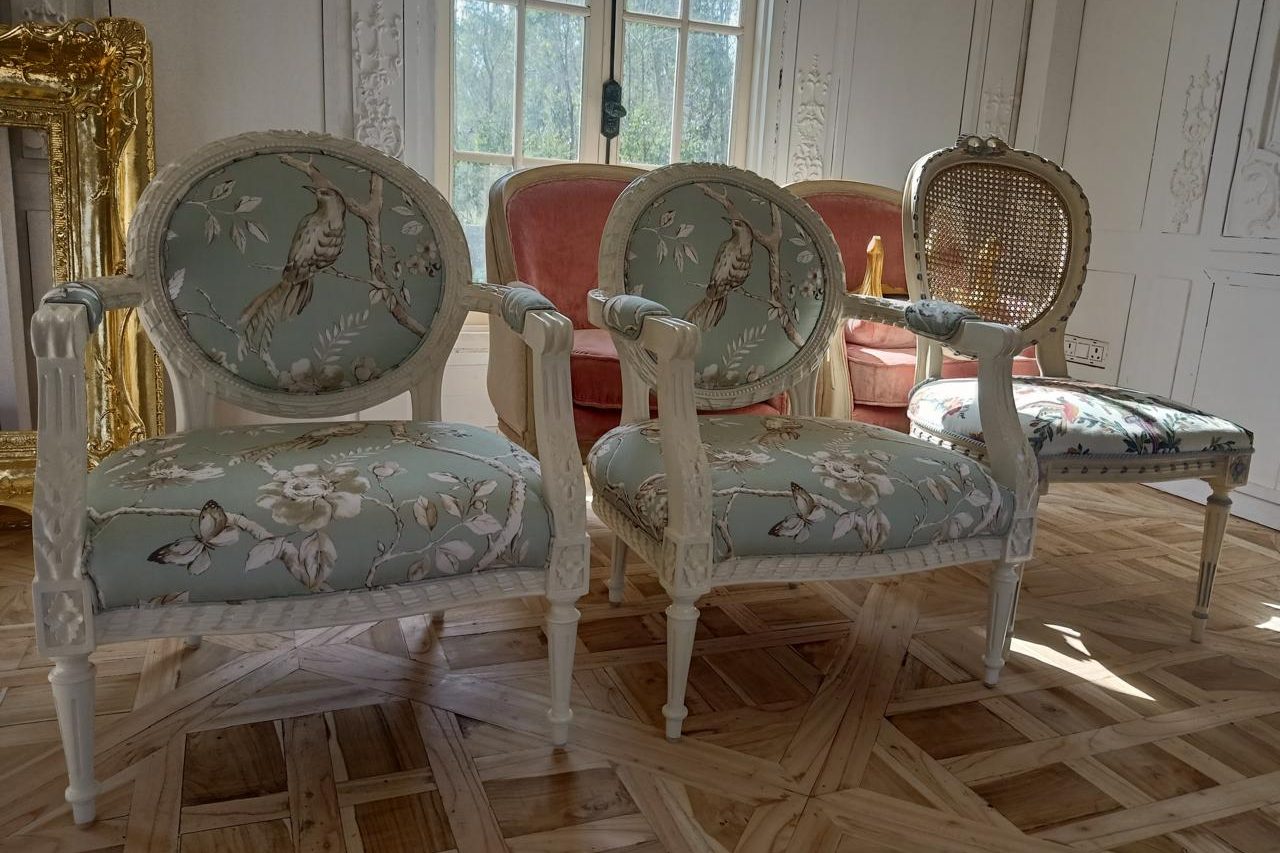
Empire: the imperial style (about 1800–1815)
Under Napoleon, furniture became architectural and heavy: dark mahogany, flat polished surfaces, gilt-bronze mounts and military or Egyptian motifs such as laurel wreaths, eagles, swans and sphinxes. It is less common in Gulf homes than the Louis styles, but Empire console tables and mirrors appear in formal entrances and dining rooms.
How to tell them apart in thirty seconds
- Look at the legs. Straight and heavy with stretchers: Louis XIV. Curved cabriole with no stretchers: Louis XV. Straight, tapered and fluted: Louis XVI. Sabre-shaped or columnar with bronze: Empire.
- Look at the back. Tall rectangle: Louis XIV. Curving cartouche: Louis XV. Oval medallion or square: Louis XVI.
- Look at the carving. Shells, flowers and scrolls: Louis XV. Laurel, ribbons, beading and urns: Louis XVI.
Many pieces made today, in Europe as well as here, blend periods. That is not a fault, but it helps to know which features you are responding to when you brief a maker.
Gilding: the finish that separates good from glossy
Gold on classic furniture can be applied four ways, and the difference in price and appearance is large:
- Water gilding: genuine gold leaf laid over layers of gesso and a clay bole, then burnished with a stone to a deep, liquid shine. The traditional finish on the finest carved frames, and the most skilled.
- Oil gilding: gold leaf laid onto an oil-based size. Softer and matte, cannot be burnished, but more tolerant of humidity and handling.
- Metal leaf: a brass-based imitation leaf. Convincing when toned, but it must be sealed or it tarnishes.
- Gold paint: the cheapest route and the easiest to spot, especially in the recesses of the carving.
Gilded surfaces are usually toned back so they read as warm, slightly aged metal rather than bright yellow. Ask which method a quotation assumes; “gold finish” can mean any of the four.
Timber and carving
French makers traditionally carved beech, which takes fine detail and is usually painted or gilded, and walnut, which is left natural. For pieces made in Dubai we carve in solid teak or sheesham, kiln-dried so the frame stays stable in air-conditioned rooms; our guide to the two woods explains when we choose each. Good carving has depth and undercutting, so shadows fall inside it, and matching pieces are genuinely symmetrical. Run a hand over the back of a carved rail: on a well-made piece it is finished there too. The whole process, from drawing to gilding, is described in how a hand-carved classic sofa is made.
Living with French classic today
- Adjust the proportions. Period canapés were shallow and upright. We usually keep the carving and silhouette while deepening the seat to 55–60 cm and sizing the piece to the room.
- Choose the fabric for the room, not the period. Silk damask and brocade are traditional; a plain velvet or a textured weave makes the same frame feel current. The Héritage and Aurelia collections were chosen with carved frames in mind.
- Suites and single pieces both work. A full salon suite of canapé, bergères and fauteuils is a legitimate choice for a formal majlis. In a modern room, one painted Louis XVI chair or a gilded console does more than a matching set.
- Care for the finish. Dust gilded surfaces with a soft brush and never use water or polish on them. Keep carved pieces away from the direct blast of an air-conditioning vent.
For the wider context of classic and contemporary styles in Dubai homes, see our interior design styles guide, and for the chairs themselves, armchairs and accent chairs explained.
Commissioning a classic suite?
Send a reference photograph, or tell us the period you like. We will draw the pieces to your room, specify the timber, carving and finish on the drawing, and send cuttings with a fixed price.
Book a Consultation