The television is the one object every living room is arranged around, and the one most often handled badly — a black rectangle floating on a bare wall with a tangle of cables below. A bespoke media wall solves that: it turns the screen into part of a considered composition, hides the technology, adds storage, and gives the room a focal point worthy of the sofa in front of it. Here is how to design one properly for a Dubai home.
Start with the wall, not the TV
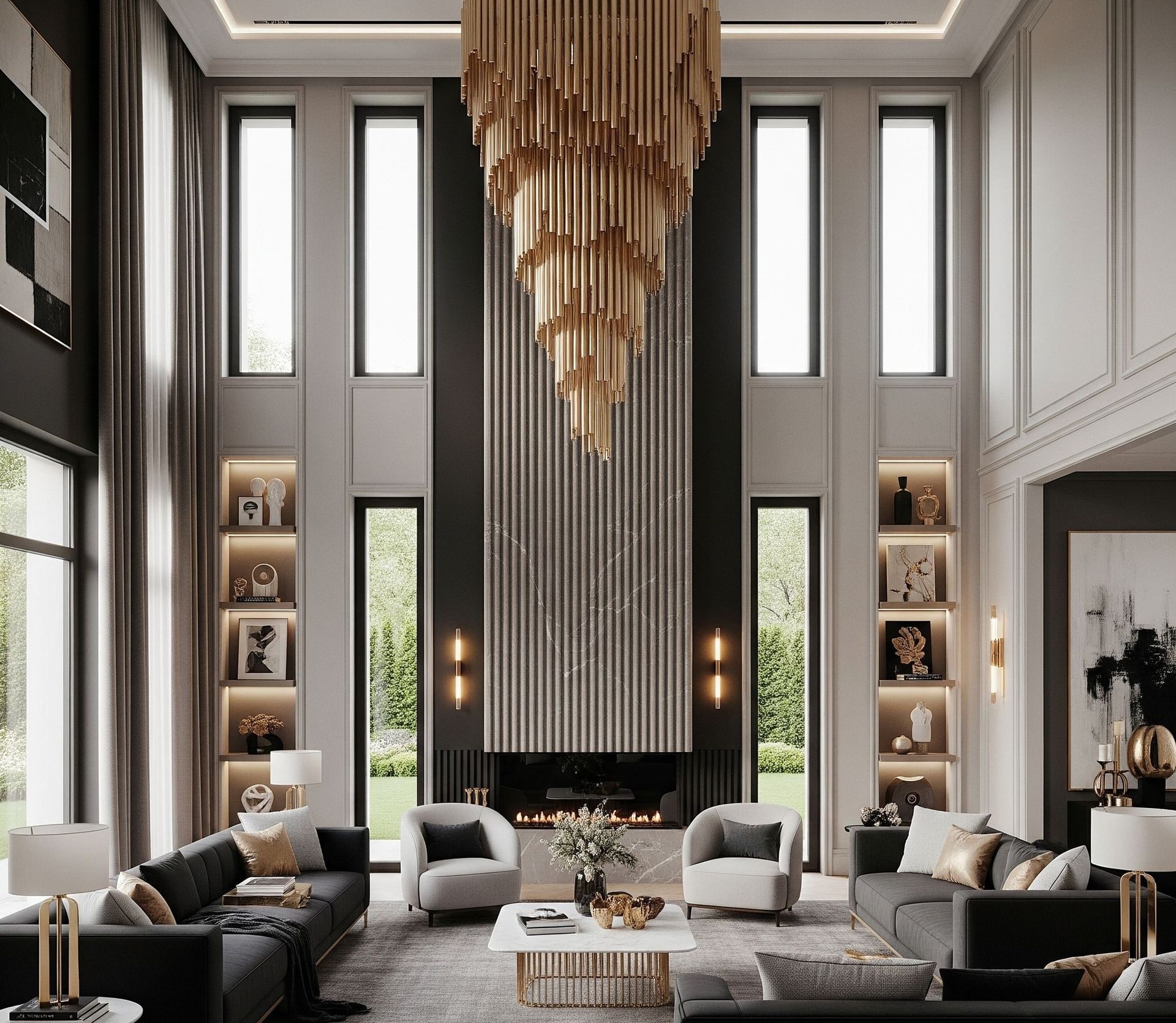
The best media walls read as architecture. Rather than mounting a screen on a finished wall, treat the whole elevation as one design: a floor-to-ceiling composition of panelling, niches, storage and the screen, so the television becomes one element in a balanced whole. This is what separates a joinery-built media wall from a shop-bought TV cabinet.
Get the screen height right
The single most common error is mounting the TV too high. For comfortable viewing from a sofa, the centre of the screen should sit close to seated eye level — roughly 100–120 cm from the floor to the middle of the screen. On a tall feature wall, keep the bottom edge around 60–75 cm up. Avoid the “above the fireplace” position unless the room's geometry genuinely demands it; it looks dramatic and feels uncomfortable within ten minutes.
Proportion and balance
A large screen on a small unit looks top-heavy; a small screen lost on a wide wall looks mean. Size the joinery so the screen occupies a comfortable share of the composition, and balance it with:
- A grounding base — a floating console or low run of cabinets that anchors the screen and hides the media boxes.
- Flanking elements — open niches, closed storage or panelling either side, so the TV is framed rather than isolated.
- A material change — a panel of stone, fluted wood or upholstery directly behind the screen to give it a “home”.
Materials that work
- Fluted / slatted timber: warm, tactile and quietly contemporary; also softens acoustics. One of the most-requested finishes in Dubai right now.
- Book-matched stone or porcelain: the drama option — a full slab behind the screen. Use porcelain or sintered stone for a marble look with practical durability.
- Micro-cement or upholstered panels: matte texture that keeps reflections down and feels soft.
- Veneer with metal reveals: walnut or oak with a slim brass or blackened-steel shadow line for a jewel-like finish.
Keep the finish immediately around the screen matte to avoid glare; save gloss and polished stone for the surrounding areas. For choosing between real stone and alternatives, see our marble & stone selection guide.
Hide the technology
A clean media wall is mostly about what you don't see. Plan for:
- Concealed cabling in conduits from the screen down to a ventilated equipment cabinet or a dedicated niche.
- An IR/RF solution so components can sit behind closed doors and still respond to the remote.
- Ventilation for AV equipment — enclosed electronics need airflow, especially in the Dubai climate.
- Integrated speakers or a soundbar recess, and provision for a future upgrade.
- A power and network point behind the screen, set into the joinery.
Get the first fix right — conduits and power in the wall before finishes go on — and the finished wall stays immaculate.
Lighting the media wall
Lighting turns a media wall from flat to architectural. Back-light niches and floating shelves with warm LED, wash a stone or fluted panel with a concealed strip, and keep it all dimmable so the wall glows softly during a film and lifts for daytime. A little indirect light behind the screen also reduces eye strain in a dark room. Our lighting design guide covers the layering.
Storage and everyday use
Design for how the room is actually used: closed cabinets for consoles, controllers and clutter; a drawer for chargers; open display for a few considered objects rather than a shelf of odds and ends. In family villas, plan generous concealed storage — the tidier the wall, the more expensive it looks.
What it costs
A simple floating bespoke TV console typically starts around AED 4,000–9,000. A full media wall — floor-to-ceiling joinery with panelling, storage, integrated lighting and concealed cabling — commonly runs AED 15,000–45,000+, depending on size, materials and integration. It is one of the highest-impact pieces of joinery in a home, which is why it rewards doing bespoke.
The bottom line
Treat the television wall as architecture, not an afterthought: design the whole elevation, set the screen at a comfortable height, frame it with balanced joinery and the right materials, hide every cable, and light it well. Done properly, the media wall becomes the anchor of the living room — and the television all but disappears into a beautiful composition when it's off.
Planning a living room or media wall? Talk to our team — we design and build bespoke media walls and joinery from our Al Quasis workshop, coordinated with your furniture and lighting.
Designing a media wall?
Book a complimentary consultation. We'll design the elevation, integrate the technology and return a complete proposal with budget.
Book a Consultation