Stone is the most defining material in a luxury Dubai interior. It anchors the entrance hall, dominates the kitchen, lines the bathrooms and gets specified by the square metre across the project. Choose the right stone for the right location and the project ages into something exceptional. Choose wrong — pretty marble in a busy kitchen, a soft stone in a wet area — and the interior starts showing wear within months. This is the guide we walk every villa and penthouse client through.
The stone families
Marble
Metamorphic, mostly calcium carbonate. The luxury vocabulary — Calacatta, Statuario, Carrara, Arabescato, Nero Marquina. Beautiful, characterful, status-loaded. Also soft: porous, easily etched by acids (lemon, wine, vinegar), stains from oil, scratches from cutlery. Sealed marble in residential lasts decades with care. Unsealed or unloved marble shows wear in months.
Travertine
Sedimentary, calcium-based. Warmer, more matte, more characterful pitting and movement than marble. Excellent for floors, feature walls, fireplaces, exterior cladding. Honed travertine is the warm minimalism material of the moment in Dubai villas. Seal annually.
Limestone
Sedimentary, soft to medium. Used for floors, wall cladding, exterior facades. Less commonly used as worktops because it scratches easily. Beautiful in Mediterranean and Arabic-influenced interiors. Annual sealing required.
Onyx
Translucent calcium-based stone, dramatic and rare. Backlit onyx is one of the most stunning statement materials in Dubai interiors — reception desks, bar fronts, headboard walls. Too soft for any horizontal high-use surface (never worktops). Sealed and protected, it ages magnificently.
Quartzite
Metamorphic, predominantly silicon dioxide. The under-appreciated star of luxury kitchens. Looks like marble (Macaubas, Taj Mahal, Sea Pearl) but is significantly harder — nearly granite-level scratch and stain resistance. The right answer for clients who want the marble look in a working kitchen.
Granite
Igneous, hardest mainstream natural stone. Highly durable, less fashionable in luxury interiors than it was 15 years ago. Still excellent for commercial kitchens, BBQ bars and outdoor applications. Specify polished or leathered finish for contemporary looks.
Quartz (engineered)
Quartz crystals bound in resin. Caesarstone, Silestone, Cambria. Almost indestructible, completely consistent (no slab-to-slab variation), no sealing required. The most practical choice for everyday luxury kitchens. Doesn't have the depth and character of natural stone, but the trade-off is worth it for heavy use areas.
Porcelain slab
Large-format porcelain printed with stone visuals. Neolith, Dekton, Laminam. Modern alternative for clients who want the marble look at outdoor or high-traffic indoor locations where natural stone wouldn't survive. Heat-resistant, UV-stable, no sealing.
Where each stone belongs
Kitchen worktops
- Heavy-use family kitchens: Quartzite or top-tier engineered quartz
- Statement luxury kitchens: Calacatta or Statuario marble (accept the maintenance) OR quartzite that mimics it
- Outdoor kitchen / BBQ bar: Porcelain slab, granite or marine-grade engineered stone
- Avoid: soft limestones, onyx, polished travertine on worktops
Bathroom walls and floors
- Master bathroom feature wall: book-matched marble, onyx, or travertine
- Bathroom floors: honed marble, travertine or large-format porcelain
- Shower interiors: sealed marble, large-format porcelain or quartzite
- Powder room hero piece: onyx, dramatic veined marble, or rare quartzite
Entrance and reception
- Floor: large-format marble, travertine or porcelain slab
- Feature walls: book-matched stone, often backlit for onyx
- Reception desks (commercial) or console tops (residential): any luxury stone, choose for visual impact
Living areas
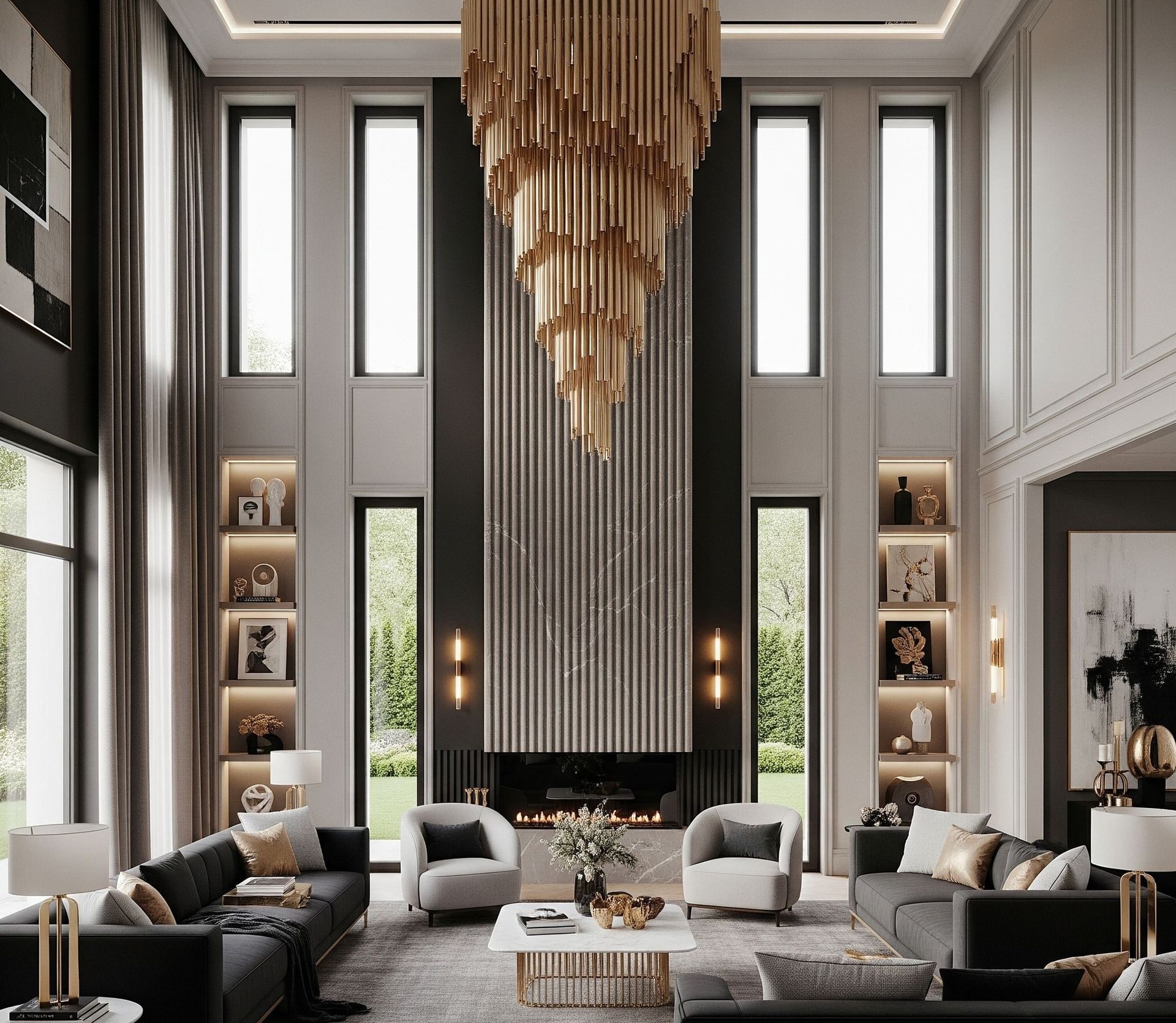
- Fireplace surrounds: book-matched marble, travertine or limestone — a luxury Dubai signature
- Coffee table tops: any stone, choose for character (onyx makes for jaw-dropping coffee tables)
- Bar fronts: book-matched stone, backlit onyx, or fluted limestone
Outdoor and pool deck
- Pool deck: sandblasted travertine or porcelain slab with anti-slip texture
- Outdoor BBQ counter: porcelain slab, granite or marine-grade engineered stone
- Avoid: any soft or polished stone outdoors — UV bleaches, salt etches, anti-slip becomes a safety issue
Finishes
- Polished: mirror-bright, shows veining best, scratches and dulls fastest. Best for low-traffic feature walls.
- Honed: matte, soft, less likely to show etching, easier to maintain. The luxury Dubai default for floors and worktops.
- Leathered: textured, low-sheen, hides fingerprints and water marks. Excellent for darker stones in busy kitchens.
- Sandblasted: rough texture, used on pool decks and stair treads for slip resistance.
- Brushed: between honed and leathered, modern and tactile.
- Bookmatched: two adjacent slabs cut so their veining mirrors. Spectacular on walls, fireplaces and bar fronts.
Sealing & care
Natural stone is porous. Without sealing, oil, wine, water and dust penetrate the surface, causing staining and discoloration. The schedule:
- Marble (honed): seal every 6–12 months indoor, more frequently in wet areas
- Marble (polished): seal every 12–18 months
- Travertine: seal annually
- Quartzite: seal every 1–2 years
- Onyx: seal every 6 months, treat as a sensitive material
- Engineered quartz, porcelain slab: never need sealing
Use only stone-specific cleaners (Method's Daily Granite, MarbleLife). Never use vinegar, lemon, bleach or generic kitchen sprays on natural stone — they etch the surface permanently.
Sourcing & supply in Dubai
Dubai has excellent stone yards in Al Quoz and Ras Al Khor. We typically source through a small set of trusted suppliers who hand-pick slabs, hold material until project sign-off and handle international sourcing for rare specifications. For the most prestigious projects, slab selection at the source (Italy, Turkey, Brazil) is worth the trip — you choose your exact slab, mark it, and watch it shipped.
Cost guidance
- Engineered quartz: AED 350–800 / m² supplied + AED 200–350 / m² installed
- Granite, basic travertine: AED 400–900 / m² supplied
- Quartzite, mid-range marble: AED 800–2,000 / m² supplied
- Calacatta, Statuario, rare marbles: AED 2,500–8,000+ / m² supplied
- Onyx, exotic quartzite, book-matched feature slabs: AED 5,000–25,000+ / m² supplied
Installation, sealing, edging and fabrication typically add another 30–60% on top of supply cost. Book-matching, complex edges (waterfall, mitred) and slab handling add further premiums.
The bottom line
Don't pick stone for one room without thinking about the whole house. The palette should harmonise — consistent colour temperature, complementary veining direction, sensible repetition of materials. Pick the showpiece stone (the master bathroom marble, the entrance feature wall) first, then build the rest of the palette around it.
If you're specifying stone for a villa or penthouse fit-out, our team can walk through slab selection with you in Al Quoz or schedule an at-source trip to Italy or Turkey for the most demanding projects. We've delivered every category above and can advise honestly on which combinations age beautifully in Dubai.
Specifying stone for a Dubai project?
Book a complimentary consultation. We'll review your project plans and walk you through material samples at our Al Qusais showroom or in your villa.
Book a Consultation