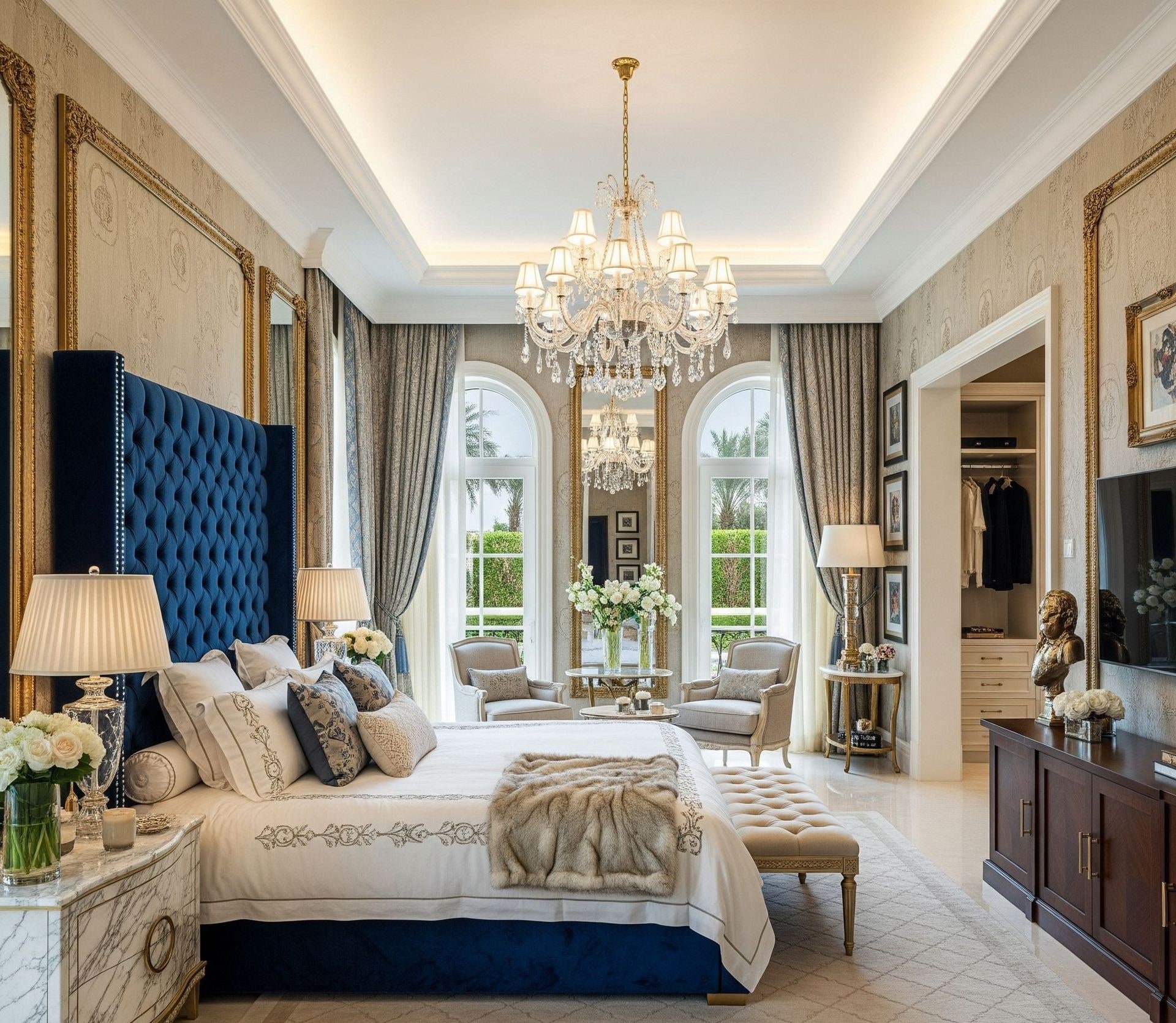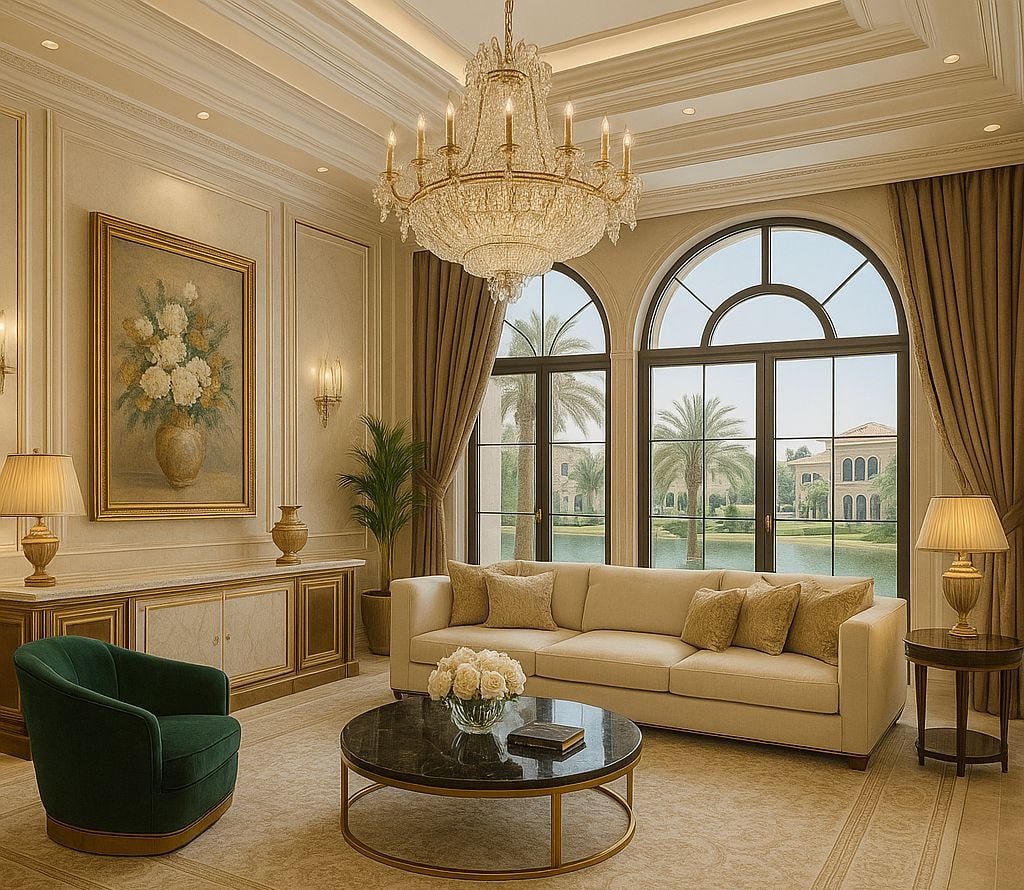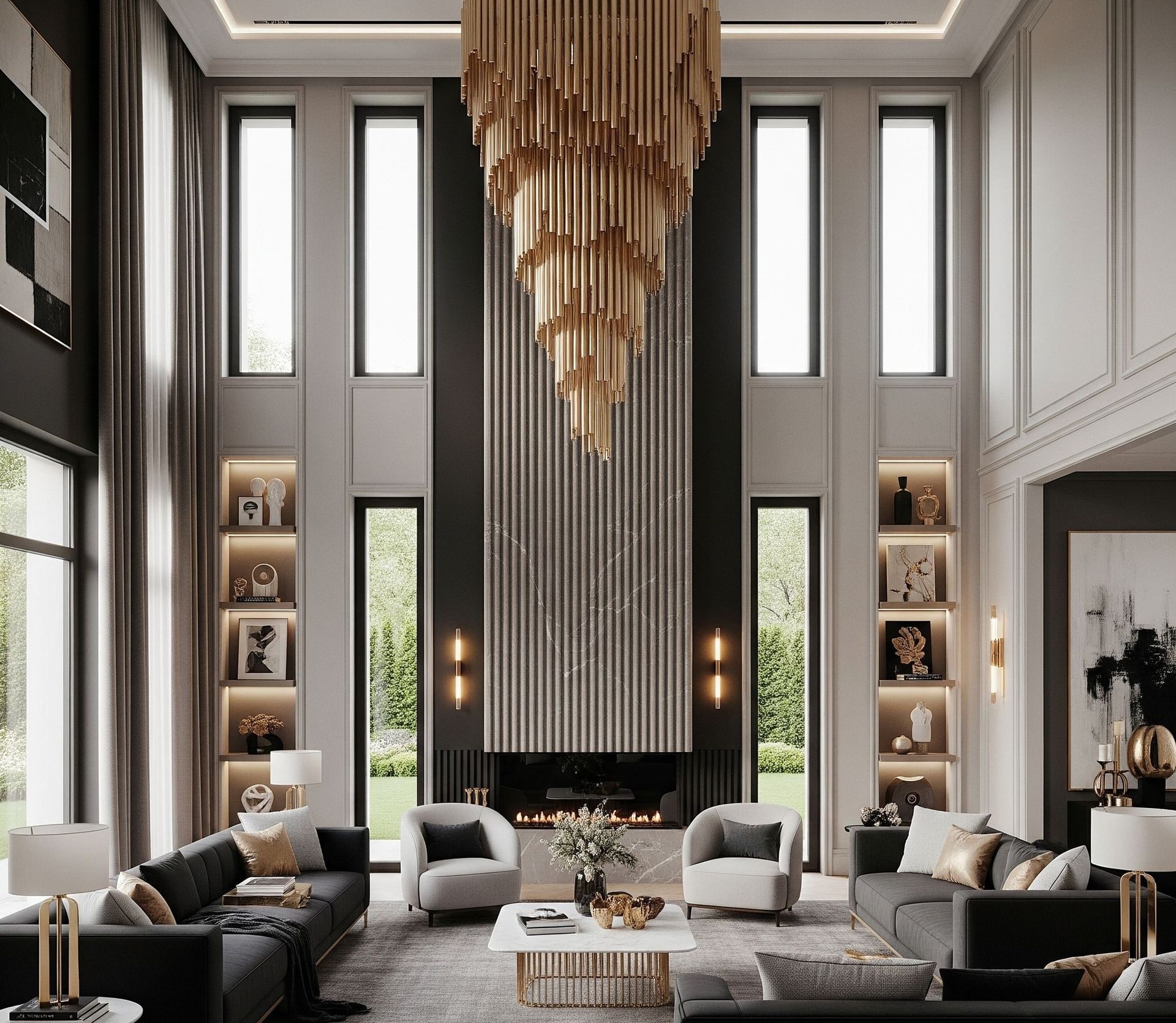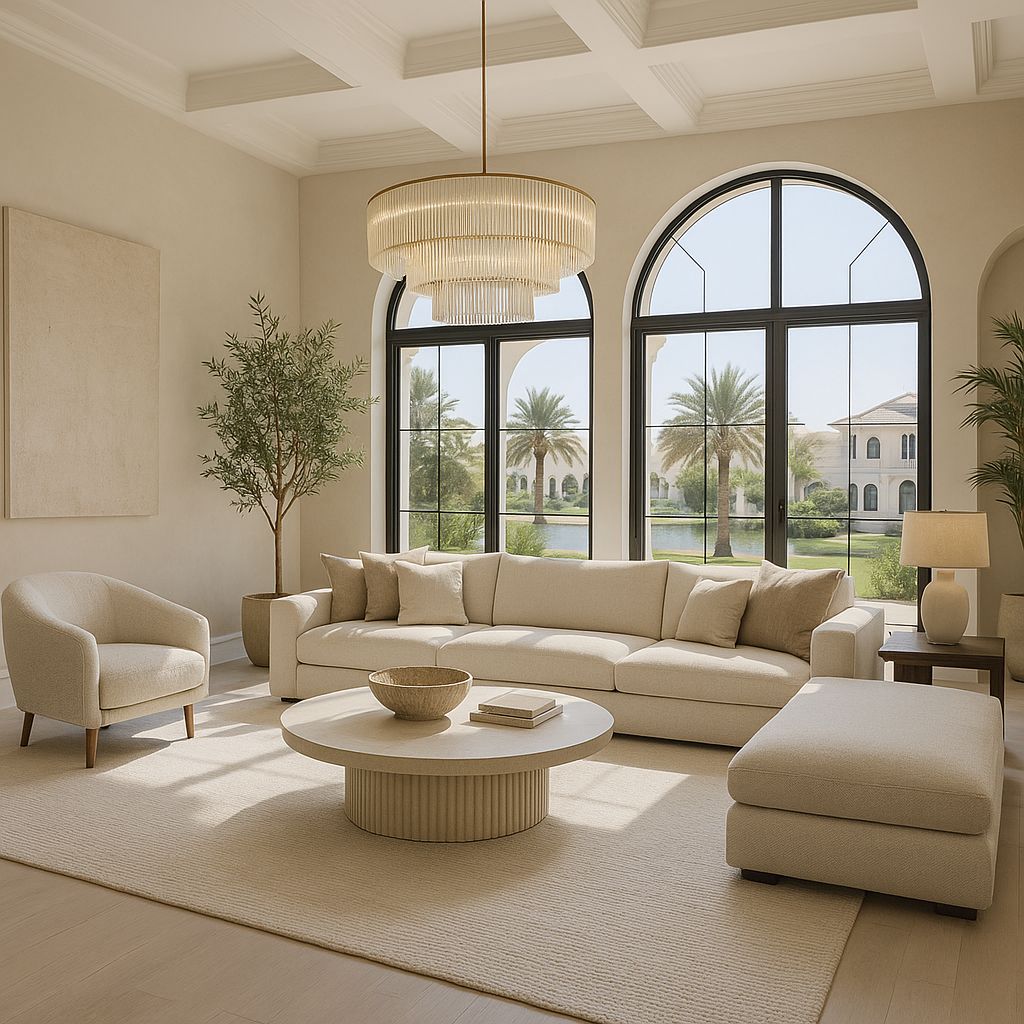
A penthouse is not a villa stacked vertically. The buyer profile overlaps, the budget overlaps, but the design problems are completely different. The view is your most expensive asset. The acoustics fight you. The lift defines what furniture you can deliver. And the building management has opinions about everything from drilling hours to fire-rated joinery.
This guide covers what changes when you design a penthouse instead of a villa — and the priorities specific to Dubai's most sought-after high-rise addresses.
The penthouse design problem, in one sentence
You're designing for a buyer who paid AED 8M–80M largely for the view, in a space that is structurally locked, acoustically lively, MEP-constrained, lift-restricted and surrounded by a building that imposes its own rules. Every design decision has to respect all of that.
Designing around the view
In a villa, the garden is one of many design elements. In a penthouse, the view is the design element. Everything else supports it.
Practical principles we follow
- Sightlines first, plan second. Walk the apartment at the architect-set sofa height. Anywhere a head sits, the view should be uninterrupted.
- Low-profile furniture. Sofa backs at 75–82 cm, dining chairs with low backs, no full-height storage on view-side walls.
- No mullion-mimicking joinery. Don't echo the window grid in the room behind — it visually flattens the view.
- TVs that disappear. Frame TVs, motorised lift mechanisms or projector + retractable screen. A 75″ black slab in front of a 270° Burj Khalifa view is the most expensive mistake we see.
- Reflective surfaces, with care. A polished marble floor near a west-facing wall doubles the sunset. The same floor near the kitchen creates blinding glare at 6 pm.
What the lift will allow
Before a single piece of furniture is specified, we measure the service lift. This single number kills more design ambitions than budget does.
- Service lift dimensions: usually around 110 × 220 cm interior. Anything larger has to come up the stairs or be craned in.
- Lift weight limit: typically 1,000–1,600 kg. A solid marble dining table can exceed this on its own.
- Crane access: available for Burj Khalifa, Address, Bluewaters and most Marina towers, but requires 4–8 weeks of approvals and AED 30K–120K in costs depending on building and load.
- Knock-down design. For oversized pieces — large sofas, dining tables, beds — design with concealed bolt-on construction. Our workshop builds these as components specifically for high-rise delivery.
Rule of thumb: if a piece doesn't fit in the service lift in one section, it has to be designed to assemble on site. Plan this at concept stage, not at delivery.
Acoustics — the silent killer of penthouse design
Dubai high-rises are mostly hard surfaces: glass, concrete, marble, polished plaster. The result is a beautiful empty apartment that sounds like a swimming pool changing room. Conversation echoes, TV bounces, footsteps reverberate. Most clients only notice once they move in.
Acoustic principles for penthouses
- One soft surface per room minimum. A large rug, a fabric sofa, fabric drapery, an upholstered headboard wall.
- Acoustic panels disguised as design. Fabric-wrapped wall panels, perforated timber slat walls, micro-perforated metal ceilings — all read as design features and absorb up to 80% of mid-range sound.
- Heavy curtains on hard windows. Floor-to-ceiling drapery in linen or velvet absorbs significant glass reflection. Sheers alone don't.
- Cluster soft furnishings. Lots of small cushions on a leather sofa do more than one large rug across the room.
- Address ceilings early. The hardest place to retrofit acoustics is overhead. Plan ceiling treatment at design stage.
MEP coordination — the unseen complexity
You cannot drop a slab beam, move a riser or punch a window in a Dubai high-rise. Mechanical, electrical and plumbing routes are fixed. Every interior change has to work within or around them.
What this means in practice
- AC grilles dictate ceiling layout. The location of supply and return grilles is non-negotiable. Plan your ceiling design around them, not the other way around.
- Electrical risers fix joinery routes. A wardrobe wall with a hidden electrical riser running through it can't be moved without a project-killing approval process.
- Wet areas can shift only within their slab zones. Moving a kitchen 1m can require dropping the entire slab below for new drainage. Often refused.
- Smart home wiring retrofitted into existing walls means cable trunking. Plan it as concealed casing or accept visible boxes.
The cleanest penthouse projects are the ones that respect the engineering grid and design within it — not the ones that fight it.
Building approvals: the hidden timeline
Each prestige tower has its own fit-out approval process, and these are not interchangeable. We map them at the start of every project.
- Burj Khalifa & Address Downtown: Emaar Hospitality fit-out approval, structural sign-off, fire-rated joinery only, restricted working hours (typically 9 am–5 pm Mon–Sat), ban on percussive tools after 11 am. 4–6 weeks of approvals.
- DIFC towers (Index, Burj Daman, Sky Gardens): DIFC Authority fit-out approval, mandatory contractor pre-qualification, civil defence sign-off on all FF&E. 5–8 weeks of approvals.
- Marina towers (Princess, Marina 23, Cayan): generally faster — 2–3 weeks of OA approvals, no DIFC layer.
- Bluewaters: Meraas approvals plus Bluewaters Residences OA, restricted lift access for non-residents, mandatory crane permits for any loads above lift capacity.
Critical: never sign a fit-out contract before the OA approval is in writing. We've seen six-figure cost overruns from contractors starting work pre-approval and being told to stop.
Light — the second most important asset after the view
Dubai gives you 9–10 hours of intense sunlight a day. By 6 pm, that becomes the most cinematic light in the world. By 8 pm, you're in a glass box that needs its own light to feel inhabited.
Lighting layers for a penthouse
- Ambient: recessed downlights at 2700K, dimmable. Avoid the cool 4000K commercial spec that shows up by default.
- Task: reading lamps beside seats, kitchen island pendants at proper height (75–85 cm above counter), under-cabinet LED in the kitchen.
- Accent: wall washing on art and feature walls. Track lighting where the art collection rotates.
- Decorative: sculptural pendants and chandeliers as design statements, not as primary light sources.
- Smart control: a single dimmer scene per zone is the difference between a hotel room and a home. Lutron, Crestron or KNX, integrated with motorised drapery.
For a deeper room-by-room treatment of lighting, see our Lighting Design for Luxury Dubai Homes guide.
Materials that work at altitude
The penthouse material palette diverges from the villa palette in a few specific ways:
- Skip outdoor-grade indoor. No client at the 60th floor needs a teak coffee table. The maritime durability is wasted.
- Reduce stone weight. Marble veneer on aluminium honeycomb panels gives the marble look at one-third the weight, critical for the lift and for slab loading on book-matched walls.
- Polished plaster instead of wallpaper. Wallpaper struggles in AC humidity swings and can lift at the seams. Tadelakt or Venetian polished plaster ages beautifully.
- Heavier curtains, lighter rugs. Drapery does double duty for acoustics and sun control. Rugs can be lighter weave than villa rugs because foot traffic is lower.
- Bronze and brushed brass indoor only — no need for marine grade unless the penthouse has a rooftop terrace exposed to sea air.
The terrace question
Penthouse terraces are gold — and almost always under-designed. A few principles:
- Wind is the enemy. At the 50th floor, anything not weighted down will move or take off. Specify outdoor furniture rated for high-wind use, or build planters as wind breaks.
- UV is intense. Standard outdoor fabrics fade in 18 months. Use Sunbrella or equivalent UV-stabilised performance textiles.
- Heat radiates from glass and stone. Pergolas, retractable shades or fabric structures are not optional for summer use. Misting systems extend usable months.
- Water and weight. Plunge pools, jacuzzis and large planters add significant load. Always check structural permission. Many penthouses simply cannot take them.
- Lighting is a feature. Terrace lighting visible from the city becomes part of the building's nighttime identity. Worth designing carefully.
Storage in a penthouse
Penthouses tend to over-provide for entertainment and under-provide for storage. The result: clients move in with two empty walk-in wardrobes and no place to store luggage, sports equipment, off-season decor, glassware, hospitality stock, or staff supplies.
- Plan a separate storage room or large utility — not just wardrobes.
- Add concealed storage in unused spaces: under stairs, under window seats, behind feature walls.
- Specify wine storage early — integrating it later usually means breaking up a wall.
- Hospitality stock matters in entertaining homes — allow space for additional crockery, glassware, table linen, and bar inventory.
The brief by neighbourhood
Downtown Dubai (Burj Khalifa, Address Residences, Opera District)
The brief usually leans contemporary, polished, hotel-influenced. Buyers are often international, used to the Address standard, and expect five-star material specification. View priority: Burj Khalifa, fountain, Old Town. Acoustic challenge: high. Approval complexity: highest in Dubai.
Dubai Marina (Princess, Cayan, Marina 23, Damac Heights)
The brief is more relaxed — coastal modern with warmer materials. Buyers often live full-time, entertain frequently. View priority: marina, sea, JBR walk. Acoustic challenge: moderate (some buildings are noisier than others — check Marina Walk facing units). Approval complexity: low to moderate.
DIFC (Index, Burj Daman, Sky Gardens, Liberty House)
The brief skews professional — minimalist, restrained, often a pied-à-terre rather than a primary home. Buyers value privacy and acoustic isolation above all. View priority: city skyline. Acoustic challenge: moderate. Approval complexity: highest after Downtown.
Bluewaters & Palm Tower
The brief is destination luxury — statement design, sea views, often weekend or holiday use. Buyers want photogenic interiors with a hospitality polish. View priority: open sea, Ain Dubai (Bluewaters), Atlantis (Palm Tower). Acoustic challenge: low. Approval complexity: moderate.
What to avoid
- Furniture larger than the lift can take, without a knock-down strategy.
- Solid marble installations that exceed the slab loading.
- Hard-surface-only schemes that turn the apartment into an echo chamber.
- Cool 4000K downlights specified by the developer — they make luxury interiors look like an office.
- Statement TVs in front of statement views.
- Treating the terrace as an afterthought and discovering it's unusable for half the year.
- Signing the contractor before the OA fit-out approval is in writing.
The bottom line
A great penthouse interior is not a great villa interior on the 60th floor. It's an interior built around a view, designed within the engineering grid of a tall building, acoustically tuned for hard surfaces, and delivered through a service lift the size of a small bedroom. Get those four right and the rest follows. Get any of them wrong and even an AED 80M apartment ends up feeling like an expensive hotel suite.
If you're commissioning a penthouse fit-out in Downtown, Marina, DIFC, Bluewaters or anywhere else in Dubai, speak to our team. We'll walk the apartment with you, map the OA approval timeline, and put a realistic budget against your brief before you commit.
Designing a Dubai penthouse?
From Downtown to DIFC, Marina to Bluewaters — we've delivered fit-outs across the city's most demanding addresses. Book a private walkthrough with our design team.
Book a Consultation