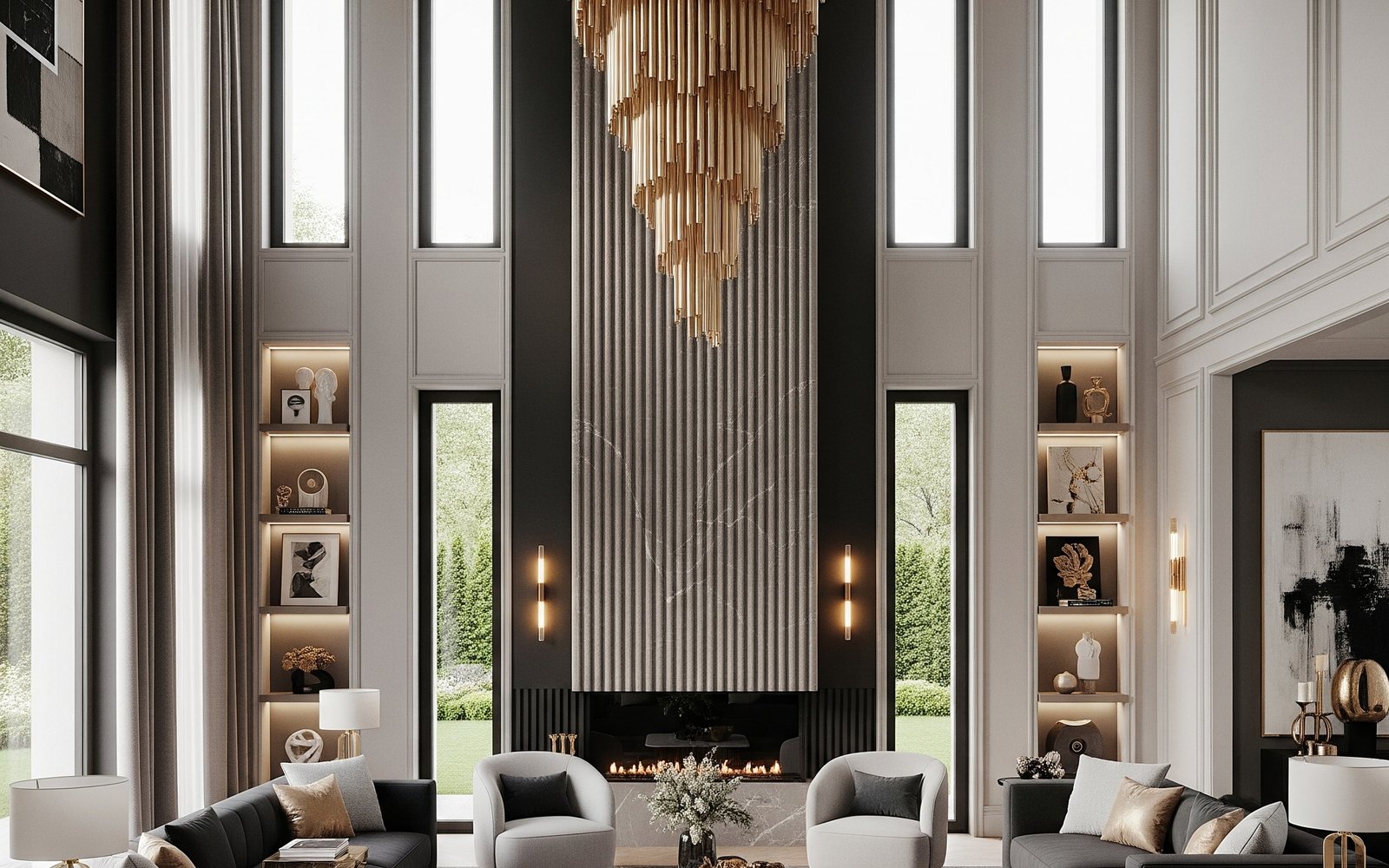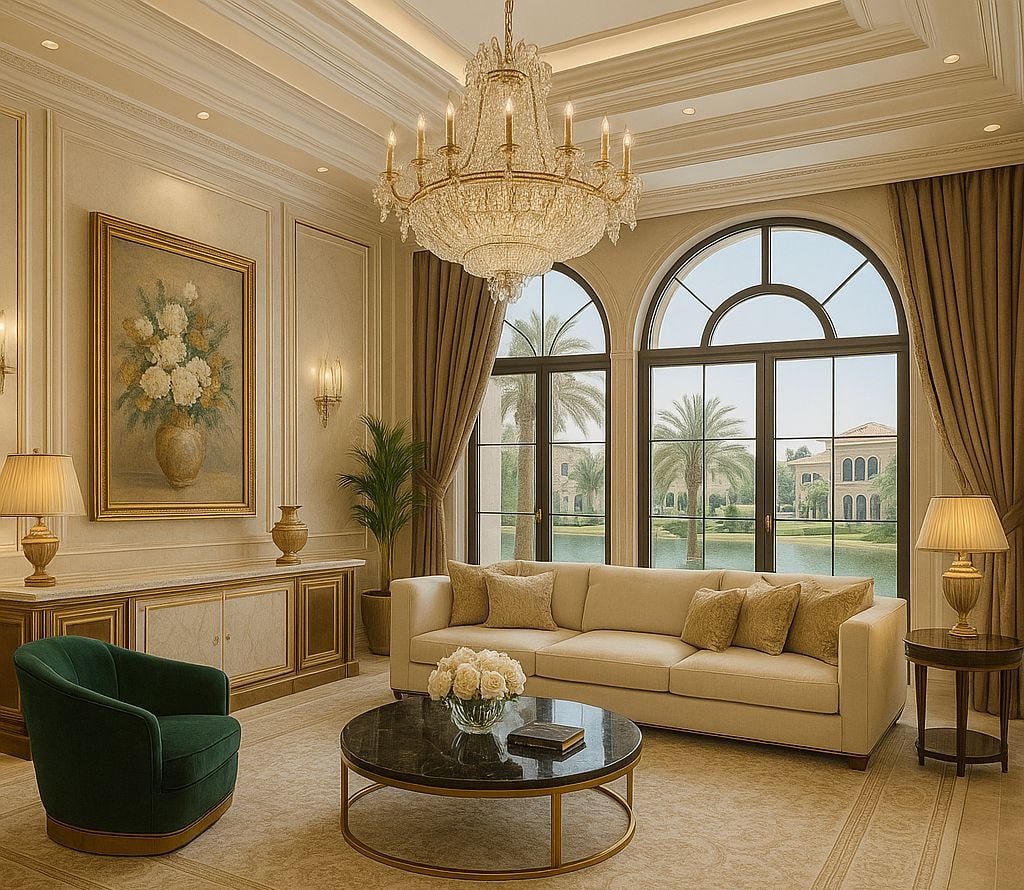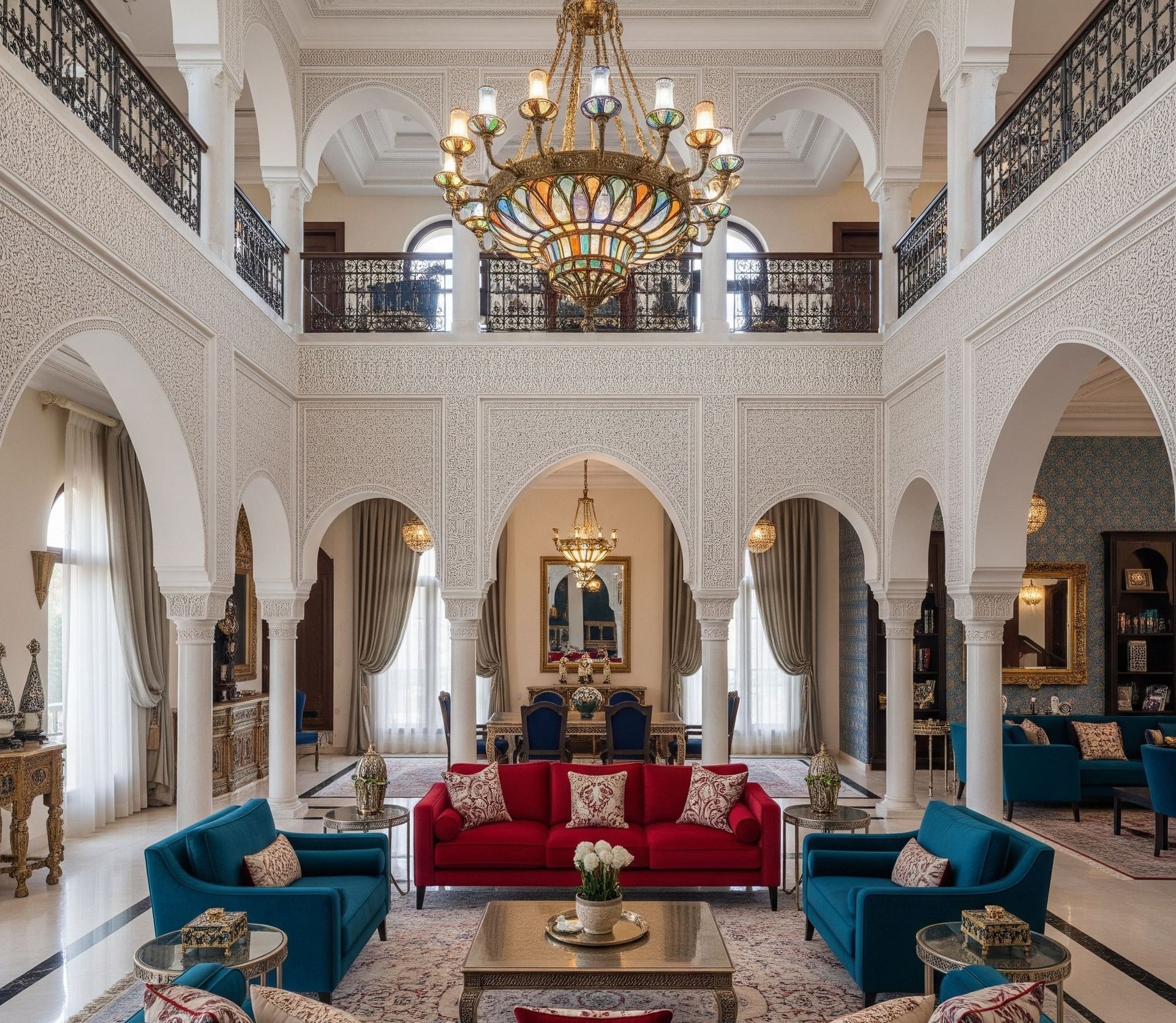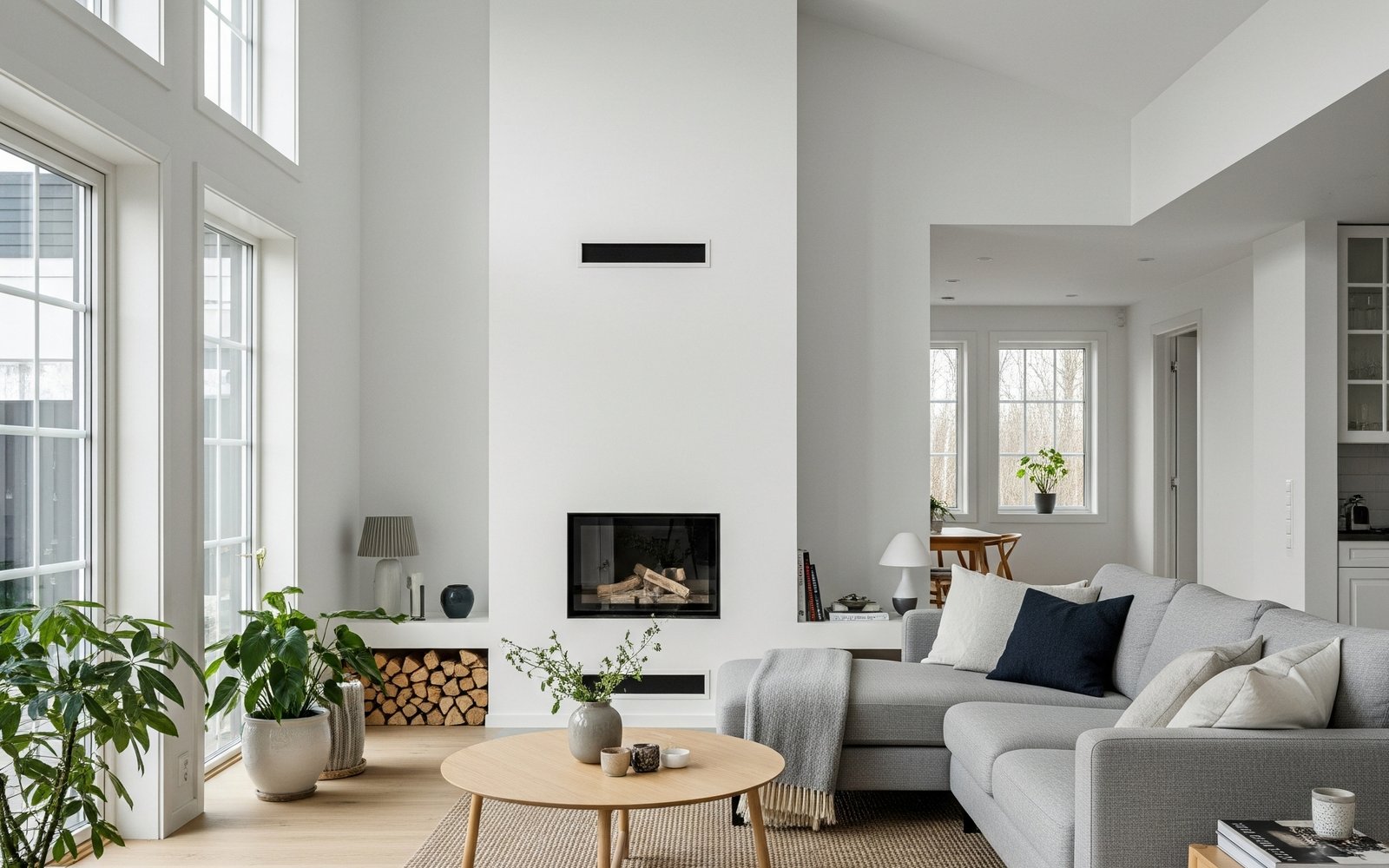
A poorly integrated smart home is more obvious than a non-smart one. Visible wall-warts, mismatched keypads, exposed sensor pucks, AV racks bleeding orange and green LEDs from a hallway closet — the technology dominates the architecture rather than serving it. A well-integrated smart home does the opposite: you notice the room before you notice the controls. This is a designer's view of how the integration should actually be planned.
The five disciplines
- Lighting control — dimming, scene programming, automatic schedules
- Motorised shading — curtains, blinds, pergola louvres
- Climate — AC zoning, underfloor heating, ventilation
- AV — whole-home audio, video distribution, dedicated cinema
- Security & access — CCTV, intercom, smart locks, alarm integration
The integration is the orchestration layer that lets all five operate from a single interface (wall keypad, mobile app, voice). The platform choice (Lutron, Crestron, KNX, Savant) determines what's possible and how it looks.
Platform comparison
Lutron HomeWorks (lighting benchmark)
- Best-in-class dimming curves — smooth, flicker-free across LED, halogen, and warm-dim
- Cleanest keypad aesthetics (Palladiom, Alisse families) — the keypads themselves look designed
- Excellent reliability — mature platform with decade-plus track record
- Strong native shading integration (Sivoia QS)
- Weaker AV / climate integration on its own — usually paired with another platform
Crestron (whole-home orchestrator)
- Most flexible whole-home platform — AV, climate, lighting, security all under one umbrella
- Strongest cinema and multi-room audio
- Requires expert programming; UI quality depends entirely on the integrator
- Higher cost per zone than Lutron-only lighting
- Default choice for villas where AV (theatre, gym, outdoor zones, multi-room speakers) is a major part of the brief
KNX (open standard, broader installer base)
- European open protocol; many installer options in Dubai
- 20-40% lower cost than Lutron/Crestron for equivalent functionality
- Less polished keypad aesthetics; depends on which manufacturer (Jung, Gira, Hager)
- Strong for lighting and shading; weaker for AV
Savant (Apple-style ecosystem)
- Strong UI design; consumer-friendly app
- Smaller Dubai installer base than Lutron or Crestron
- Good middle option between Crestron complexity and consumer-grade systems
The integration aesthetic — what designers actually care about
Keypad consistency
One platform, one keypad family, one finish, across the entire villa. The most common visible failure: light switches from the original developer, plus Lutron added in the master bedroom, plus a different brand for the cinema. The result looks accumulated, not designed. Specify the keypad family at concept stage and rip out the developer's basic switches.
Keypad placement and orientation
Keypads should appear in expected positions (next to doorways, on the bedside, at the staircase entry) at consistent heights (typically 110-120 cm from floor) and in landscape rather than portrait orientation in formal rooms. Vertical 4-button stacks look industrial; horizontal 4-button or square layouts look architectural.
Finish coordination
Keypad finish should match the dominant hardware finish in the room — brushed brass on a brushed-brass-fitted room, matte black on a matte-black-fitted room. Mismatched white keypads in a brushed-brass kitchen are visible from across the space.
Hidden infrastructure
- AV equipment rack in a dedicated, ventilated cupboard — never in a hallway with the door cracked open
- Wi-Fi access points ceiling-flush mounted, painted to match the ceiling colour
- In-ceiling speakers selected for minimal grille visibility (Sonance Invisible Series, Origin Acoustics in-ceiling)
- Wall-mounted TVs flush with the joinery wall, not protruding from a generic wall bracket
The lighting integration discipline
The single biggest aesthetic upgrade smart-home delivers in a villa is lighting control. Without it, you have wall-bank switches and on/off control. With it:
- Three to five lighting scenes per major room (bright/clean, evening/atmospheric, dinner/intimate, sleep/path)
- One-button scene activation; no need to operate five separate switches
- Schedules — cove lighting auto-on at sunset, path lights auto-on at 10 pm, off at sunrise
- Geo-fenced events — arrival scene triggers when the principal's car enters the property
- Vacation simulation — intelligent random lighting suggesting occupancy during travel
For deeper lighting strategy see our lighting design guide.
The motorised shading discipline
Motorised curtains and blinds matter more in Dubai than in most markets because of UV management:
- Automatic UV-reduction schedules close west-facing solar blinds during peak afternoon sun
- Coordinated curtain runs — opening 14 windows manually takes 10 minutes; one button takes 30 seconds
- Privacy scenes — evening shading on street-facing windows on a single tap
- Cinema integration — blackout fall-on-cue when video starts
Specify silent motorised tracks (Lutron Sivoia QS, Forest Group, Silent Gliss) — cheap motors hum audibly during operation, which becomes the most-noticed aesthetic failure in the villa.
The climate integration discipline
AC zoning integration via BMS (building management system) gives:
- Independent room temperature control without separate ugly wall thermostats per room
- Schedule-based pre-cooling (master bedroom pre-cooled 30 minutes before bedtime)
- Smart-home interface for AC control alongside lighting, instead of separate apps
- Energy reporting and optimisation
Cinema and AV integration
A dedicated cinema room is a separate design exercise (acoustic treatment, projector vs OLED, seating tiers, light isolation). Beyond the cinema:
- Whole-home audio: in-ceiling speakers in formal rooms, outdoor speakers on terraces, all controlled from any room's keypad
- Video distribution: central matrix routes any source (Apple TV, satellite, Blu-ray) to any screen
- Hidden screens: motorised TVs that rise from joinery or descend from the ceiling
- Outdoor TV: sun-readable Samsung Terrace or Seura outdoor displays for pool deck or roof terrace
Security integration considerations
- Smart locks at front and side entries (August, Yale, smart-keypad locks integrated with mobile)
- CCTV with mobile app (Hikvision, Axis, Ubiquiti UniFi Protect) — specified at planning stage so cable runs and PoE switches are in the AV closet
- Intercom (Comelit, Doorbird) with mobile and in-villa keypad access
- Alarm integration with the lighting (intrusion triggers full-villa illumination)
Planning timeline — the critical sequence
- Concept stage: AV/smart-home consultant engaged in parallel with interior designer. Discuss platform choice, scope, budget.
- Schematic design: equipment locations (AV closet, panel positions, keypad locations) defined on floor plans
- First-fix electrical: all cabling pulled (Cat 6A, fibre, speaker cable, conduit reserves). This is the point of no return — missed cables can't be added easily later.
- Second-fix: keypads installed, equipment racked
- Commissioning: scenes programmed, integration tested, training delivered to family and staff
Adding smart home retrospectively after walls are closed costs 3-5x the planned-in cost and rarely achieves the same aesthetic integration.
Budget benchmarks
- Lighting + shading only (mid-size villa): AED 250,000 - 600,000
- Full smart home (lighting + shading + AV + climate), Lutron + Crestron: AED 600,000 - 1.5 million for 600-1000 m² villa
- Ultra-prime villa (large footprint + cinema + multi-zone AV + advanced security): AED 1.5 - 3.5 million+
Cinema room separately budgets at AED 350,000 - 1.5 million depending on screen size, acoustic treatment and seating.
The bottom line
Smart home should be invisible. The right brand at the right scope, planned in early, with keypad placement and finish coordinated to the interior design, produces a villa where the technology serves the architecture instead of competing with it. The wrong brand at the wrong scope, added late, produces a villa where the technology is the most-visible thing in every room.
If you are planning a new villa or rethinking smart home integration in an existing one, our team coordinates with the AV consultant and integrator to ensure aesthetic alignment with the interior design. Book a complimentary consultation at our Al Qusais showroom or on site.
Planning smart home for a new villa?
Book a complimentary consultation. We'll coordinate with your AV consultant on platform, keypad placement and finish, and ensure the integration aligns with the interior design.
Book a Consultation