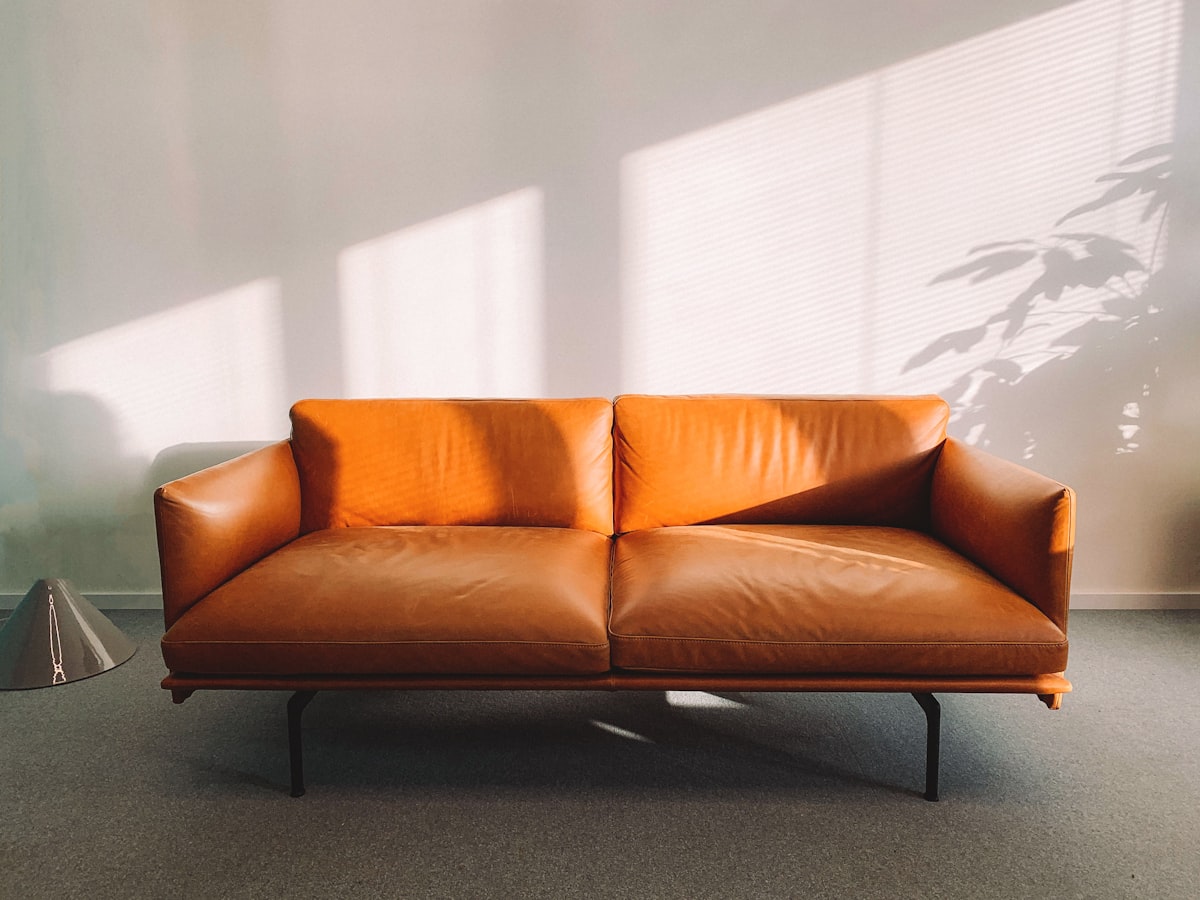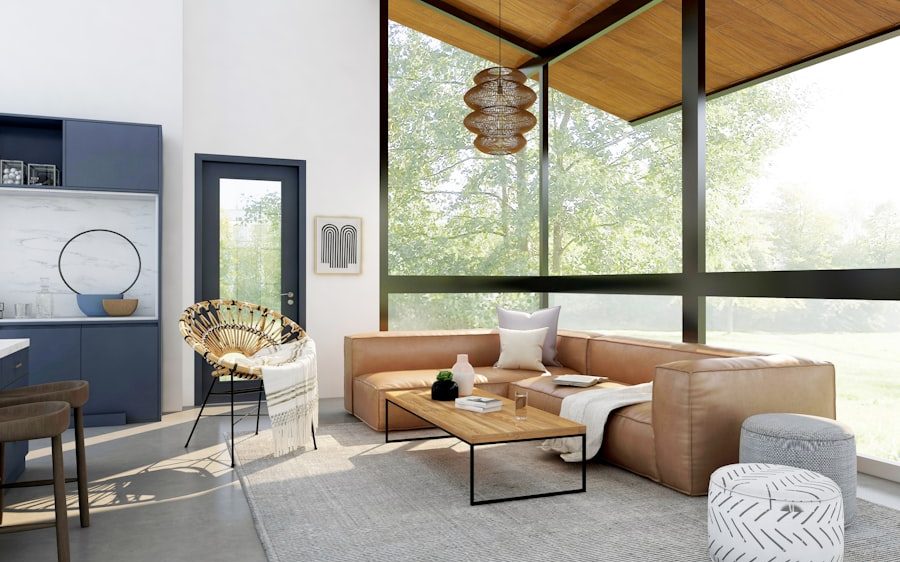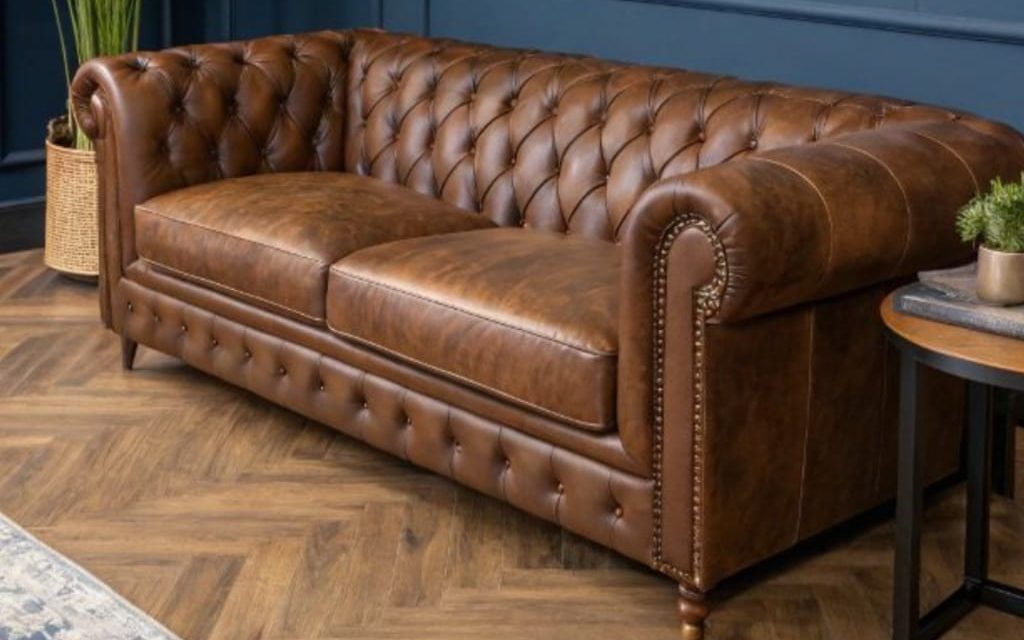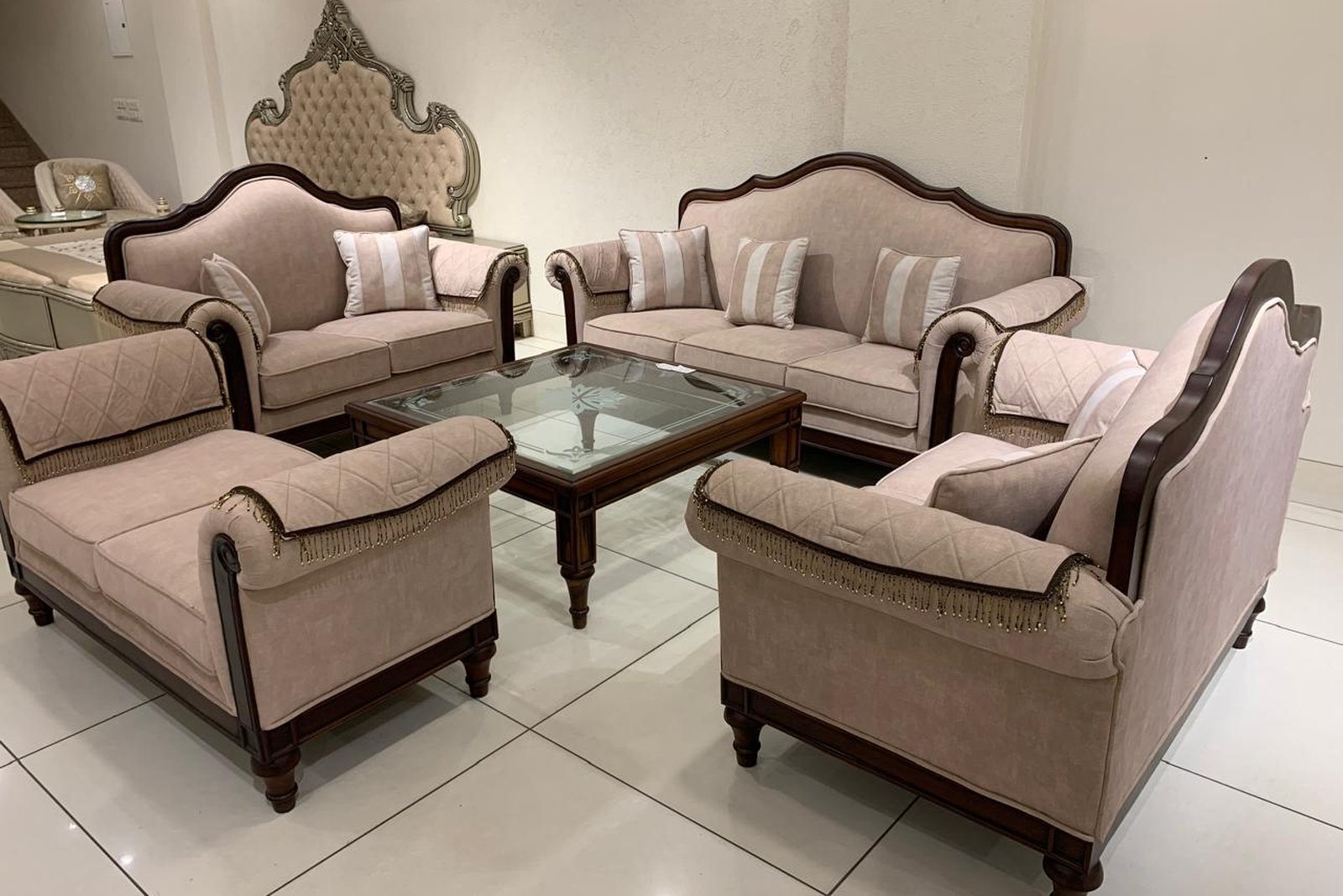
Leather or fabric is usually the first decision people make about a new sofa, and it is often made on looks alone. In a Dubai home, though, the right answer depends on things you cannot see in a showroom: whether the air-conditioning runs all day, where the afternoon sun falls, whether there are cats, dogs or small children, and how much time you want to spend cleaning. This guide works through those questions one by one, explains the leather types you will be offered, and shows where a performance fabric is the better choice.
The short answer
Choose leather for an air-conditioned room out of direct sun, where you want an easy-to-wipe surface that ages with character, and choose the leather type to match the household: pigmented (corrected-grain) for children, pets and sunny rooms, semi-aniline for a softer feel with some protection, and aniline only for adult rooms where you will enjoy the marks. Choose a performance fabric with removable covers for rooms that get warm, sofas that get a lot of sun, homes with cats, and anyone who wants a soft, warm seat and covers that can be cleaned or replaced.
For an overview of both materials and when to reupholster, see our earlier guide to sofa upholstery in Dubai. This one is about matching the material to your household.
How each behaves in a Dubai home
| Your home | Leather | Fabric |
|---|---|---|
| Air-conditioned all day | Feels cool and smooth; pleasant in shorts at 22–24 °C | Feels neutral; a matt weave never feels cold or slippery |
| AC off, or a warm room | Can feel sticky on bare skin | Breathes; more comfortable when warm |
| Strong sun on the sofa | Aniline fades quickly; pigmented holds up better | Solution-dyed or high-lightfastness fabrics hold colour best |
| Cats | Claws mark the surface, most on aniline | Tight, flat weaves resist; loops and slubs snag |
| Dogs | Wipes clean of hair and drool; scratches show | Hair clings to some weaves; removable covers wash |
| Young children | Pigmented leather wipes off juice and crayon | Performance fabric with removable covers |
| Cleaning routine | Wipe weekly; condition aniline and semi-aniline every 6–12 months | Vacuum weekly; blot spills; covers cleaned as needed |
| Ageing | Develops a patina; creases at the seat | Can pill or fade; covers can be replaced |
Heat and air-conditioning
Most Dubai homes run their air-conditioning at around 22–24 °C for much of the year. At those temperatures leather feels cool and smooth, which many people love in summer. The problem comes when the room is warm: in a holiday home with the AC switched off between guests, on a sofa in a sunny window, or in a majlis used only occasionally. Leather does not breathe the way a woven fabric does, so bare legs stick to it and it feels hot to the touch for a while.
Dry, air-conditioned air also matters. A leather sofa placed directly in the stream of an AC outlet can dry out over time, especially aniline and semi-aniline leathers, which rely on their natural oils. Keep any sofa at least a metre away from the direct blast of a vent, and condition the softer leathers every 6–12 months. Fabric is less sensitive to both heat and dry air, which is why it is the safer choice for rooms that are not cooled all day.
Sun
Strong UAE sunlight through large windows is the single fastest way to age a sofa. All leathers change colour in sun, but at very different rates. Aniline leather can lighten, darken or turn patchy within months beside a west-facing window; pigmented leather has a coloured surface layer that protects the hide and holds its colour far longer.
For fabric, look at the lightfastness rating on the spec sheet, measured on the Blue Wool scale from 1 to 8. For a sofa that catches direct sun, ask for 5 or above. Solution-dyed acrylic and solution-dyed polyester, where the colour is added to the fibre before it is spun, hold colour best of all. Whatever you choose, lined curtains, sheers or UV-filtering film on west-facing glass will roughly double the life of the colour.
Pets
Leather is easy to keep free of hair, dander and drool: a wipe with a damp cloth and it is clean. Its weakness is claws. Every jump leaves a fine line, and on soft aniline leather those lines are obvious. Some owners are happy for them to become part of the patina; others are not. If you choose leather with pets, a pigmented leather in a mid-tone hides marks best.
With fabric, the weave is everything. Tight, flat weaves resist claws; loops, bouclé and slubby textures snag. Hair clings to some fabrics and lifts straight off others. Our guide to pet-friendly sofas covers fabric, leather and design details for homes with cats and dogs.
Children
Young children are hard on any sofa: juice, yoghurt, felt-tip pens and sticky hands. A pigmented leather is the easiest surface of all to clean, because almost everything sits on the finish and wipes away. A performance fabric with a stain-resistant finish and zipped, removable covers is just as practical, softer to nap on and warmer in winter. What to avoid with small children: aniline leather, nubuck, linen, and pale cotton velvets.
The leather types, explained
“Genuine leather” tells you very little. What matters is how the hide was finished. These are the types you will be offered:
| Type | What it is | Look and feel | Stains and sun | Best for |
|---|---|---|---|---|
| Aniline | Full-grain hide coloured with dye only, no pigmented coat | Softest and most natural; shows marks, pores and colour variation | Absorbs spills and oil; fades and darkens with light | Adult-only rooms out of direct sun; buyers who love patina |
| Semi-aniline | Dyed hide with a light pigmented top coat | Still soft and natural, with more even colour | Some protection from spills; still fades in strong sun | Living rooms where you want softness and some resistance |
| Corrected grain (pigmented) | Surface lightly buffed, embossed with a grain and given a pigmented finish | Firmer and more uniform | The most resistant to spills, scuffs and fading | Family rooms, children, pets, sunny rooms |
| Bonded leather | Leather fibres mixed with binders on a backing, with a polyurethane surface | Looks like leather when new | Surface tends to crack and peel | We do not recommend it for sofas |
A few more terms worth knowing. Full-grain means the outer surface of the hide has not been sanded; aniline and most semi-aniline leathers are full-grain. Top-grain is used loosely; it can mean a lightly corrected surface. Nubuck is full-grain leather lightly brushed to a velvety nap, very soft and very easily marked. For a sofa, upholstery leather is usually around 0.9–1.3 mm thick; much thinner hides wrinkle and wear early on seat cushions.
Faux leather has improved, and good polyurethane-coated fabrics look convincing and wipe clean. Lower-grade versions, however, can crack and peel after a few years, particularly in heat and sun, so ask what the coating is and what the backing fabric is. Our guide to leather for restaurant and hotel seating looks at grades and faux leather in a commercial setting, where the same rules apply under heavier use.
Performance fabrics: what to look for
“Performance fabric” is a marketing term rather than a standard, so read the specification:
- Abrasion: 30,000 Martindale rubs or more for a family sofa; 50,000 or more with dogs.
- Fibre: polyester, olefin or solution-dyed acrylic clean with water and resist fading; cotton and linen absorb.
- Finish: an easy-clean or stain-resistant finish, so spills bead before they soak in.
- Cleaning code: W or W/S, meaning water-based cleaning is allowed.
- Lightfastness: 5 or above on the Blue Wool scale for a sunny room.
- Pilling: grade 4 or better on the 1–5 scale.
Fabric also gives you more colour and texture choice than leather, and removable covers mean a worn or stained sofa can be refreshed with a new set of covers on the same frame. You can see our easy-clean collections on our upholstery fabrics page.
Cleaning and care, side by side
- Pigmented leather: wipe weekly with a soft, damp cloth; a mild leather cleaner for marks; no conditioning needed beyond what the maker suggests.
- Semi-aniline and aniline: dust and wipe weekly; blot spills immediately; clean and condition every 6–12 months with products made for that leather; test on the back first.
- Performance fabric: vacuum weekly with a soft brush; blot spills with a white cloth; clean covers as the label allows; turn and plump cushions so wear spreads evenly.
- Both: keep out of direct sun and the direct blast of the AC; never use household bleach or ammonia cleaners.
Colour matters as much as material
Whichever you choose, the colour decides how forgiving the sofa will be. Mid-tones such as tan, cognac, taupe, stone and greige hide marks, hair and sun fading far better than ivory or black. Pale leathers can pick up dye from new jeans, a problem known as dye transfer, and pigmented finishes resist it better than aniline. Very dark fabrics show dust and pale pet hair, and dark colours fade most visibly in sun. If you want a light sofa in a family home, choose a pigmented leather or a performance fabric with removable covers, and order a spare set of seat covers from the same dye lot.
Always look at samples in your own room, in daylight and in the evening under your own lighting, before you decide. A leather that looks warm tan in a showroom can read orange beside a west window.
Comfort and ageing
Leather shapes itself to the people who sit on it. Over the first months the seat softens and creases, and on aniline and semi-aniline leather the colour deepens where hands and heads rest. Many people find that character is the reason to choose leather. Fabric stays closer to how it looked on the first day, but it can pill, fade or wear thin at the front edge of the seat; the advantage is that covers can be replaced without touching the frame.
Underneath, the frame matters more than the cover. A sofa on a solid, kiln-dried hardwood frame can be re-covered more than once. We build ours in teak, which is naturally oily and very stable, and sheesham, which is dense, strong and good value, with joints glued, dowelled and corner-blocked.
A quick decision checklist
- Is the room air-conditioned all day? If not, lean towards fabric.
- Does direct sun reach the sofa? Pigmented leather or high-lightfastness fabric, plus curtains.
- Cats? Tight, flat fabric, or accept marks on leather.
- Dogs or young children? Pigmented leather or performance fabric with removable covers.
- Love patina and an adult-only room? Aniline or semi-aniline leather.
- Want to change the look in a few years? Fabric with removable covers.
- Either way: ask for the leather type or the fabric specification in writing, and a solid hardwood frame.
The bottom line
There is no universally better material, only a better match for your room and your household. Leather suits cool, shaded rooms and people who like a surface that wipes clean and ages with character; choose the type carefully, because aniline and pigmented leathers behave like different materials. Performance fabric suits warm rooms, sunny rooms, cats and anyone who wants softness and replaceable covers. We make sofas to measure in leather and fabric on solid teak and sheesham frames; see our bespoke sofas.
Choosing between leather and fabric?
Tell us about the room, the sun and who uses the sofa. We will show you leathers and performance fabrics side by side at our Al Qusais workshop, and lend swatches to try at home.
Book a Consultation