Few pieces of furniture are as instantly recognisable as a Chesterfield, and few are copied so loosely. Search for one in Dubai and you will find everything from hand-buttoned leather built on a hardwood frame to flat-packed sofas with a quilted back and the name borrowed for marketing. The differences are easy to see once you know where to look, and they decide whether the piece is still handsome in twenty years or sagging in three.
What actually makes a Chesterfield
The design is usually traced to eighteenth-century England and, in the story most often told, to an earl of Chesterfield who wanted a gentleman to be able to sit upright without creasing his coat. Whatever the truth of that, three features define the form:
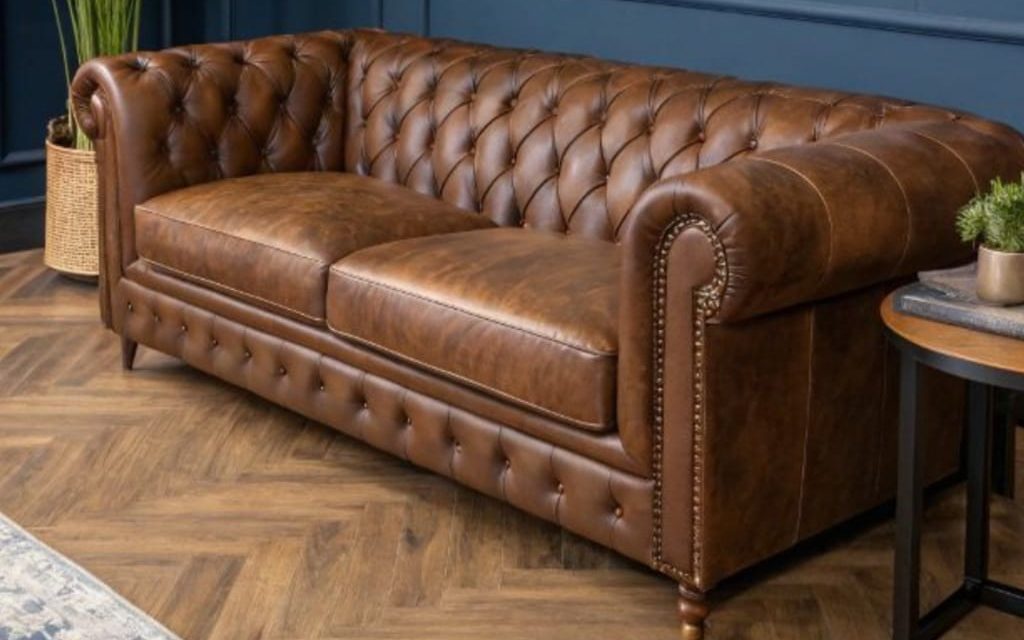
- Arms and back at the same height. The top of the back and the tops of the arms form one continuous horizontal line. If the back rises above the arms, it is a different sofa.
- Rolled arms. The arms scroll outwards, usually with a pleated or panelled face at the front.
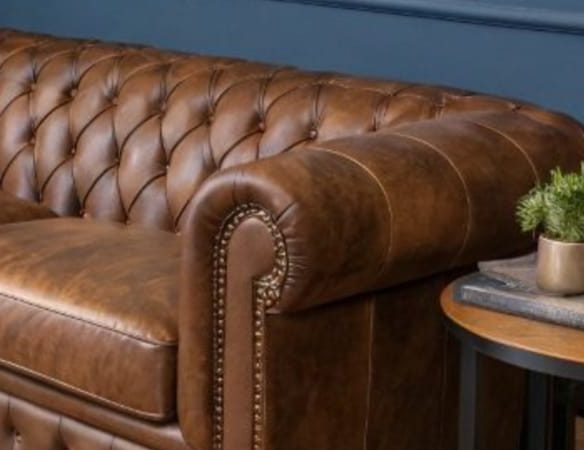
- Deep buttoning. Buttons are set into the back and the arms, and on a traditional piece the seat as well, with the leather or fabric folded into pleats between them to form diamonds.
Nail-head trim, turned bun feet and a tight (buttoned) seat are common but optional. A loose seat cushion, now far more usual, came later and makes the piece more comfortable for long sitting.
Deep buttoning: the part that separates real from lookalike
Real deep buttoning is slow, skilled work. The upholsterer marks a grid on the back and arms, cuts the padding for each button, and folds the covering into the pleats by hand so that every diamond is the same size and every pleat runs the same way. Each button is then pulled down and tied through to the frame with twine. Done this way, the buttons hold their depth for decades, and if one ever loosens it can be re-tied in minutes.
The shortcut is to glue or staple buttons onto a pre-quilted panel. It looks similar in a photograph, but the pleats are shallow, the diamonds drift, and the buttons tend to pop off within a year or two. Two questions tell you which you are looking at: how are the buttons fixed? and is the seat sprung or just foam on a board? A maker who builds properly will answer both without hesitation.
Buttoning also uses noticeably more covering than a plain sofa, because every pleat takes up material. That is one reason a genuine leather Chesterfield costs more than a plain leather sofa of the same size, and why an unusually cheap one deserves a closer look.
Leather, velvet or fabric?
Leather is the classic covering, but the type matters more than the fact that it is leather:
- Aniline: dyed right through with no surface coating. The softest, richest and quickest to develop a patina, but it marks easily and fades if it sits in direct sun. Best in a study or a shaded sitting room.
- Semi-aniline: a light protective finish over the dye. It keeps most of the character and is far easier to live with.
- Protected (pigmented): a coloured surface coat that resists stains, spills and fading. The sensible choice for a family room, a room with tall windows, or a home with children.
- Antiqued or hand-rubbed: a second tone worked into the surface by hand, which is what gives many Chesterfields their aged, two-tone look.
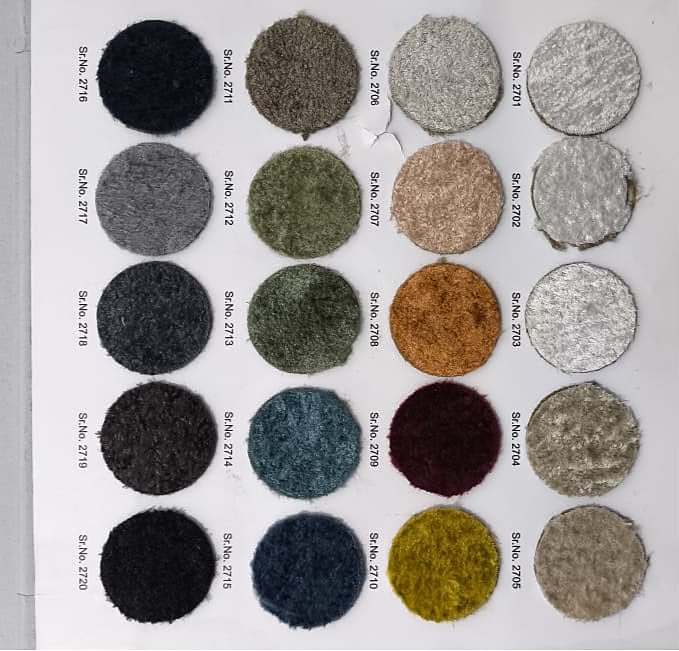
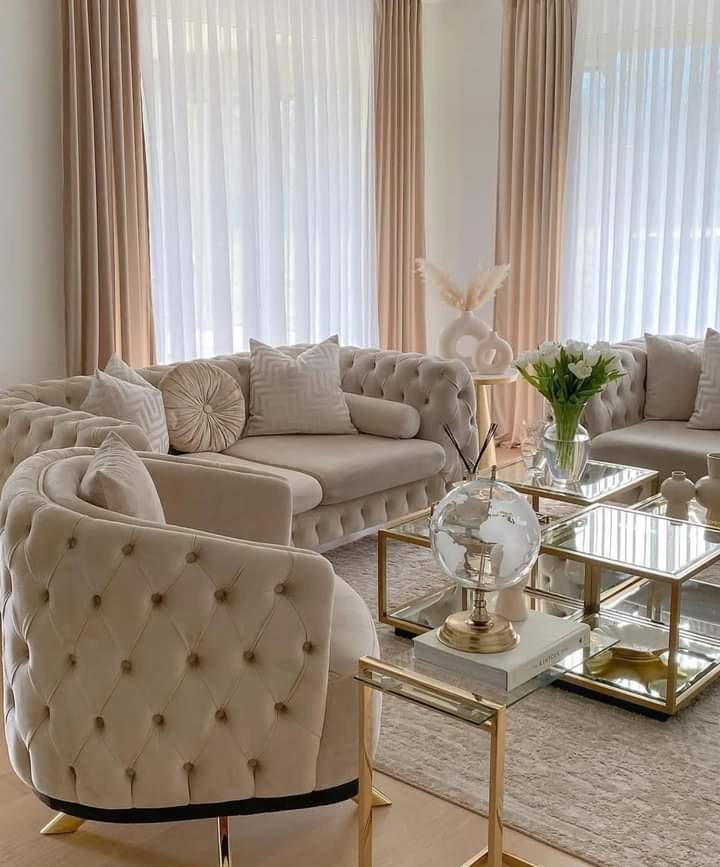
Velvet is the other great Chesterfield covering. A dense cotton or performance velvet catches light on every pleat, shows off the buttoning beautifully, and is cooler to sit on than leather in August. Wool and tight plains work too; loose, slubby weaves do not, because they distort in the pleats. Our fabric versus leather guide explains how sun, sand and air conditioning treat each.
Proportions and comfort
The rolled arms are generous, often 20–25 cm wide each, so a Chesterfield gives you less seat for its length than a slim-armed sofa. A 220 cm three-seater may have only 170–175 cm of actual seat. When space is tight, it is worth drawing the arms a little slimmer or choosing a two-and-a-half-seater rather than squeezing a three-seater in.
A traditional Chesterfield is also built for upright sitting: a back around 72–78 cm high, a firm seat and a seat depth of about 50–55 cm. That suits a study, a formal sitting room or an office. For a family room, we usually draw a deeper seat of around 60 cm with a loose cushion and a slightly more generous rake to the back, which keeps the silhouette but lets you lean back. The measurements behind those decisions are in our guide to sizing a sofa for a Dubai living room.
What sits under the leather
- Frame: kiln-dried solid hardwood, jointed and glued rather than stapled. The arms of a Chesterfield take a lot of leverage when people perch on them, so the joints there matter.
- Suspension: coil springs in the most traditional builds, or sinuous springs, which are durable and slimmer. A foam slab on a board is the sign of a lookalike.
- Padding: firm high-density foam and fibre layers under the buttoning, built up so that the back keeps its shape rather than flattening between buttons.
- Feet: turned hardwood bun feet, sometimes with castors; they lift the sofa enough for cleaning underneath.
What each of these does to the life of a sofa is set out in frame, foam and fabric explained.
Where a Chesterfield works
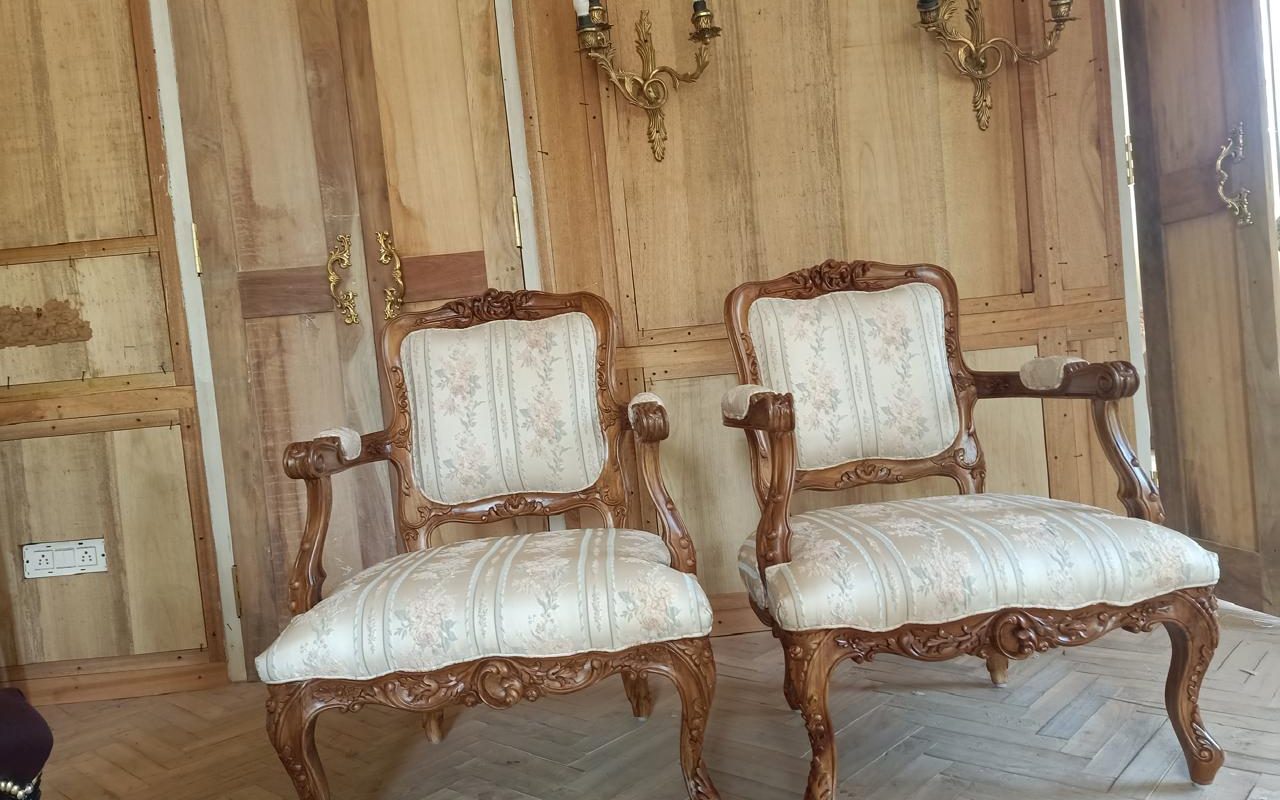
It is at home in a study, a library wall, a formal sitting room or an office, and it is surprisingly good in a contemporary room, where a single tan-leather Chesterfield against a plain wall does more than a whole matching suite. In a villa living room it pairs well with a pair of wingback or club chairs and a stone-topped coffee table. It is less suited to a deep lounging family room unless it is drawn with the deeper seat described above.
Price, lead time and care
A Chesterfield in fabric falls within the same band as our other made-to-order sofas; in full-grain leather with hand-tied buttoning it sits toward the upper part of the range in our bespoke furniture cost guide, because the leather and the hand hours both increase. Lead time is six to ten weeks from approved drawings. Leather is chosen from cuttings, and we confirm the colour against a sample hide before cutting.
Care is simple: keep leather out of direct afternoon sun and a little away from air-conditioning vents, condition it twice a year, and brush dust out of the pleats with a soft brush. Velvet needs a regular vacuum with an upholstery head and a brush to lift the pile. The pieces we make are on the sofas page.
Thinking about a Chesterfield?
Send us the wall length and a photograph of the room. We will draw the sofa to fit, with seat depth and arm width marked, and send leather and velvet cuttings with a fixed price.
Book a Consultation