A sofa in Dubai lives a harder life than the same sofa in London. It sits in strong, low-angle light for much of the year, in air that is continuously dried by air conditioning, in a city where fine dust finds its way through every seal. Upholstery that would last fifteen years in a temperate climate can look tired here in five — not because it was badly made, but because it was specified for a different set of conditions. Choose for the climate and you get the fifteen years back.
What actually degrades upholstery here
- Ultraviolet light. The dominant factor. UV breaks down dyes and, over longer periods, the fibres themselves. It is why one arm of a sofa fades while the other stays true.
- Dry air. Constant air conditioning holds indoor humidity low. Leather is a natural material that depends on its oils and moisture; strip those out and it stiffens, then crazes.
- Fine dust. Airborne sand is abrasive at a microscopic level. Ground into a weave, it wears fibres from within — which is why regular vacuuming genuinely extends fabric life here.
- Heat transfer. A practical comfort issue: dense, non-breathable coverings in a sunlit room become unpleasant to sit on.
Fabric: what works
Performance and solution-dyed fabrics
The strongest all-round choice for Dubai. In a solution-dyed fibre the colour is added while the fibre itself is formed rather than printed or dyed onto the surface — so the pigment runs the whole way through and UV has far less to bleach. Modern performance cloths have moved a very long way from the plasticky “outdoor fabric” of a decade ago; many are indistinguishable from fine linen or wool by touch. They also clean well, which matters with children.
Linen and linen blends
Beautiful, breathable, cool to sit on and entirely in keeping with the relaxed, textural direction of 2026 interiors. Pure linen creases and can fade, so for main seating we usually specify a linen blend — the hand of linen with better recovery and light fastness. Ideal for majlis and formal sitting rooms that get moderate use.
Velvet
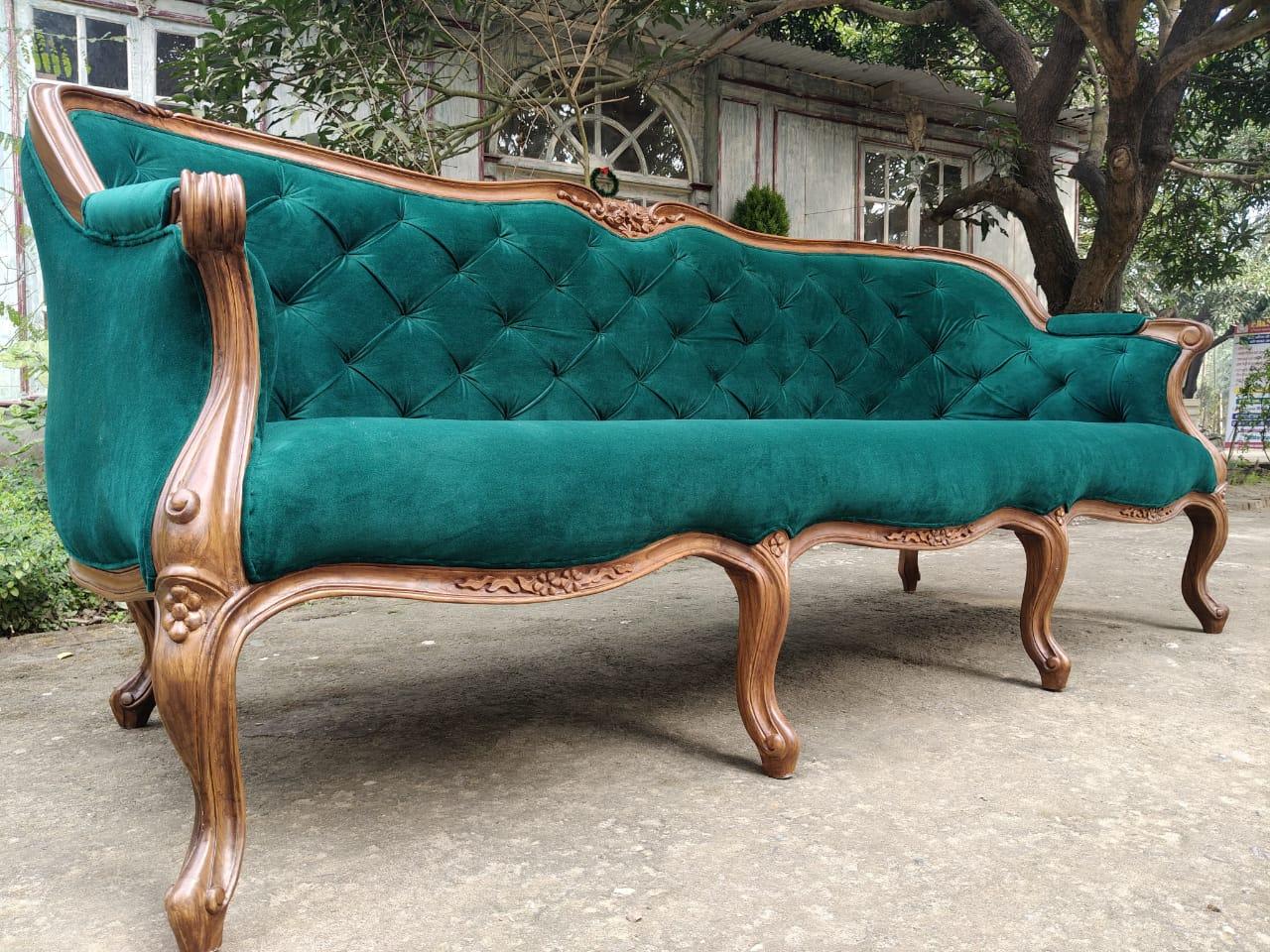
Still the most luxurious surface in a room, and cotton or synthetic-blend velvets wear extremely well. Deep colours in direct sun will drift over time; put velvet where it is admired rather than where the afternoon sun lands.
Bouclé and heavy textures
Very current, tactile and forgiving — textured weaves hide dust and light marking better than flat cloths. Check the loop construction if you have cats.
All of these are available across our fabric collections, with cuttings sent out before anything is committed.
Leather: which type matters more than the fact it is leather
“Leather” covers finishes that behave completely differently in this climate:
- Aniline — dyed through, no protective topcoat. The most beautiful and the most vulnerable: it marks, it fades, and in dry conditioned air it needs regular conditioning to avoid drying out. For low-use, low-light rooms only.
- Semi-aniline — a light protective coating over an aniline base. A sensible compromise: keeps most of the natural character with real-world durability. Our usual recommendation when a client wants leather.
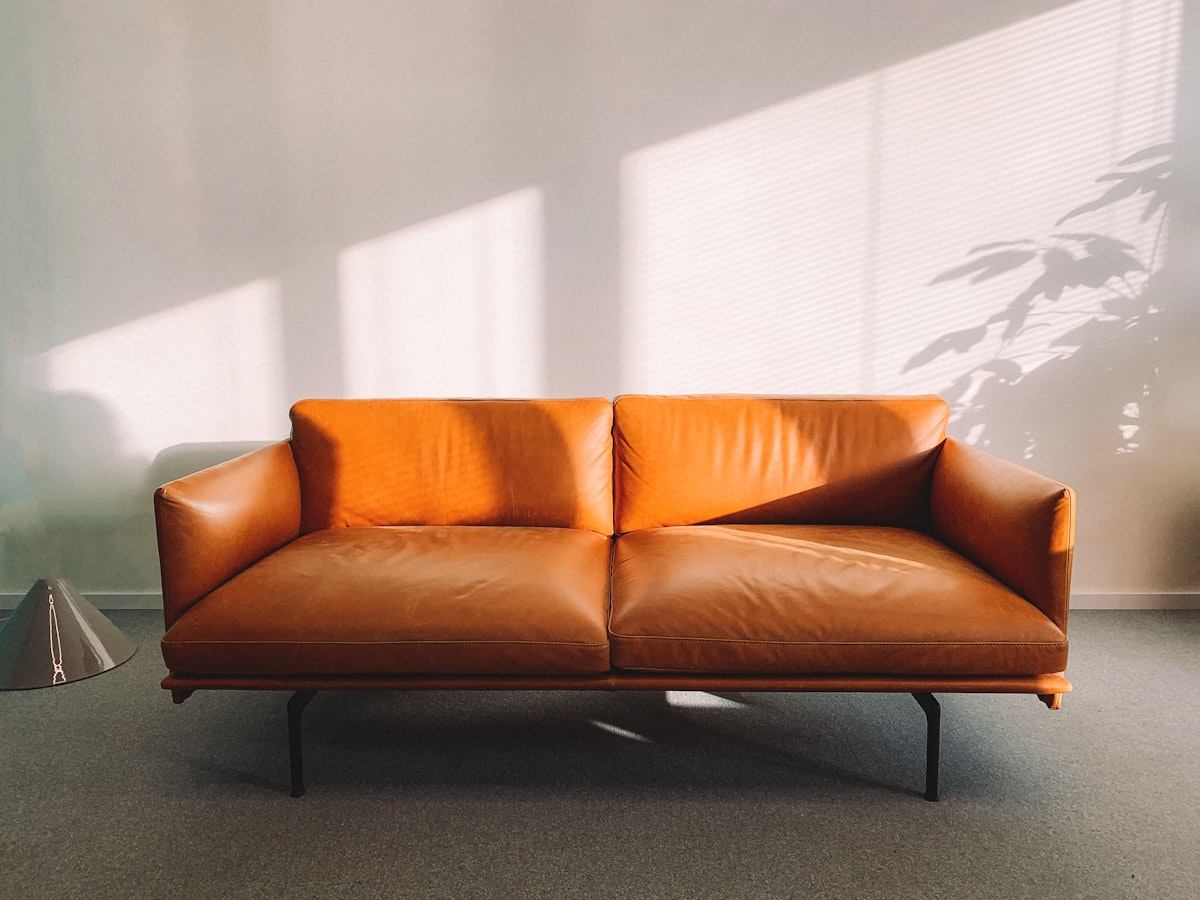
- Pigmented (protected) — a durable surface finish. Least natural in feel, by far the most robust against UV, spills and dry air. The right answer for family rooms, holiday homes and anywhere in strong light.
- Bonded leather — avoid. It delaminates, and it delaminates faster in heat.
Whatever the grade, keep leather out of direct sun and condition it once or twice a year. Done consistently, that single habit is the difference between a hide that patinates and one that cracks.
Reading a specification: rub counts and light fastness
Two numbers tell you most of what you need to know.
Martindale (abrasion)
- 15,000–25,000 — light domestic: formal majlis, guest sitting, occasional chairs.
- 25,000–40,000 — general domestic: the main family sofa.
- 40,000+ — heavy duty: holiday homes, F&B, offices, anything short-let.
Light fastness (blue wool scale, 1–8)
This is the one people ignore and then regret. For any upholstery within reach of daylight in Dubai, specify 5 or better; for a piece that genuinely sits in the sun, look for 6–7. A fabric with a superb rub count and poor light fastness will be structurally perfect and visibly faded, which is the worst of both outcomes.
Also worth checking: a cleaning code (W, S or WS), and whether the cloth is treated for stain resistance.
Under the cover: what you are really buying
Fabric is the part you see; longevity comes from what is beneath it. A sofa worth owning has a kiln-dried hardwood frame with jointed, glued and screwed corners — not staples into softwood or particleboard. Kiln drying matters especially here: timber that has not been properly dried and conditioned will move as it acclimatises to Dubai's indoor air, and a moving frame telegraphs through the upholstery.
Then suspension — eight-way hand-tied springs or good quality serpentine — and foam density. Low-density foam collapses; a high-resilience core wrapped in feather or a fibre layer gives the comfort that lasts. Our bespoke sofa guide covers construction in detail, and how bespoke furniture is made follows a piece through the workshop.
Reupholster or replace?
A straightforward test. Reupholster if the frame is solid hardwood and properly jointed, if the piece sits well and you still like its shape, if it is a scale that suits the room, or if it has sentimental or antique value. Recovering typically costs 40–60% of an equivalent new bespoke piece, and you keep a frame that has already survived this climate.
Replace if the frame is stapled softwood or board, if it creaks and flexes when you rock the arms, if the proportions were never right for the room, or if you want a fundamentally different shape. There is no sense spending on fabric and labour to re-cover something that is not worth covering.
Reupholstery is also the quiet, sustainable option — and it is often the only way to keep a piece whose scale suits a room that standard retail furniture simply does not fit.
What it costs
- Three-seat sofa reupholstered, mid-range fabric, new foam, labour: AED 3,500–7,000.
- Same in premium fabric or leather: AED 8,000–15,000.
- Dining chairs: AED 250–600 each, depending on detailing.
- Majlis seating (full perimeter): quoted by running metre; typically AED 1,200–2,500 per metre.
- Buttoning, channel stitching, piping and pattern matching add labour — beautiful, but budget for them.
The bottom line
Specify for the room's light before you specify for the showroom. Performance and solution-dyed cloths, or a semi-aniline and pigmented leather, will hold their looks here in a way that untreated naturals will not. Check the light fastness as carefully as the rub count. Buy the frame, not just the fabric — and if you already own a good frame, recover it rather than replacing it. A well-built sofa in the right cloth is a twenty-year piece, even in Dubai.
Choosing upholstery or considering reupholstery? Talk to our team — ELEVÉ makes and upholsters furniture in our own Al Qusais workshop.
Choosing upholstery, or reviving a sofa?
Book a complimentary consultation. We'll bring cuttings, assess the frame if you're reupholstering, and return a full quotation.
Book a Consultation