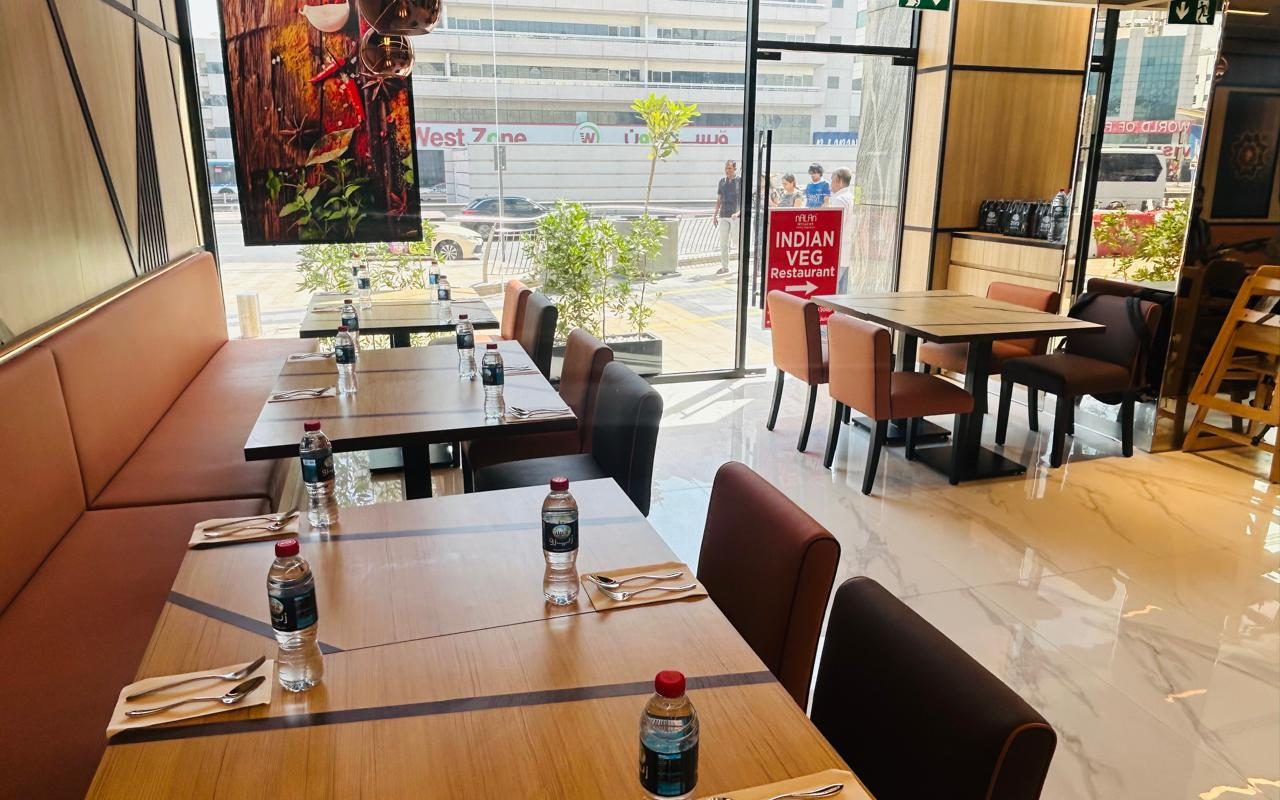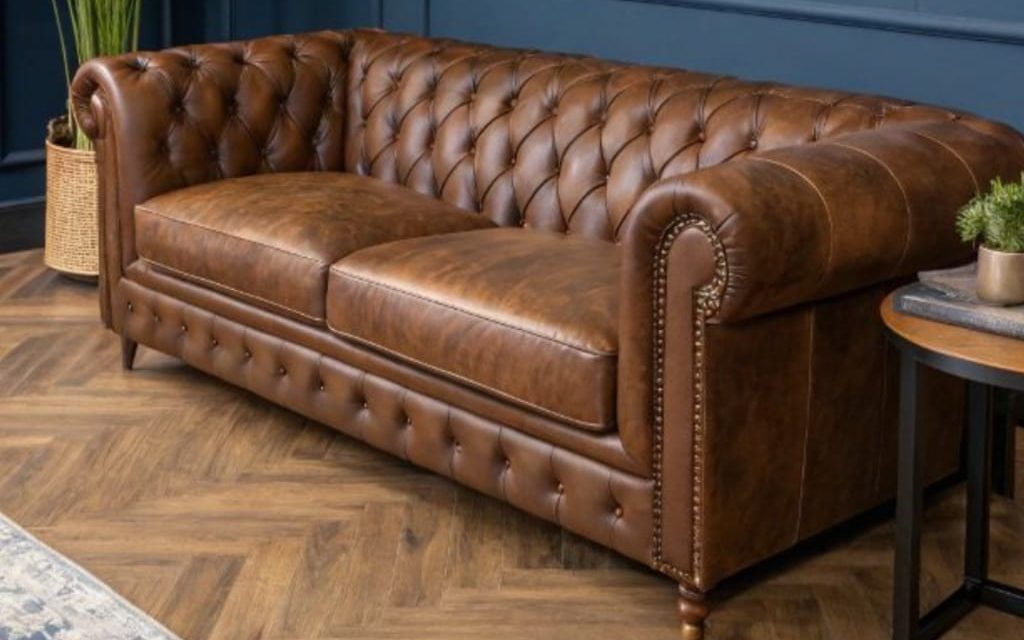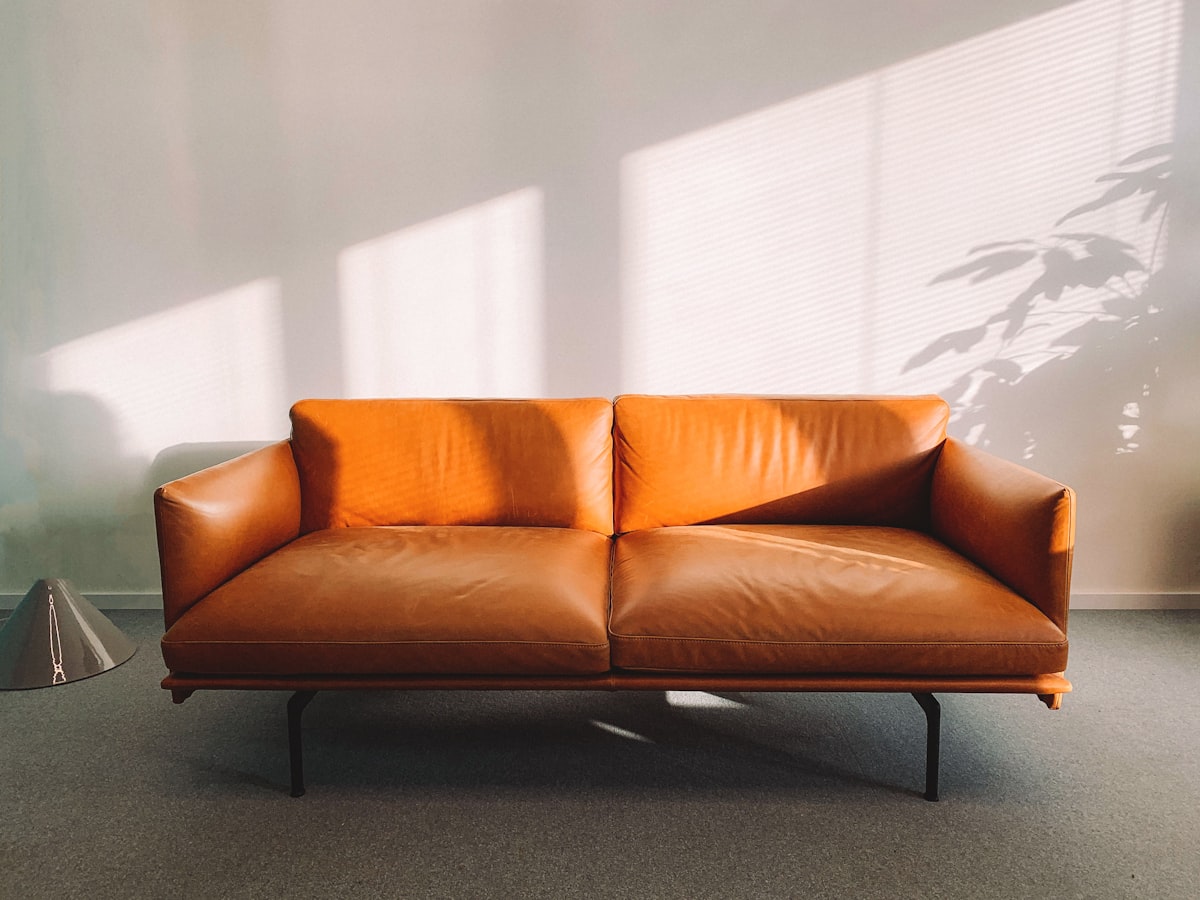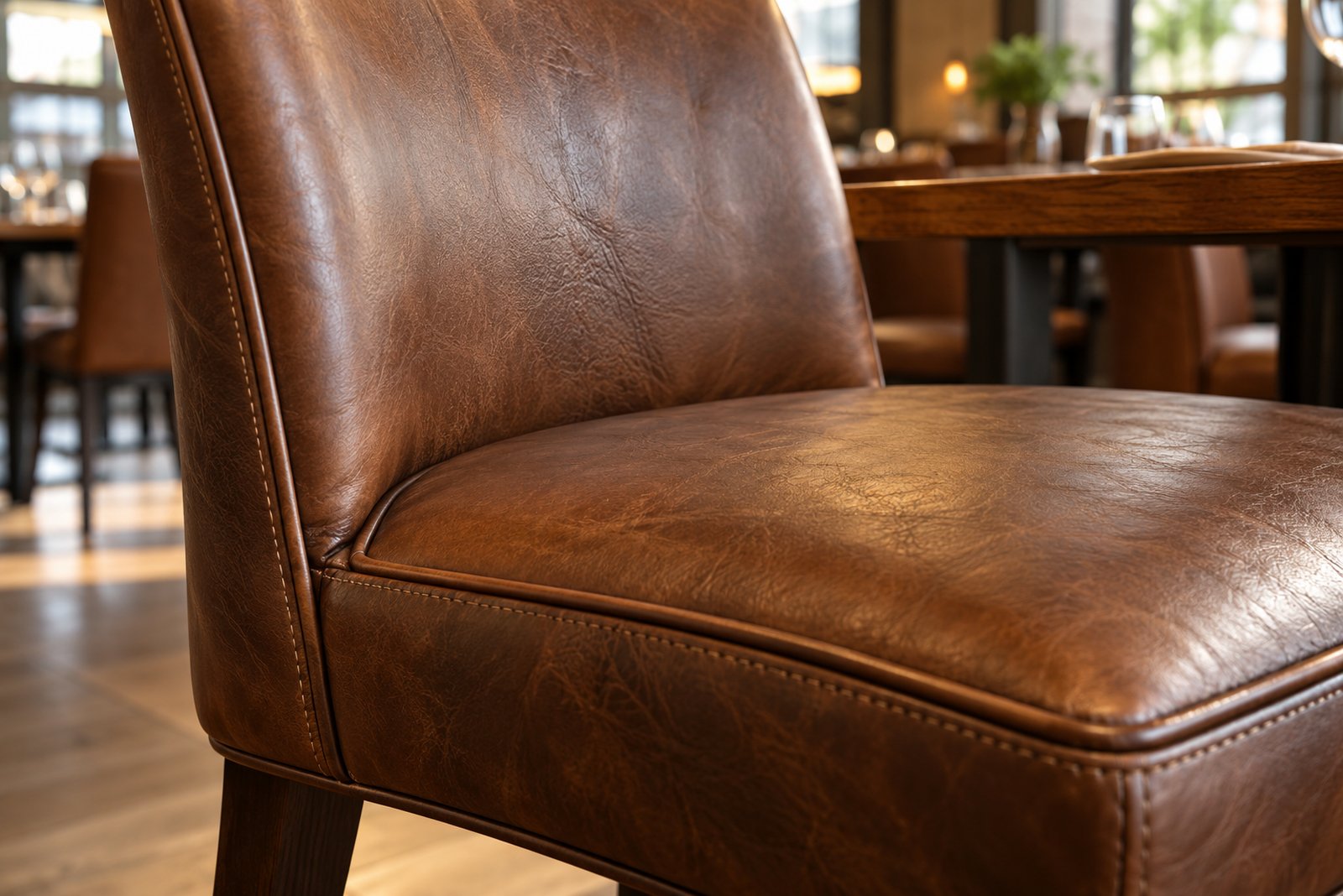
Tobacco, cognac and dark chocolate leather are back on restaurant chairs and banquettes across Dubai, often on bronze metal frames or warm timber. Leather is a superb contract material when it is the right leather. The wrong one, chosen from a sample for its softness, can look tired within a season. Here is how the grades differ, which suit which room, and what to write into the specification.
The short answer
For restaurant and café seating, specify a pigmented (protected) leather about 1.0 to 1.2 mm thick, in a mid-to-dark tone, on combustion-modified foam built to the fire rating your project needs. Keep aniline and semi-aniline leathers for hotel lounges, private dining and suites, where their softness and patina can be enjoyed and wear is gentle.
The four kinds of leather you will be offered
Aniline. Dyed right through with no surface coat, so you see and feel the natural grain. The most beautiful and the softest, but it absorbs spills and oils, marks easily and fades in sun. It develops a rich patina, which some operators love and housekeeping does not.
Semi-aniline. An aniline leather with a light protective coat. It keeps most of the natural look with better stain and fade resistance. A good choice for hotel lounge chairs and bar stools in calmer venues.
Pigmented, protected or finished. Coated with a pigmented finish that evens the colour and seals the surface. It looks a little more uniform, but it is by far the most durable: it shrugs off spills, food oils and cleaning, and minor scuffs can be re-coloured. This is the workhorse of restaurant seating.
Nubuck and suede. Brushed, velvety surfaces that mark at the first touch of grease. Lovely on a headboard; avoid them anywhere near food.
And one to avoid: bonded leather, made of leather fibres glued to a backing with a polyurethane face. It is cheap, and it peels.
Thickness, hides and colour
Upholstery leather is usually around 1 mm thick. For contract seating, 1.0 to 1.2 mm is a good balance: thick enough to resist wear and stretch, thin enough to tailor around a curved back. Leather comes in whole hides, each one slightly different, so order all the leather for a project from one production lot, and include spare hides for repairs and later additions. Expect natural marks, small scars and variation between hides; a good upholsterer places them where they will not show.
For colour, mid and dark tones such as tobacco, cognac, chocolate and olive hide wear best and age gracefully. Pale leathers look superb on the opening night and need the most care afterwards, particularly against dark denim.
Fire rating: leather is tested as part of the seat
Commercial seating in restaurants and hotels is commonly specified to BS 5852 with ignition source 5, known as crib 5. The test is carried out on the composite: the leather, the foam and any interliner together. With combustion-modified high-resilience (CMHR) foam and, where needed, a fire-barrier interliner, leather seating is regularly built to meet it. Some leathers are also given a fire-retardant treatment in the tannery. Ask your maker for the test report or certificate that covers the combination you are buying, not a certificate for a different leather. Our guide to fire-rated upholstery explains the levels in detail.
Details that make leather seating last
- Piping and welts on the edges that rub most, such as the front of the seat and the top of the back, protect the seams and can be replaced.
- Strong thread, a bonded nylon or polyester, in a stitch length that does not perforate the leather like a postage stamp.
- Firm seat foam, because soft foam lets the leather crease deeply and crack along the creases.
- A separate seat pad or a loose-seat construction on dining chairs, so a damaged seat can be re-covered without stripping the whole chair.
- Kick plates or a metal skirt on banquettes, where shoes and cleaning machines hit the base.
Faux leather: where it makes sense
For very high-turnover seating such as cafés, food halls and staff areas, a contract-grade vinyl can be the sensible choice. It wipes clean, comes in long rolls with no hide marks and costs less to replace. Choose one with published abrasion and hydrolysis test results: cheap polyurethane coatings can crack and peel within a few years in Gulf heat and humidity. For a premium restaurant or a hotel lounge, real leather ages better and repairs more easily.
Care in a Dubai restaurant
- Wipe daily with a soft, damp cloth, and clean weekly with a pH-neutral leather cleaner.
- Keep alcohol-based sanitisers and kitchen degreasers off the leather; they strip the finish and dry the surface.
- Condition protected leather two or three times a year, and aniline more often.
- Keep seats out of strong direct sun through glazing, and away from the blast of AC vents, which dries leather out.
- Touch in scuffs on pigmented leather early, before they wear through.
A quick specification checklist
- Leather type: pigmented for dining, semi-aniline or aniline only for low-traffic lounges
- Thickness around 1.0 to 1.2 mm
- All hides from one lot, plus spares
- Fire rating stated, and a certificate for the actual composite
- Piping on wear edges, firm foam, replaceable seat pads
- A cleaning and conditioning routine for the operations team
The bottom line
Leather rewards the right choice and punishes the wrong one. Put protected leather where people eat, save aniline for where they linger, specify the fire rating up front, and keep spare hides. Done that way, leather seating looks better in its fifth year than in its first. For upholstery in the home, read our guide to fabric or leather for a sofa.
Specifying leather seating for a restaurant or hotel?
Send us the drawings and the number of seats. We will suggest the leather grade, foam and construction, and make a prototype chair for you to sit in before production.
Book a Consultation