In Dubai, pets live indoors for much of the year. From May to October, walks happen at dawn and after dark, and the rest of the day is spent in the air conditioning, very often on the sofa. That makes upholstery choices matter more here than in cooler cities. The good news is that a pet-friendly sofa does not have to look like one. It comes down to the weave, the colour, the leather if you choose one, and a handful of construction details.
Why the usual ratings do not tell you enough
Upholstery is sold on its abrasion rating, the Martindale rub count, and a high number is still worth having. But Martindale measures how a fabric wears under rubbing, not whether a claw will catch and pull a thread. A fabric rated at 50,000 rubs with a loose, loopy surface can be ruined by a cat in a week, while a tight weave with a lower rating survives for years. With pets, the structure of the weave matters as much as the number.
Fabrics that work
- Microfibre and microsuede: extremely tight, so claws have nothing to catch and hair lifts off easily. Practical, if less luxurious to the eye.
- Dense performance weaves: tightly woven polyester or olefin cloths with a stain-resistant finish, cleanable with water. The best all-round choice for dogs.
- Short-pile synthetic velvet: no loops, and hair wipes off with a damp cloth or a rubber glove. It shows paw prints and pressure marks, so choose a mid-tone.
- Canvas and tight cotton twills: tough and washable, especially as loose covers.
Fabrics to avoid
- Loop bouclé: fashionable and beautiful, but every loop is a hook for a claw.
- Loose linen and slubby weaves: they snag and pull, and linen marks with water.
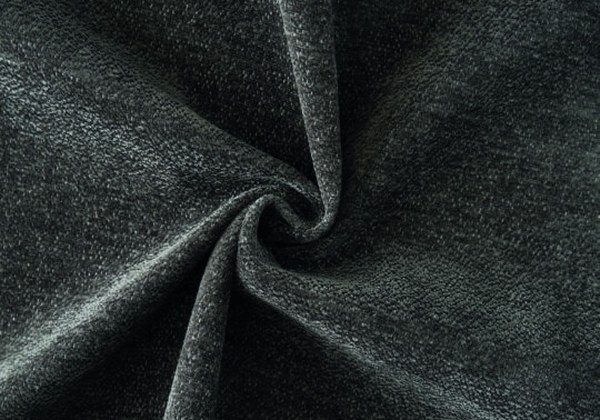
- Textured chenilles and decorative weaves with long floats: soft and rich, but the raised pile and loose surface threads catch claws. We steer owners of cats away from these, including some of our own more decorative designs, and towards tighter cloths.
- Silk and delicate embroidery: best kept for rooms the animals are not allowed into.
Colour and pattern: let the fabric hide the hair
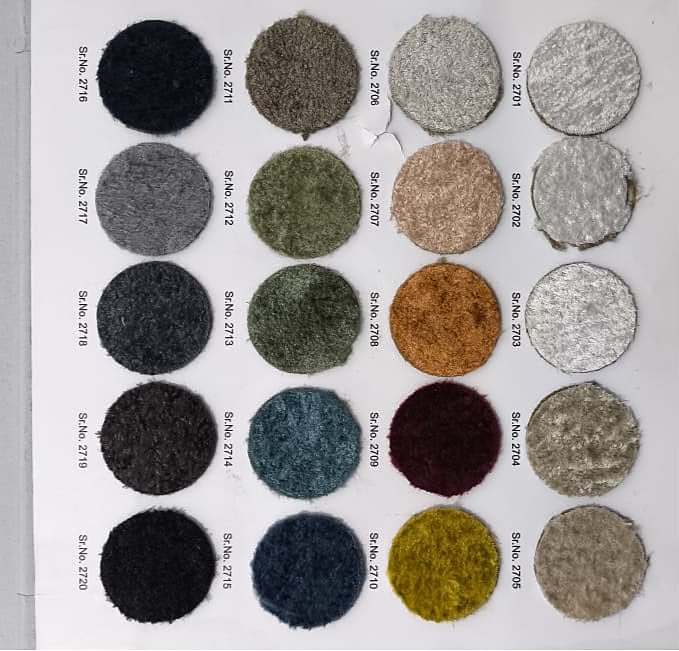
Choose a colour close to your pet's coat, and hair almost disappears between cleans. Mid-tones hide both light and dark hair better than black or white. Melange and heathered weaves, where two or more colours are woven together, and small, busy patterns hide hair, paw marks and the occasional stain far better than a flat plain. The ELEVÉ upholstery collections include Vespera, our everyday workhorse with a quiet melange texture, and Nuance, a fine cross-woven plain in twenty-three colours, which makes matching a coat colour easy.
Leather and pets
Leather is easy to wipe and hair does not cling to it, but claws scratch it. On a protected (pigmented) leather the scratches show as pale lines, although the surface resists stains and accidents well. Aniline and distressed leathers show scratches too, but they blend into the patina, and some owners like the lived-in result. Some cats show less interest in scratching smooth leather than a textured weave, but that varies from cat to cat. Faux leathers are the weakest choice, because a claw can puncture the coating. Our fabric versus leather guide explains the leather types in more detail.
Construction details that make a sofa pet-proof
- Zipped, removable cushion covers, or a fully loose-covered sofa, so fabric can be cleaned or replaced without re-upholstering the frame.
- A water-resistant, breathable layer under the cushion covers, which protects the foam from accidents.
- Firm front edges and high-resilience foam, for dogs that jump up and settle on the same spot every day.
- Tight backs or fixed back cushions if loose ones end up on the floor every morning.
- The right leg height: either high enough for a vacuum or robot cleaner to pass underneath, which usually means 10 cm or more, or a skirt or plinth right to the floor so pets cannot hide, and hair cannot collect, underneath.
- Fitted arm covers in the same fabric, on the arms cats favour. They are cheap to replace.
Living with it
Vacuum with an upholstery head once or twice a week, and use a rubber glove or brush to lift hair from velvet and tight weaves. Deal with accidents immediately with an enzyme cleaner, testing it on a hidden area first, and check the fabric's cleaning code if it carries one. Put a tall scratching post next to the sofa: a cat that has somewhere better to scratch usually uses it. A throw in the same colour as the fabric on the dog's favourite corner saves the upholstery beneath.
Most of all, test before you commit. We send free cuttings of any cloth in our collections: leave one on the sofa or chair your pet uses now for a week, and you will know. For choosing fabric more generally, see our guide to choosing upholstery fabric for a custom sofa, and for the pieces themselves, the sofas page.
Choosing a fabric with a pet in mind?
Tell us about the animal: cat or dog, coat colour, and whether it sleeps on the sofa. We will send cuttings of the cloths we would choose, so you can test them at home first.
Book a Consultation