Ask ten Dubai homeowners how they furnished the living room and you will hear two stories. One went to a designer showroom, fell for an Italian sofa, paid a deposit and waited five months. The other went to Dragon Mart on a Saturday, drove home with a three-seater in the back of the car and replaced it three years later. Both stories are true, both routes have their place, and neither is the whole market. There is a third option that most people discover only after they have tried one of the first two: furniture made to order, to your dimensions, here in Dubai.
This guide sets out what each route actually involves — lead time, construction, price and what happens after delivery — so that the decision is made on facts rather than on a showroom floor.
The showroom route: pedigree, and patience
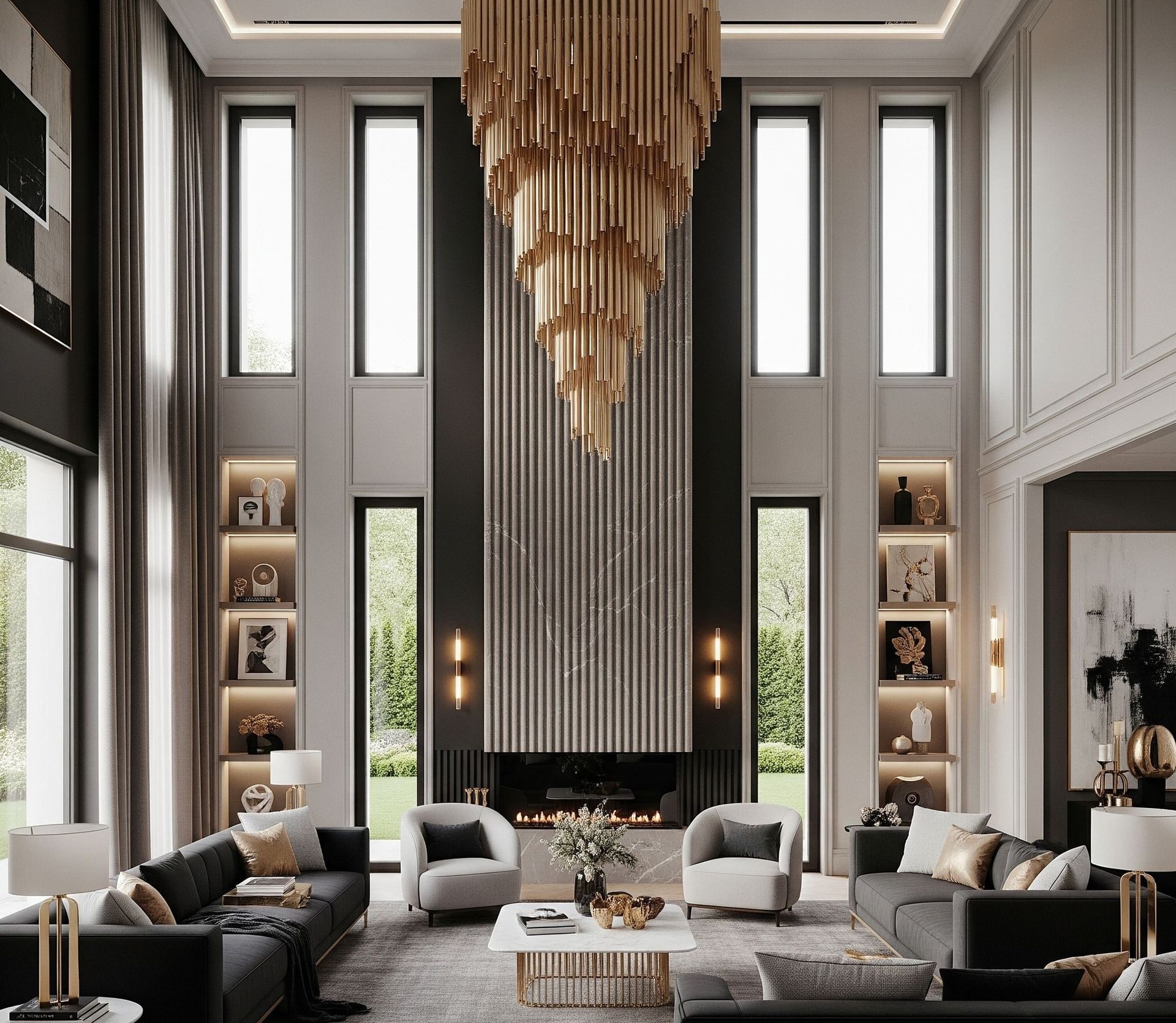
Dubai has one of the best collections of designer furniture showrooms anywhere: the Italian houses in Al Quoz and along Sheikh Zayed Road, the Scandinavian and German brands, the curated multi-brand galleries in Dubai Design District. What you are buying is design authorship, a finish quality that has been refined over decades, and the reassurance of a name. Those are real things and they are worth paying for when a particular piece is the point of the room.
What the showroom cannot shorten is the calendar. Very little of what you see is stocked in your fabric and size. A made-to-order piece goes into a European production queue — typically 8 to 16 weeks for an upholsterer — and then travels: 4 to 8 weeks of sea freight, customs clearance and local delivery. Four to six months from deposit to living room is the honest figure, and it is why every fit-out programme in the city has a line called long-lead items. Customisation is limited to the brand's own menu of fabrics and sizes, and if a leg arrives chipped the repair goes back through the distributor rather than to a workshop down the road.
Price reflects the journey as much as the object. A designer sofa retailing here at around AED 90,000 usually leaves its factory at AED 28,000–35,000; freight, duty, the distributor's margin and prime showroom rent make up the difference. None of that is unreasonable. It is simply useful to know what you are paying for.
The value route: immediate, enormous, and built to a price
At the other end of the market are the ready-made import outlets — Dragon Mart and International City, the large online marketplaces, the warehouse showrooms along the Al Quoz and Ras Al Khor industrial roads. Dragon Mart alone is one of the largest retail destinations in the region, with thousands of independent shops, and its strengths are obvious: you can furnish an apartment in a single afternoon, choice is almost unlimited, and prices are a fraction of anything designer. For a rental, a first apartment, a guest room or a home you expect to leave in two years, that is a rational purchase and there is nothing to apologise for.
The limitations are structural rather than cosmetic, and they follow from the price. To hit those numbers most pieces are built on engineered-board carcasses rather than solid or kiln-dried hardwood frames, seat foam tends to sit below the 30 kg/m³ that a daily-use sofa needs, fabrics are rarely sold with a published Martindale abrasion rating, and warranties are brief and often informal. Dubai's climate is then unkind to those choices: summer air-conditioning takes indoor humidity down to 20–30%, the house left closed for a holiday swings it back up, and boards, veneers and low-grade foam respond by swelling, lifting and sagging. The practical result, which anyone who has furnished two homes here will recognise, is a main sofa or dining set that needs replacing within four to six years. Cheap to buy, but bought twice.
The third option: made to order, made here
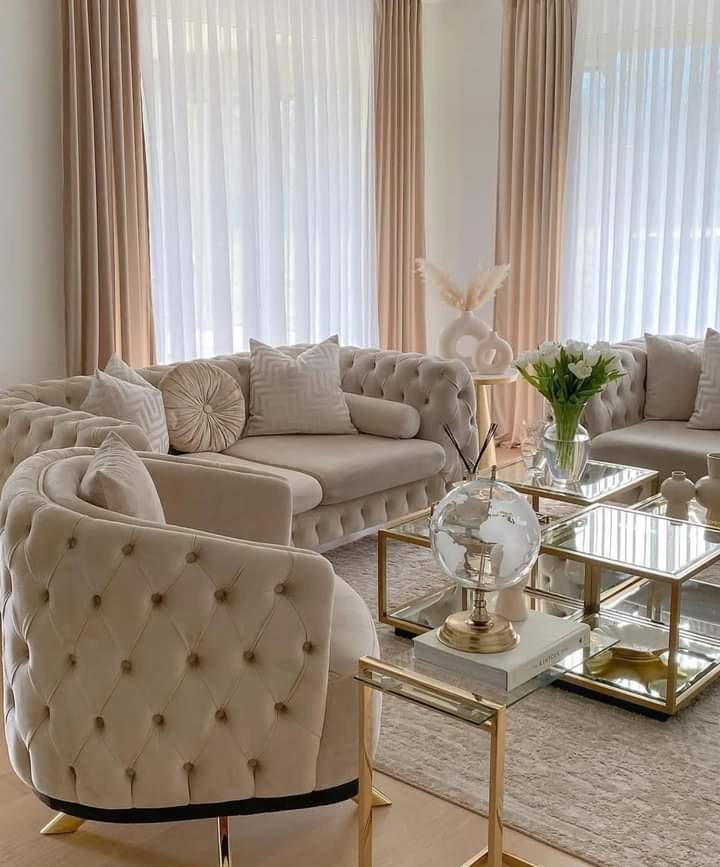
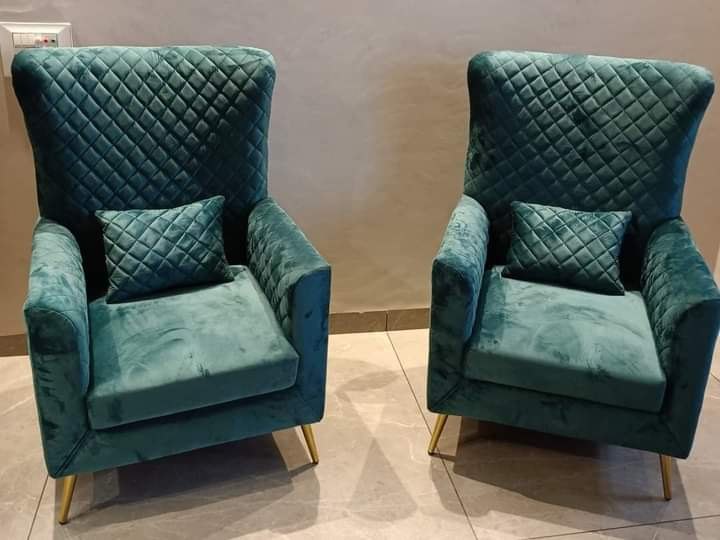
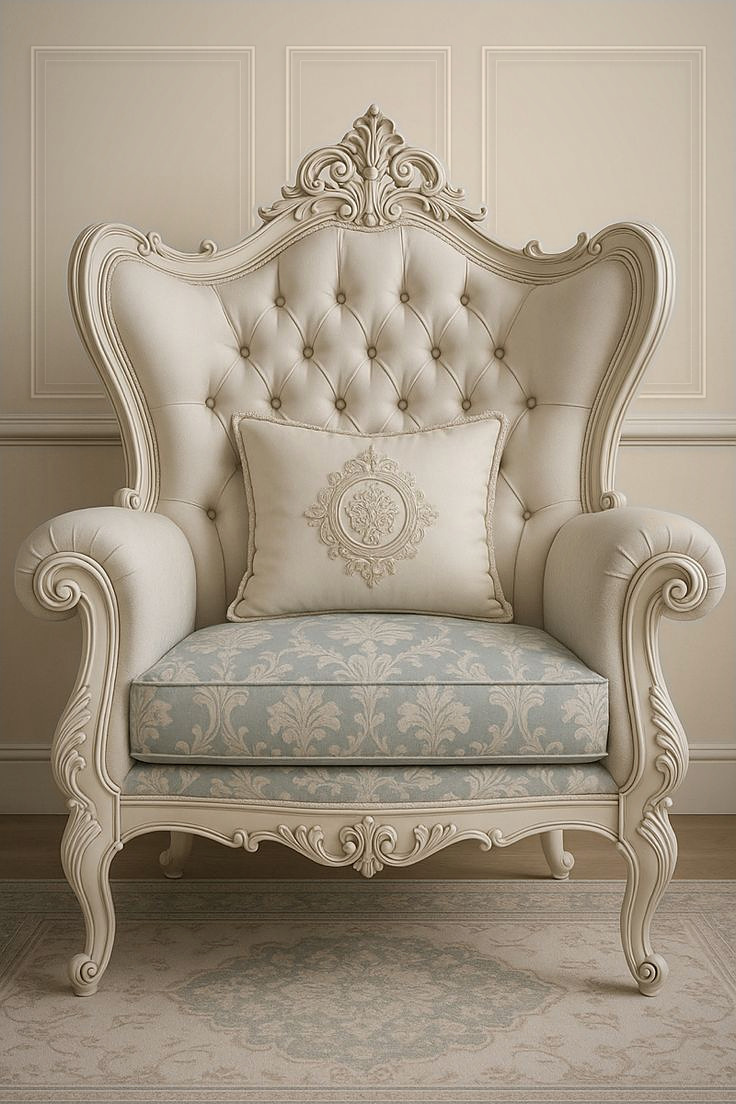
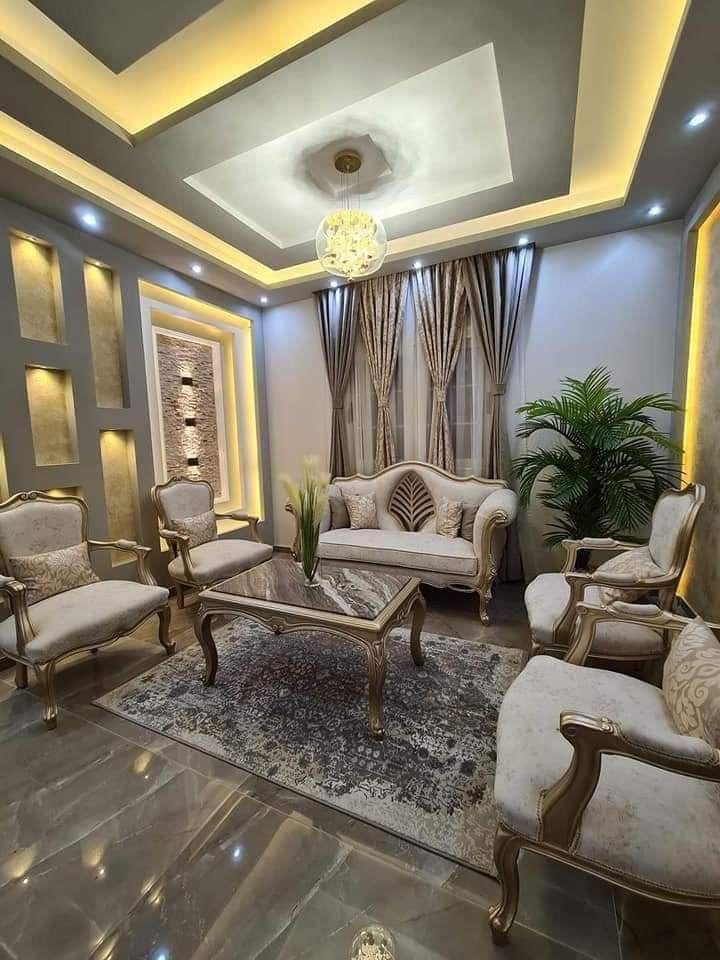
Between the two sits the Dubai workshop — the route that furnished this city's villas long before the showrooms arrived, and the one we have worked in since 2002. The proposition is straightforward. You describe the piece, or bring a photograph of one you like. We measure the room, draw the piece to your dimensions and return a fixed quotation with a delivery week. You choose the fabric from our own upholstery collections or bring your own, and the timber, foam grade and fabric are written on the drawing you sign. Six to ten weeks later it is installed; hand-carved classic pieces take eight to ten. Nothing crosses a border, so nothing waits on a ship.
Construction is where the difference from the value market shows. Show-wood frames are solid teak or sheesham rosewood, kiln-dried to 8–10% moisture content to match an air-conditioned interior and joined with mortise-and-tenon joints and corner blocks; hidden carcasses use hardwood plywood or high-density board, never chipboard. Seat cushions are high-resilience foam at 35–45 kg/m³, backs at 24–28, and the fabrics carry abrasion ratings of 25,000 rubs or better for family use. These are the same specifications the better European makers use; the difference is that here they are written down for you and you can visit the workshop to see them.
Price sits between the two poles, and usually closer to the value end than people expect: a tailored three-seater in a good fabric from roughly AED 12,000–18,000; very large, leather or hand-carved pieces AED 35,000–65,000. And because the maker is twenty minutes away, aftercare is real: a scuffed leg is refinished at the workshop, and in ten years the piece is re-upholstered for a fraction of its price rather than thrown away.
The three routes side by side
- Lead time: designer showroom 4–6 months for made-to-order; ready-made import same day to two weeks; Dubai workshop 6–10 weeks.
- Customisation: showroom, the brand's menu of sizes and fabrics; import, none; workshop, every dimension, timber, finish and fabric.
- Frame and foam: showroom, generally excellent; import, engineered board and standard foam at the lower grades; workshop, specified on the drawing and inspectable.
- Price, tailored three-seater: showroom typically AED 40,000–90,000+; import AED 1,500–6,000; workshop AED 12,000–18,000, more for leather or carving.
- Expected life in daily use: showroom 15–25 years; import 4–6 years; workshop 15–25 years, longer with one re-upholstery.
- Aftercare: showroom via the distributor; import limited; workshop local, including re-upholstery a decade on.
Which route for which piece
The useful conclusion is not that one route wins, but that each suits a different kind of purchase. A signature designer piece you have admired for years, in a room with no deadline, belongs to the showroom. Furniture for a temporary home, a secondary room or a budget that must stretch across a whole apartment belongs to the ready-made market. The pieces that carry a household — the sofa everyone sits on every evening, the majlis seating that receives guests, the dining chairs pulled in and out five times a day, the bed — are the ones to commission, because that is where frame, foam and fabric decide whether you buy once or twice.
The same logic applies to awkward rooms. A sofa 20 cm shorter than the stock size, a majlis run that turns a corner, dining seating for eleven, a headboard to the exact width of the alcove: these are ordinary requests for a workshop and impossible for either of the other routes.
Why the market is moving this way
The UAE home furniture market is estimated at roughly USD 2.9 billion in 2026 and growing at about 4% a year, and the residential segment is being driven by villa and apartment handovers in the master-planned communities — Dubai Hills, Emirates Living, Tilal Al Ghaf, the Palm. Those homes arrive empty, on a date, in numbers, and their owners have already learned that a five-month wait for a sofa does not fit a handover programme. Made-to-order furniture built locally is the segment growing fastest as a result, not because it is a compromise but because it is the only route that offers designer-grade construction on a builder's timetable.
Five questions to ask anyone selling you a sofa
- What is the frame made of, and how are the joints made? Kiln-dried hardwood with mortise-and-tenon or dowelled joints and corner blocks is the answer you want. Stapled board is not.
- What is the seat foam density? 35 kg/m³ or above for seats in daily use. If the seller does not know, the answer is usually low.
- What is the fabric's Martindale rating? 25,000 rubs for a family sofa, 30,000+ for majlis and dining seating.
- What is the delivery date, in writing? A workshop should give a week; a showroom should give a month; a stockist should give a day.
- Who repairs it, and can it be re-upholstered? The answer tells you the piece's real life expectancy.
The next articles in this series take each of those questions in turn: how long a sofa should last and why, what a sofa really costs by each route, and how to size and specify a dining set. For the pieces themselves, see our sofas and custom furniture pages.
Want a fixed quotation and a delivery date before you decide?
Send us the room dimensions and a photograph of a piece you like. We return dimensioned drawings, fabric options and a fixed price with a delivery week, usually within three working days.
Book a Consultation