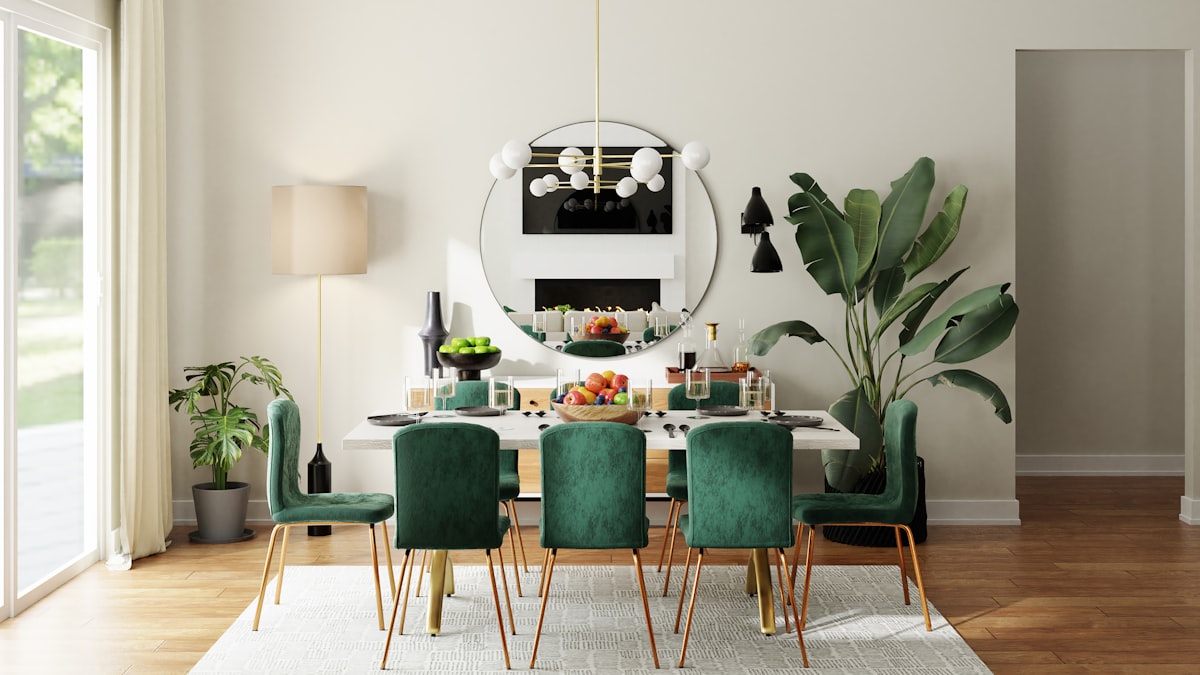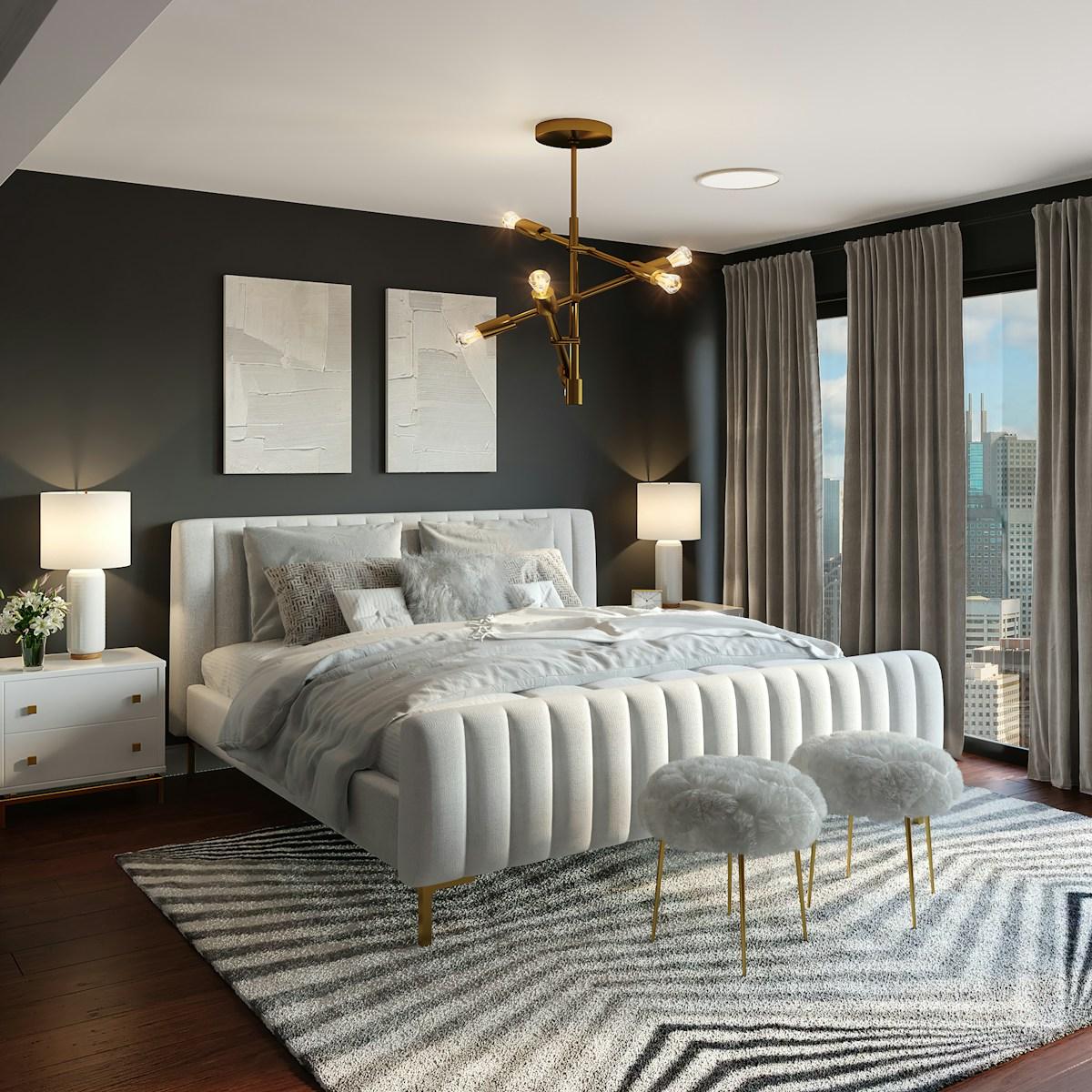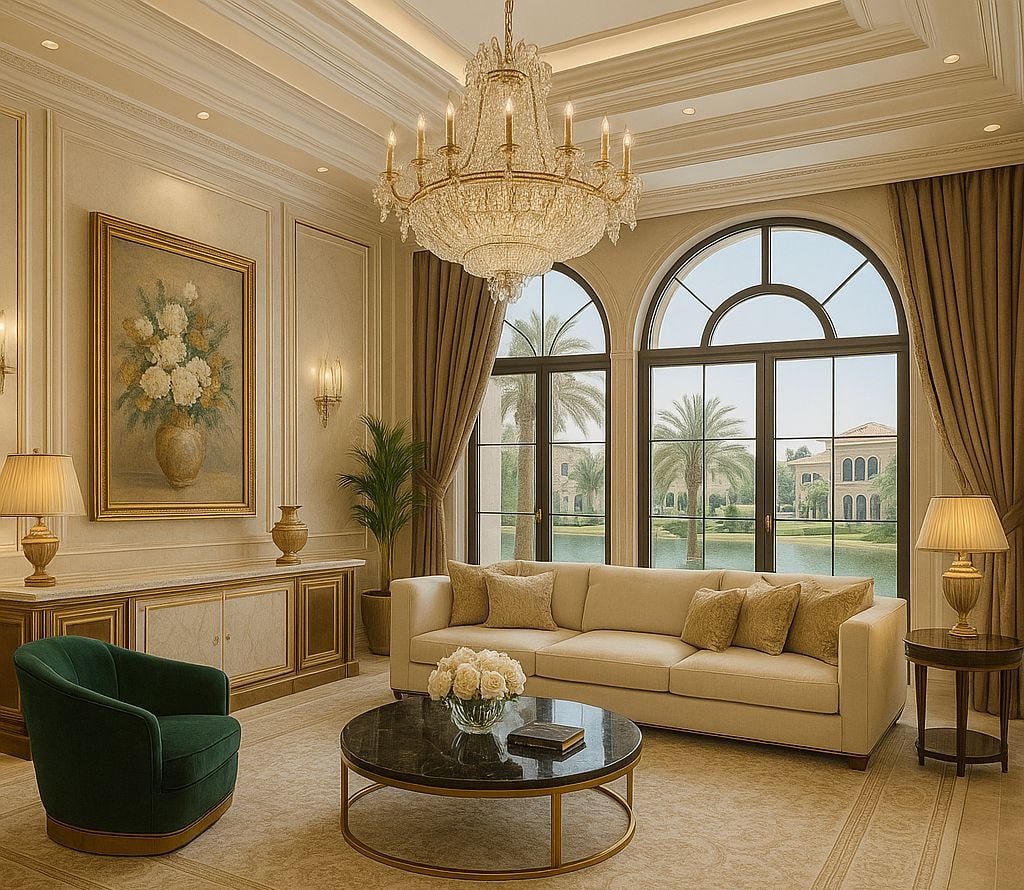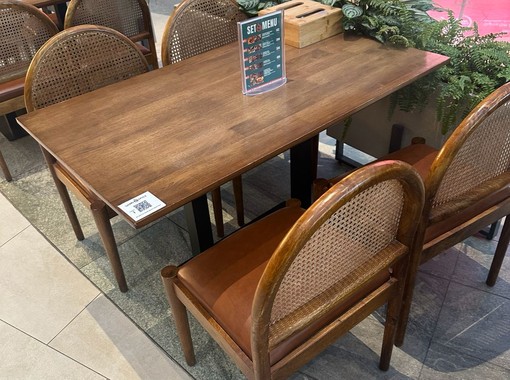
The dining table is the one piece of furniture a family gathers around every single day and the piece that anchors every celebration — Eid lunches, wedding dinners, the long Friday gatherings that define hosting in the UAE. It is also the single hardest item to buy off the shelf, because the right table is defined entirely by your room, your guest count and your hosting culture. That is exactly why a custom dining table is one of the most commissioned pieces from our Al Qusais workshop. This guide walks through every decision — size, shape, top material, base, detailing, cost and care — so you commission a table that is right the first time.
Why commission a bespoke dining table rather than buy off the shelf
Showroom dining tables are built to a small number of standard sizes — typically 6 and 8 seats — because manufacturers optimise for volume. The moment your room needs a 12-seater, an unusual length, a specific top material, or a table that matches an existing majlis or console, the retail options collapse. A bespoke dining table solves four problems at once:
- Exact size. Built to the precise length and width your room and hosting count require — not the nearest standard.
- Material control. You choose the exact timber species and grain, the exact stone slab, the edge profile and the base — not a catalogue finish.
- Coherence. The table is designed to sit with your chairs, your lighting and your architecture rather than fighting them.
- Build quality for the climate. A table made locally, from properly kiln-dried and acclimatised materials, behaves far better in Dubai's dry, heavily air-conditioned homes than an imported piece that was never conditioned for it.
If you are still weighing made-to-order against imported ready-made pieces in general, our guide to bespoke vs off-the-shelf furniture covers the wider trade-off.
Step one: size the table to your hosting count
Every other decision follows from size, and size follows from two numbers: your regular hosting count (a typical family lunch or dinner party, usually 8-12) and your peak count (Eid, weddings and large gatherings, often 14-22). The rule of thumb worldwide is simple — allow roughly 60-65 cm of table edge per place setting so elbows do not clash and each guest has a genuine place. From there:
Rectangular tables (the most versatile)
- Seats 6: 180-200 cm long × 90-100 cm wide
- Seats 8: 220-240 cm long × 100-110 cm wide
- Seats 10: 280-300 cm long × 110-120 cm wide
- Seats 12: 320-340 cm long × 120 cm wide
- Seats 14: 360-380 cm long × 120 cm wide
- Seats 16: 420-440 cm long × 120 cm wide
A width of 100-120 cm is the sweet spot: wide enough for a central runner of dishes, serving platters and candles, narrow enough that conversation still carries across the table.
Round and oval tables
Round tables are the most sociable shape — everyone can see everyone — and they soften a square room. They seat 6 at 150-160 cm diameter, 8 at 180 cm, 10 at 200 cm, and up to 12 at 220 cm. Beyond 12, a single round table becomes impractical (nobody can reach the centre) and an oval becomes the better answer: it keeps the softer silhouette while adding length for 10-14 guests. Oval tops are also one of the clearest signals of bespoke work, because they are rarely stocked.
Clearance — the number most people forget
The table is only half the equation; the room around it decides whether dinner feels effortless or cramped. Leave at least 100-130 cm of clearance behind each chair — roughly 75 cm for a guest to pull the chair back and stand, plus a service path for staff or family carrying dishes. Where people regularly walk behind occupied chairs, aim for the upper end. As a working guide, a 12-seat rectangular table wants a room of about 5.5 × 4.5 m to feel correctly proportioned. We size the table to the room, never the other way around.
For the full architecture of the room around the table — chandelier height, console scale, the wall behind the head of the table — see our companion guide to designing the formal dining room in a Dubai villa.
Step two: choose the top material for the Dubai climate
The top is what you see, touch and remember — and it is where the climate matters most. Dubai homes are dry and heavily air-conditioned, which is gentle on stone but demanding on solid timber that was not properly prepared. Here is how the main options behave. Choosing between stone tops? Our comparison of marble and sintered stone covers scratches, etching, weight and edges in detail.
Solid hardwood — walnut and oak
A solid book-matched timber top is our most-specified bespoke dining surface, and for good reason: it is warm, tactile, ages into a patina and invites daily use. American black walnut gives deep chocolate tones and dramatic grain; smoked or European oak gives a lighter, calmer, more contemporary surface. The critical detail in Dubai is preparation: timber must be kiln-dried to the correct moisture content and then acclimatised, and the top engineered with breathing joinery so it does not cup or split in dry AC air. Built correctly — typically 50-80 mm thick with a mitred edge for visual mass — a solid timber table lasts generations. Built from unconditioned wood, it moves. This is precisely where a local workshop outperforms an import.
Marble and book-matched stone
Nothing makes a statement like a full slab of Calacatta, Statuario or Arabescato with the veining book-matched across the centre line. Stone is heat-stable, spectacular in photographs and unmistakably luxurious. The trade-offs are weight (a full slab top runs 200-450 kg and dictates the base engineering), acid sensitivity (citrus, vinegar and wine will etch a polished surface), and sealing every 12-18 months. Marble suits villas that host formal, occasional dinners and want a showpiece. For the deeper decision between stone types, our marble & stone selection guide goes species by species.
Sintered stone and porcelain slab — the practical luxury
Sintered-stone and large-format porcelain surfaces (Dekton, Laminam, Neolith, Maximum) have quietly become the smart choice for families who want the marble look without the marble maintenance. At 12 mm with a mitred edge they read as a solid stone top in photographs, yet they are highly resistant to stains, scratches, heat and UV, and need essentially no sealing. For a busy household with children, this is often the most sensible top of all.
Glass and epoxy "river" tops
Tempered glass keeps a room feeling light and shows off a sculptural base, though it demands constant polishing to look its best. Epoxy-resin river tables — a live-edge timber slab with a coloured resin channel — make a bold contemporary statement, but suit a feature table more than a hard-use formal one.
Step three: the base and the engineering underneath
The base does the quiet work: it holds the top dead flat, keeps legs out of the way of knees and chairs, and carries a great deal of the table's character. Our guide to dining table bases covers leg positions, pedestal stability and how stone tops are fixed.
- Pedestal (single or twin): the most comfortable option, because there are no corner legs to clash with chairs. Twin pedestals suit long rectangular tops; a single sculptural pedestal suits round tops.
- Four legs: the classic solution, best set inboard from the corners so end seats are not blocked.
- Trestle and slab bases: architectural and modern — solid timber or stone slab ends, often paired with a matching top.
- Metal bases: blackened steel, brushed bronze or stainless, used to lift a heavy stone or timber top visually and add a jewel-like contrast.
If you host at both your regular and peak counts, we can engineer a discreet extension mechanism — self-storing butterfly leaves or a synchronised extending frame — so an everyday 10-seater opens to a 14-seater for occasions, without a separate table.
The details that quietly signal bespoke
Two tables can be the same size and material and still feel worlds apart. The difference is in the detailing:
- Edge profile: a chunky mitred edge for mass, a fine chamfer for lightness, or a softened bullnose for a tactile, family-friendly feel.
- Book-matching and grain layout: in timber and stone alike, mirroring the grain across the centre line turns a top into a composition.
- Inlay and marquetry: a fine brass inlay line, a mother-of-pearl detail or a contrasting timber border — restrained, but unmistakable craft.
- Metal accents: a bronze foot cap or a slim metal reveal between top and base that catches the light.
For a wider look at the materials and finishes that define high-end pieces, see our guide to bespoke furniture materials & finishes.
Pairing the table with chairs and the room
A dining table is bought as furniture but experienced as a set. Guests sit for 90 minutes to three hours at a Dubai dinner, so chair comfort is not a detail — seat height should sit at 45-48 cm against a 73-76 cm table, with 45-50 cm seat depth and a supportive back. Leave a few centimetres of clearance between the underside of the table apron and the top of the chair so seats tuck away cleanly. Upholstered or leather chairs read formal and wipe clean; open-back timber or caned chairs feel lighter and more contemporary. We design table and chairs together so proportion, timber tone and upholstery all agree.
The ELEVÉ bespoke process, step by step
Commissioning a table with us is designed to be calm and certain:
- Consultation. We discuss your room, your regular and peak hosting counts, your style and your budget — at your villa or in our showroom.
- Design & drawings. You receive scaled drawings and a 3D visual of the table in proportion to your room, with shape, size and base resolved.
- Material selection. You see and handle the actual timber boards or the specific stone slab, the metal finish and the edge sample. Nothing is chosen from a photograph.
- Craft in Al Qusais. The table is built in our own workshop, where materials are conditioned for the local climate and every joint is made to last.
- White-glove delivery & installation. We deliver, place and level the table in your home, and check it against the chairs and lighting.
From approved design and selected material, most tables are ready in 5 to 9 weeks. You can explore our dining furniture and the wider custom furniture range for a sense of range and finish.
What a custom dining table costs in Dubai
Bespoke pricing is driven by size, top material and base complexity rather than a fixed catalogue number, but useful ranges are:
- Solid European oak, seats 8: approximately AED 12,000-18,000
- Book-matched American walnut, seats 10-12: approximately AED 25,000-40,000
- Sintered-stone slab top with metal base, seats 10: approximately AED 28,000-45,000
- Full book-matched marble slab with sculptural base, seats 12: AED 55,000 and up
Extension mechanisms, fine inlay and imported feature stone add to these figures; simpler bases and in-stock timber reduce them. We return a complete, itemised proposal after the consultation so there are no surprises.
Caring for your table in the UAE climate
- Keep it out of direct sun. UV through villa glazing fades timber and can mark some stones over time — position away from unshaded windows or use solar-control glazing and curtains.
- Mind the AC. Very dry air is the main enemy of solid timber; a well-built, acclimatised top handles it, but avoid placing tables directly under a cold diffuser blowing onto the surface.
- Seal stone on schedule. Marble and natural stone want resealing every 12-18 months; wipe spills of citrus, wine and vinegar immediately.
- Use felt and coasters. Protect timber and stone alike from hot dishes and ring marks; sintered stone is the most forgiving here.
For a broader view of which materials thrive in the local climate, our furniture & the Dubai climate guide is a useful companion.
The bottom line
A great dining table is not the most expensive one — it is the one sized correctly for your room, built from a material your household can actually live with, and detailed so it belongs with everything around it. Get the size and clearances right, choose a top that matches how you really host, and let the base and edge detailing carry the craft. Do that, and the table becomes the quiet centre of family life for decades.
Thinking about a custom dining table or a full dining set? Talk to our team for a complimentary consultation. We will size it to your hosting, show you the actual materials, and return a complete proposal with budget — built in Dubai, for Dubai.
Commissioning a custom dining table?
Book a complimentary consultation. We'll size the table to your room and hosting, show you the real timber and stone, and return a complete proposal with budget — typically within two weeks.
Book a Consultation