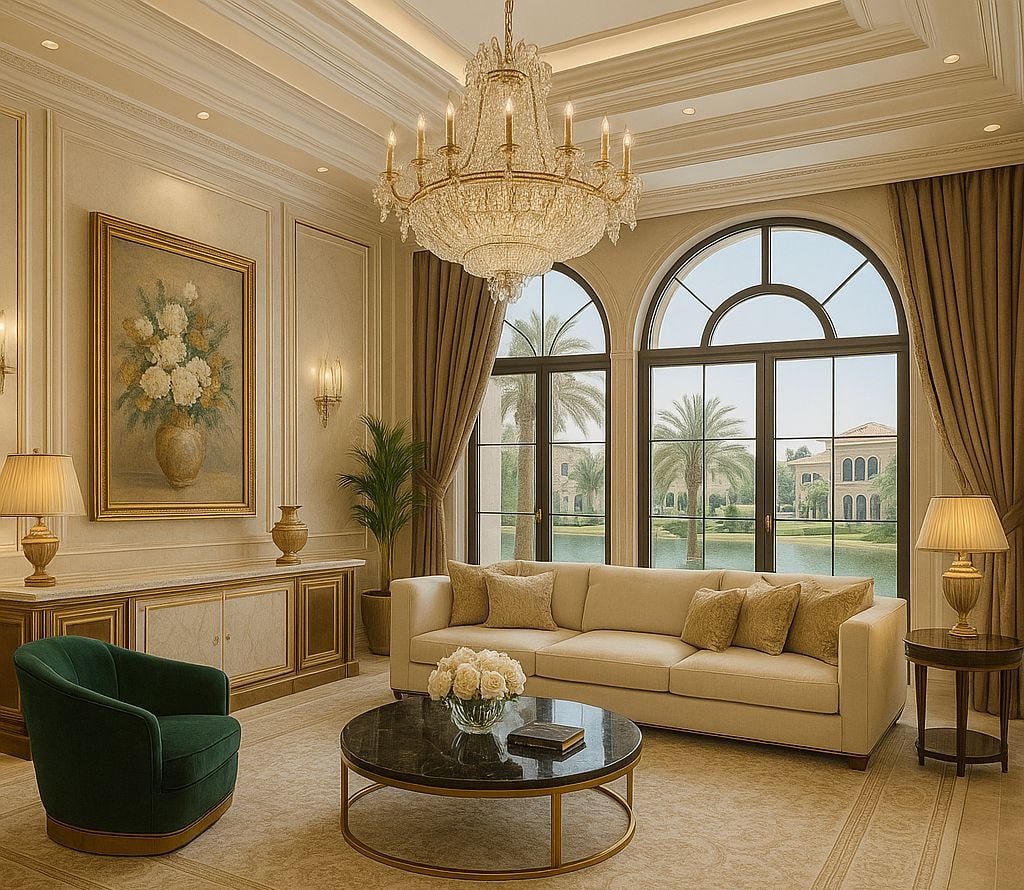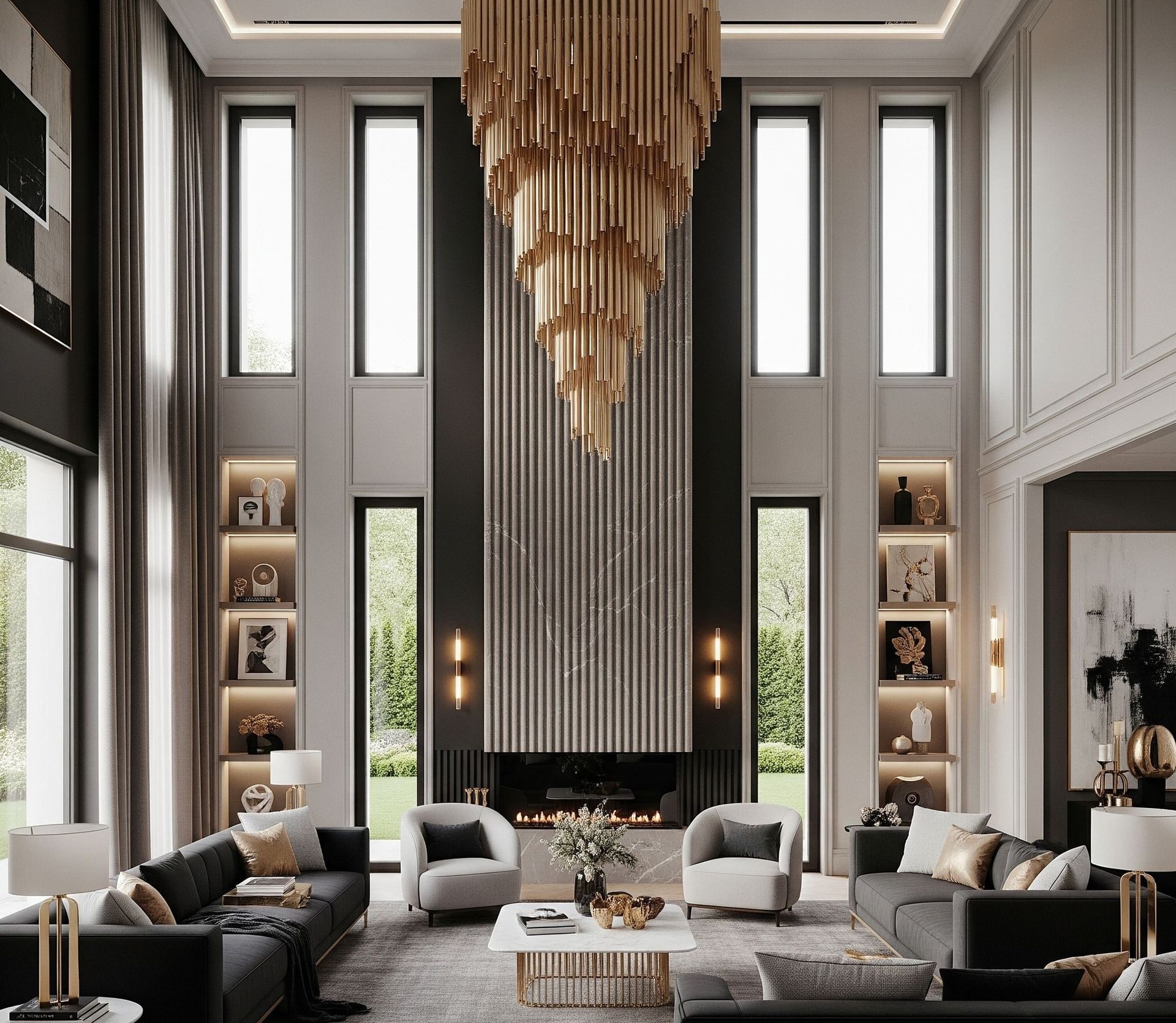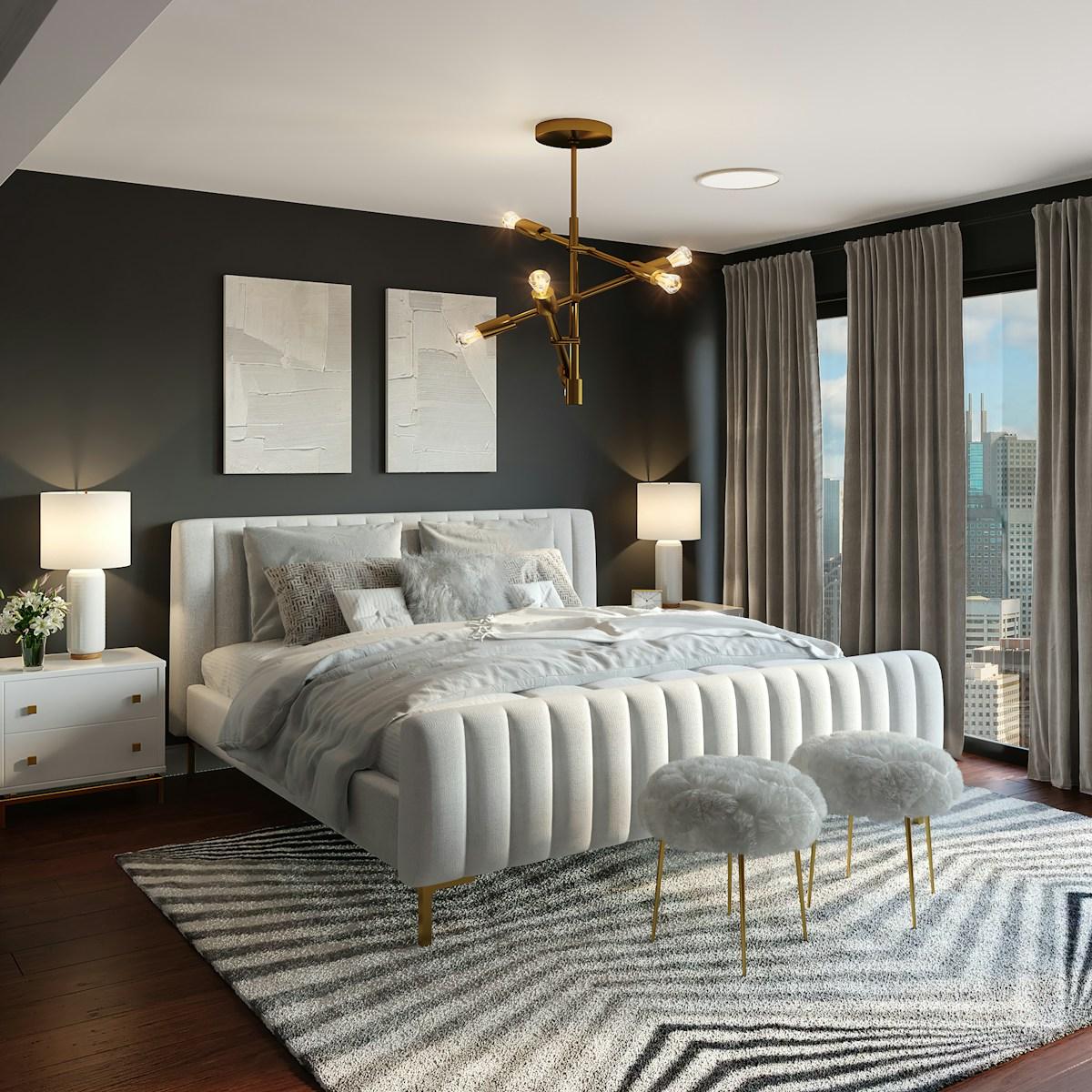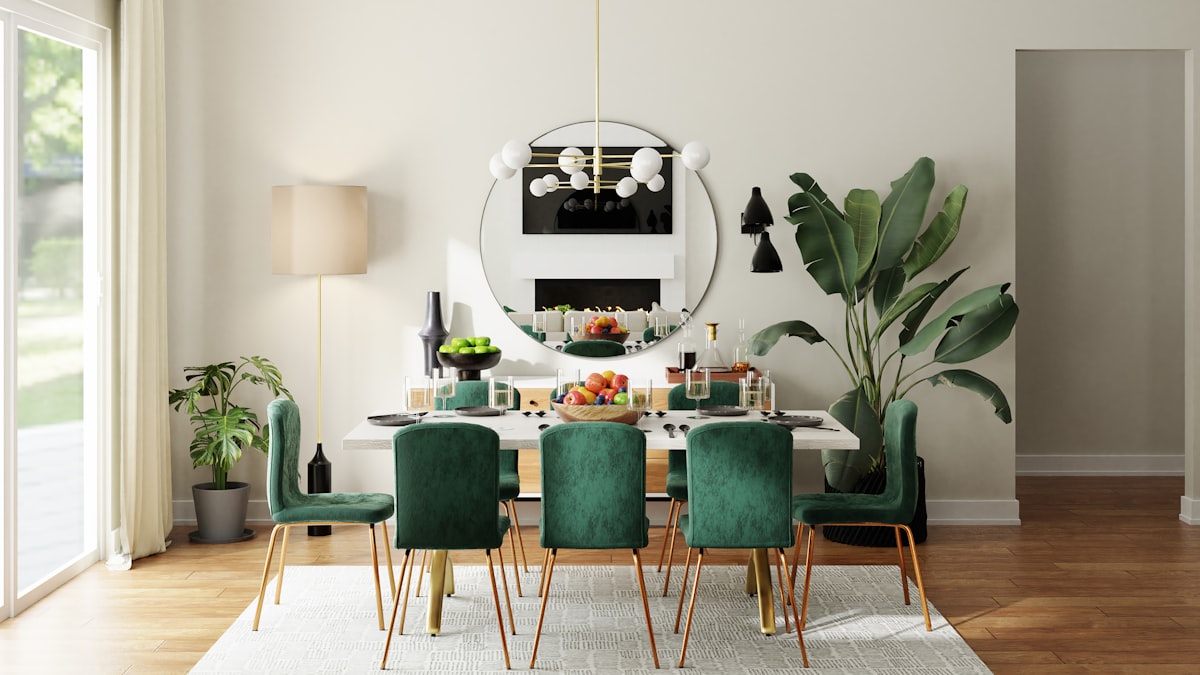
A Dubai villa dining room is, on most weeks, the second-most-used hosting space after the majlis — and on Eid, weddings and family celebrations, the most important room in the house. Designing it well means starting with the hosting reality (how many guests, how often, what kind of meal) and working back from there. This guide covers the sizing, materials and architectural decisions that separate a great formal dining room from one that looks good in photos but doesn't host.
Start with the hosting count
Two numbers shape the entire room:
- Regular hosting count: the number of seats used at typical Friday family lunch or Saturday entertaining. Usually 8-12.
- Peak hosting count: Eid, weddings, large family gatherings. Usually 14-22.
Size the table to the regular count, but design the room so the peak count is still possible — either through a removable extension leaf, a second matching table that combines, or a separate breakfast-room arrangement for overflow.
Table sizing by guest count
Rectangular tables (most common)
- Seats 8: 220-240 cm long × 100-110 cm wide
- Seats 10: 280-300 cm long × 110-120 cm wide
- Seats 12: 320-340 cm long × 120 cm wide
- Seats 14: 360-380 cm long × 120 cm wide
- Seats 16: 420-440 cm long × 120 cm wide
Allow 60-65 cm of edge per place setting. Less and elbows clash; more and conversation breaks across the gap.
Round tables
- Seats 6: 150-160 cm diameter
- Seats 8: 180 cm diameter
- Seats 10: 200 cm diameter
- Seats 12: 220 cm diameter (single round table comfortably hosts 12 maximum)
For 14+ guests, round becomes impractical — either go rectangular, or use two matching round tables.
Room clearance
The number that gets missed most often: clearance behind seated guests for service flow.
- Behind chair to wall: 110-130 cm minimum (75 cm for chair pull-back + 35-55 cm for staff service path)
- Behind chair to console / sideboard: 100-120 cm
- Behind chair to a buffet or serving station: 140-160 cm if guests will queue and serve themselves
A formal villa dining room for a 12-seat rectangular table needs a footprint of approximately 5.5 × 4.5 m minimum to feel correctly proportioned. Less and the room feels cramped no matter how good the table is.
Chairs — the comfort decision
Guests sit at the dining table for 90 minutes to 3 hours on a typical Dubai hosting evening. The chair specification matters more than most clients realise.
Specification fundamentals
- Seat height: 45-48 cm (table height typically 73-76 cm)
- Seat depth: 45-50 cm (deeper for taller adults; shallower can feel awkward)
- Seat width: 48-55 cm
- Backrest height: 90-110 cm for formal dining; lower (85-95 cm) for contemporary low-profile chairs
- Upholstery: seat pad foam density 35-50 kg/m³ for sustained comfort
Material approach
- Fully upholstered: formal, traditional, statement; harder to clean (food and oil staining), more visual mass
- Upholstered seat + open back: classic, visually lighter; easier to clean
- Leather: wipes clean, ages beautifully, formal weight
- Open caning or rattan back: contemporary; ages slowly in dry AC environments
Table top materials
Marble or bookmatched stone
The dramatic statement choice. Calacatta Viola for warmth, Statuario for pure-white luxury, Arabescato for bold veining. Heavy (200-450 kg for a full slab top), formal, photographs spectacularly. Requires sealing every 12-18 months and care with acid (citrus, vinegar, wine).
For deeper material guidance see our marble & stone selection guide.
Solid walnut or oak
Warmer, more inviting, develops a patina with use. Lighter to move, more forgiving of everyday hosting. Solid book-matched plank tops (50-80 mm thick) in American walnut or smoked European oak are our most-specified bespoke dining top. Built in our Al Qusais workshop with mitred-edge construction.
Epoxy resin (river table)
Contemporary statement, less formal than stone. Limited longevity for hard-use formal rooms but striking visual.
Porcelain slab
Marble-look with practical durability. Maximum, Laminam, Atlas Concorde slabs at 12 mm with mitred edge to create the visual mass of a stone top. Indistinguishable in photographs from marble; very different to the touch.
The chandelier — size and height
The single most-photographed object in a dining room.
Sizing rule
The chandelier diameter should be 50-70% of the table width. A 120-cm-wide table calls for a 60-85 cm chandelier diameter. For very long tables (over 300 cm) use a linear suspension or a cluster of 2-3 pendants rather than a single fixture.
Hanging height
- Standard ceiling (2.8-3.2 m): bottom of chandelier 75-85 cm above table surface
- Villa ceiling (3.4-3.8 m): 85-95 cm above table
- Double-height room (4+ m): 100-130 cm above table; consider a 2-tier or vertically articulated fixture to fill the volume
The bottom of the chandelier should never be lower than 165 cm from the floor (head-clearance for guests standing).
For broader lighting integration see our lighting design guide.
The supporting furniture
Console or sideboard
Essential. Lives along one wall, used for serving, displaying decorative pieces (Quranic calligraphy, art object, fresh flowers), and hidden storage for table linen and rarely-used flatware. Width should be 60-75% of the table length to read in proportion.
Bar cabinet
Optional but common in expatriate villas. Houses glasses, decanter, mixer kit. In Emirati and Khaleeji villas usually omitted or replaced with a discreet beverage station for coffee, tea and water.
Buffet credenza
For villas that host larger gatherings frequently — a longer credenza (240-320 cm) with food service surface, warming drawers integrated, sometimes a built-in coffee/tea station.
Architectural backdrop
The dining room's most photographed wall is the one behind the head of the table (visible from the entry). Three approaches:
- Bookmatched stone wall: Calacatta or travertine, full-height, no joins. The most statement option.
- Fluted wood panel: oak or walnut, contemporary, calmer than stone
- Single large artwork: sculptural or framed canvas, picture-lit
What it should not be: a generic flat painted wall with no architectural moment.
Floor and rug
If using a rug under the dining table, size it so all chair legs remain on the rug when chairs are fully pulled back to seat — typically the rug should extend 60-75 cm beyond the table edge on all sides. A 320-cm table with chairs needs a rug of approximately 440 × 240 cm minimum.
Common error: rug sized to table top only. Chairs slide partly off the edge when guests stand, the rug bunches, the room reads as poorly-planned.
Climate considerations
- AC distribution: diffusers placed away from seated guests — cold air on the back of the neck ruins a long dinner. Position over the perimeter, not over the table centre.
- Curtains: floor-length, heavy textile, on dimmable curtain track. Acoustic absorption matters for a 14-guest dinner.
- Sound: stone-floor dining rooms with no curtain or rug absorption sound like a hotel lobby. Specify soft absorption deliberately.
Hosting culture considerations
- Emirati / Khaleeji hosting: tends toward larger guest counts, longer evenings, formal place settings with multiple courses. Table specification leans larger and more formal.
- Expatriate Western hosting: tends toward mid-size dinner parties (8-12), wine pairings, conversation-driven dinners. Table specification leans more intimate.
- Cultural family dual-purpose: formal dining room reserved for special occasions; daily meals happen at a separate breakfast room or kitchen table. The formal room is designed for occasional showpiece use.
The villa-dining checklist
- Table sized to regular hosting count, room sized to peak
- 110-130 cm clearance behind chairs
- Chair seat depth 45-50 cm, height 45-48 cm
- Chandelier diameter 50-70% of table width, hung 75-95 cm above
- Console sized 60-75% of table length
- Architectural feature on the wall behind the head of the table
- Rug extends 60-75 cm beyond table edges
- AC diffusers away from seated positions
- Floor-length curtains for acoustic absorption
- Plan for the peak count, not just the regular
The bottom line
A formal dining room reads beautifully only if it hosts beautifully. Get the table sizing right, plan the clearances honestly, choose materials the room can actually live with, and let the chandelier and the wall behind the table do the architectural lifting. The piece you remember from a great Dubai villa dinner is rarely the menu — it is the room.
If you are commissioning a dining table, full dining set, or designing a formal dining room as part of a villa project, our team handles full dining design and custom table manufacturing from our Al Qusais workshop. Browse current dining furniture or book a complimentary consultation.
Commissioning a custom dining table?
Book a complimentary consultation. We'll size the table to your hosting culture, propose materials and chandelier scale, and return a complete proposal with budget within two weeks.
Book a Consultation