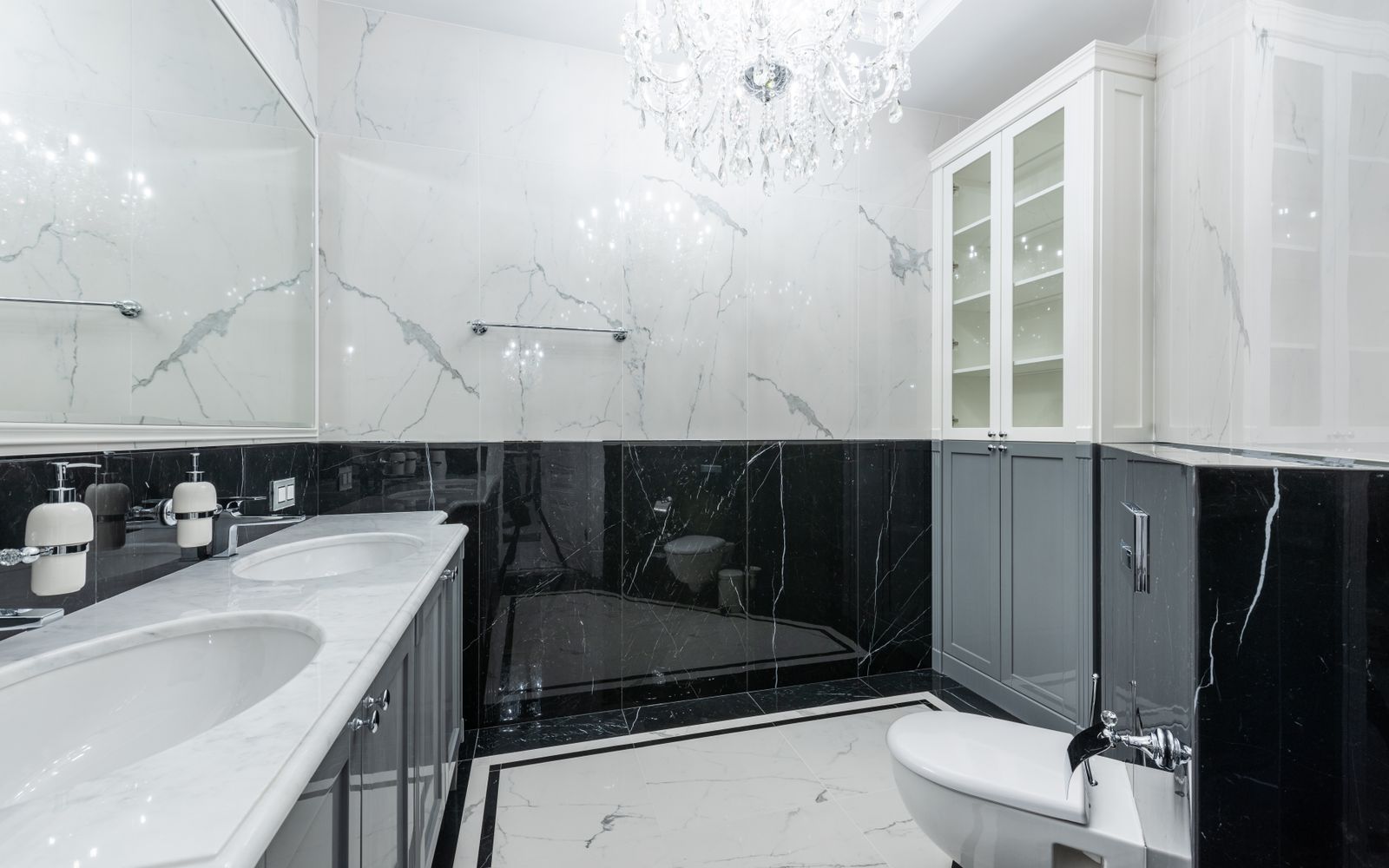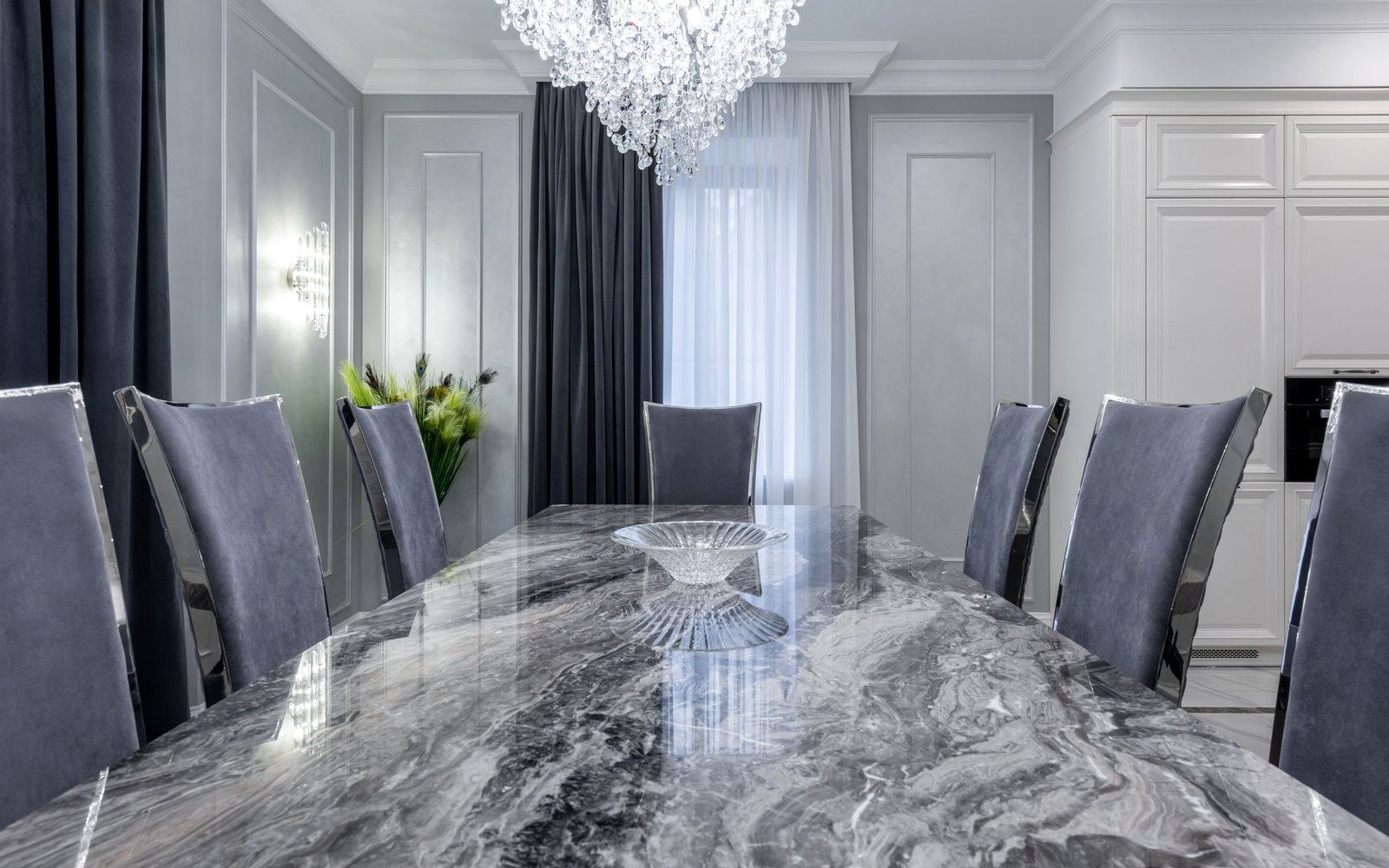
Walk through any furniture showroom in Dubai and the stone dining tables look much alike: white, veined and glossy. Some are natural marble, quarried and polished. Others are sintered stone, an engineered slab made from minerals pressed and fired at extreme heat. They photograph the same, but they do not live the same. Here is how they differ at the table, and how to decide which belongs in your dining room.
The short answer
Choose sintered stone if the table will be used every day by a family, if you want it to look exactly as it did on delivery in ten years' time, or if it stands in strong sun. Choose natural marble if the table is the centrepiece of a formal dining room, if you want a slab nobody else has, and if you are happy for it to gain a little character with use. If you love marble but worry about wine and lemon, a honed marble or a satin-finish sintered stone sits in between.
What each material actually is
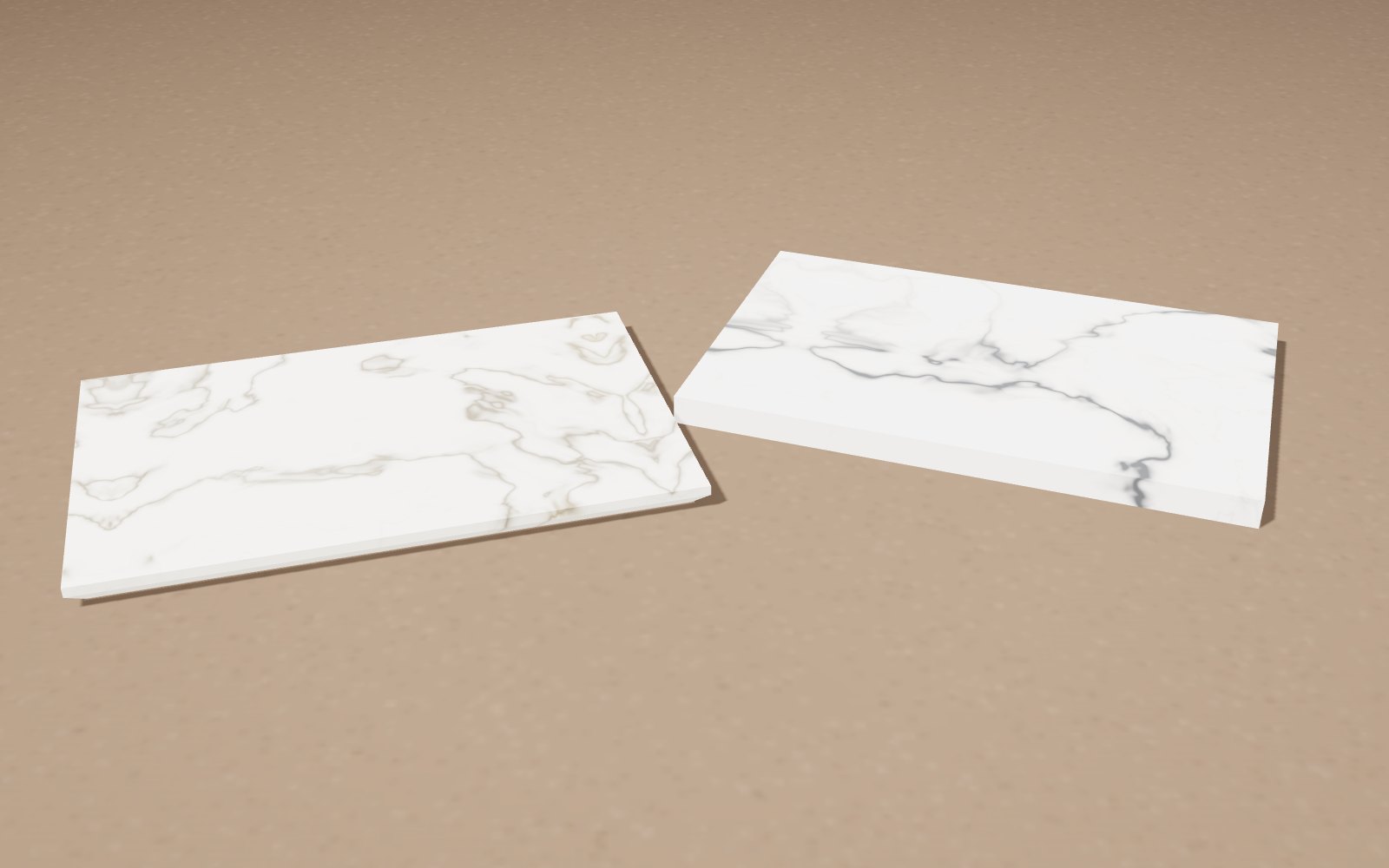
Natural marble is limestone transformed by heat and pressure over millions of years. It is mostly calcite, which gives it its depth and soft translucency, and also makes it relatively soft and sensitive to acids. Each slab is sawn from a quarried block, so the veining runs through the full thickness and no two tables are the same. Dining tops are usually 20 mm thick, or 30 mm for very large tops.
Sintered stone, sold under names such as Dekton, Neolith and Laminam, is made from natural minerals (clays, feldspars and silica) compacted under enormous pressure and fired at around 1,200 °C. The result is dense and almost non-porous. On most slabs the marble pattern is printed digitally onto the surface and the body beneath is a plain colour; some premium “full-body” ranges carry the veining through the thickness. Table tops are usually 12 mm thick.
At a glance
| Natural marble | Sintered stone | |
|---|---|---|
| Scratches | Soft, about 3 on the Mohs scale; a polished top shows fine scratches | Very hard, about 6–7; resists knives and the bases of dishes |
| Lemon, vinegar, wine | Acids etch dull marks, sealed or not | No reaction |
| Stains and sealing | Porous; reseal every 6–12 months | Virtually non-porous; no sealing, ever |
| Heat | Tolerates warm dishes; resin-filled areas can mark | Highly heat resistant |
| Gloss over time | Dulls where it is used; can be re-polished | Lasts longer, but a worn polish cannot be renewed |
| Chips | Can be filled and blended in | Hard to hide, especially on printed slabs |
| Usual thickness | 20 mm (30 mm for very large tops) | 12 mm, often with a mitred apron |
| Weight of a 2.6 × 1.2 m top | About 165–170 kg | About 95 kg |
| Strong sun | Stone is stable; resin fills can yellow | UV-stable, even outdoors |
| Unique? | Yes: you choose the slab | The pattern repeats from slab to slab |
Scratches: hardness is the big difference
On the Mohs scale of mineral hardness, marble sits at about 3. A steel knife, the unglazed ring under a ceramic dish or a little grit under a handbag will mark a polished top. Sintered stone rates about 6 to 7, harder than steel, and everyday use barely touches it. On polished marble, fine scratches show as a haze when the light rakes across the surface; on honed marble they disappear into the matte finish.
Placemats, and felt pads under vases and centrepieces, prevent most of it. Marble's softness is also what makes it repairable: a stone restorer can hone and re-polish a scratched or dulled top in place, and it looks new again. A deep scratch in a polished sintered surface is permanent.
Etching, staining and sealing
This is where people are most often caught out, because staining and etching are different problems. A stain is something absorbed into the stone, such as oil, coffee or turmeric, and a good penetrating sealer slows absorption enough for you to wipe it up in time. An etch is a chemical reaction: the acids in lemon juice, vinegar, wine, tomato and some cleaning sprays dissolve the calcite at the surface and leave a dull, slightly rough mark. Sealer does not stop it.
So a marble table will etch eventually, even when it is sealed. On a honed finish the marks blend in; on a high polish they show as dull rings. Some owners love this patina, the way old Italian café tables wear; others find it stressful. It is worth being honest about which you are.
Sintered stone is almost non-porous and acids do not affect it. It never needs sealing and can be cleaned with ordinary household products.
Gloss: which surface stays looking new
A mirror polish on marble is not permanent. It softens gradually where plates and elbows go while the rest of the top stays bright, and every few years a restorer can bring it back. Glossy sintered stone keeps its shine much longer, but once a factory polish is worn or scratched it cannot be renewed. For sintered tables that will be used hard, a satin or matte finish is the durable choice; for marble, a honed finish is the low-maintenance one.
Heat, sun and the Dubai climate
Neither material minds air-conditioning or humidity the way solid wood does. Heat is a small advantage for sintered stone, which will not scorch. Marble tolerates warm serving dishes, but resin-filled areas can mark, and a very hot pan from the oven is best kept off any stone; use trivets on both. In strong sun, beside a glass wall or on a covered terrace, sintered stone is UV-stable and can even live outdoors, while the resin used to fill natural pits in some marbles can yellow over time.
Engineered quartz, the third option people often ask about, is bound with resin, so it can scorch and discolour in sunlight. We rarely recommend it for a dining table near a window.
Weight, and what it means for the base
Marble weighs about 2.7 tonnes per cubic metre, so a 20 mm top weighs about 54 kg per square metre. A 2.6 by 1.2 m top for eight to ten people therefore weighs roughly 165–170 kg. The same top in 12 mm sintered stone weighs about 95 kg.
Weight is not a problem in itself; it is a design input. A heavy top is stable, but it bends between supports, needs a base engineered for it and has to come up in the lift. Most large stone tops sit on a steel sub-frame that supports the slab across its width, with the legs or pedestals fixed to the frame rather than to the stone, and the frame set back from the edge so it cannot be seen. Marbles also vary widely in strength: some white marbles are only a third as strong in bending as others, which changes how much support the slab needs. A good workshop checks the data sheet of the actual stone before designing the frame.
Thin sintered stone is strong but brittle, rather like glass. It needs flat, continuous support, and unsupported overhangs should be kept modest. We explain the base options, and how they are fixed to stone, in our guide to dining table bases.
Edges: where the two materials differ most
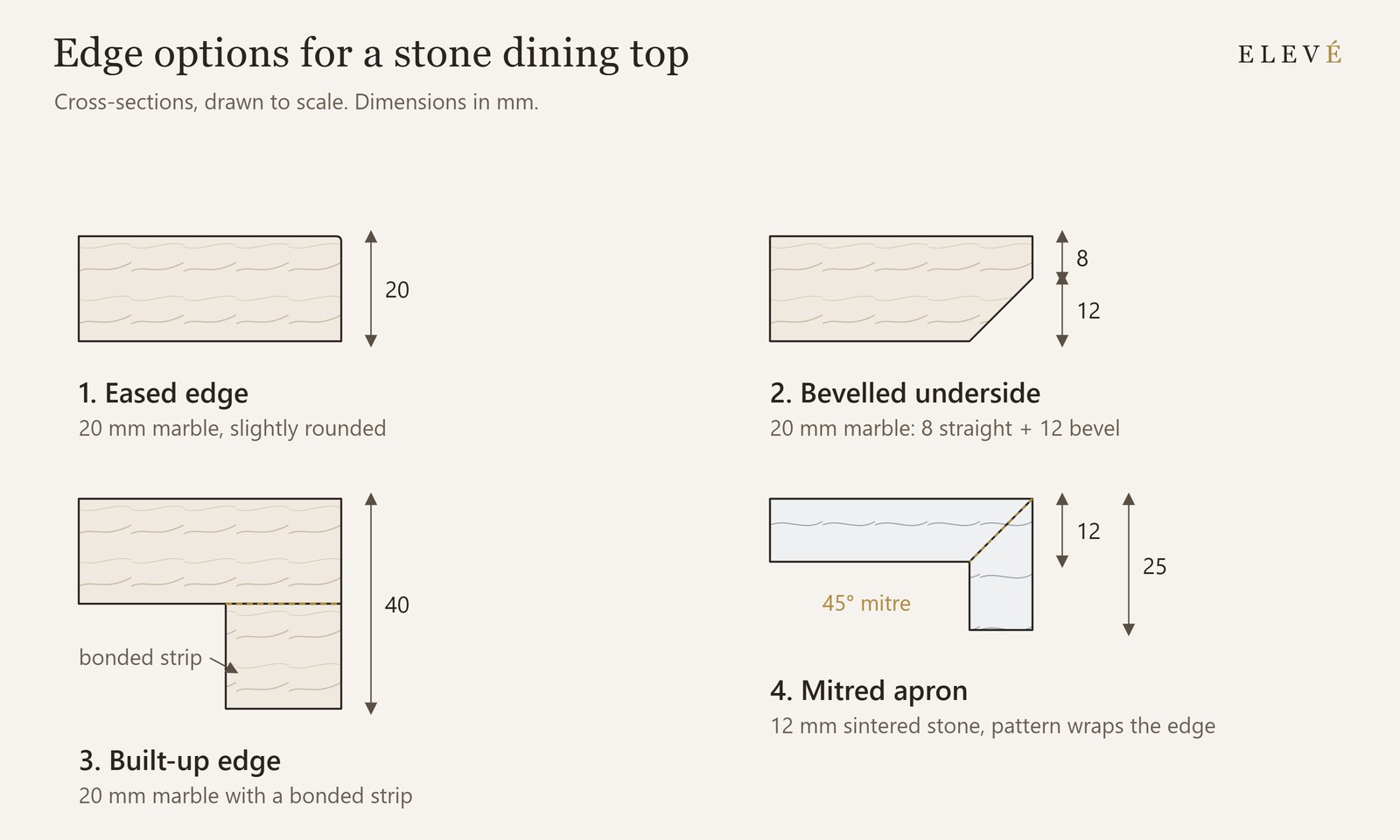
Because the veining runs through it, marble can be shaped: eased, bevelled, rounded or cut to a fine knife edge, and the pattern simply continues. A popular profile on 20 mm marble is a short straight edge over a bevelled underside, which makes the top look much slimmer than it is. For the look of a thick slab without the weight, a strip of the same stone is bonded under the edge so that it reads as 40 mm.
Sintered stone is usually 12 mm and, on most ranges, patterned on the surface only, so a bevel or a round would expose the plain body. The usual answer is a 45° mitred apron: a strip of the same slab joined at the corner so the pattern wraps over the edge and the top reads as 20–40 mm thick. Corners should be generously rounded, because the corner of a thin slab is where a knock is most likely to chip it.
What drives the price
Our bespoke dining tables start from AED 15,000, and where a particular table lands depends mostly on two things: the top and the base.
- The top material. Solid wood and veneers are the starting point and sintered stone comes next. Marble varies more than any other material: a classic Carrara costs far less than a Calacatta or Statuario, and a rare, strongly figured slab is priced almost like art. Book-matching two consecutive slabs adds both stone and labour.
- Size and slab yield. Most slabs are no longer than about 3.2 m, so longer tops need a joint or a jumbo slab, and centring the best veining on the table can mean more waste.
- Edge and thickness. A built-up 40 mm edge, a mitred apron or a knife edge takes hours of skilled work compared with a simple eased edge.
- The base. Painted or powder-coated steel is the most economical; brushed or PVD-coated stainless steel, solid hardwood, bronze and brass, and stone pedestals each cost more. A base engineered to carry 170 kg of stone also costs more than legs under a wooden top.
- Finish and logistics. Honing or special finishes, crating, delivery, the lift and the team needed to set a heavy top.
As a guide, a stone top on an engineered steel base typically starts from about AED 25,000 for an eight-seater, and rare or book-matched marble, longer tables and sculptural bases take it well beyond that. When comparing quotes, ask for the top and the base to be priced separately so you can see which choice moves the number. There is more on budgets in our custom dining table guide.
Five questions that decide it
- Who uses the table, and how often? Daily family meals, homework and children point to sintered stone or honed marble. A formal dining room used mainly for guests can take a polished marble.
- Should it age, or stay new? Marble develops a patina; sintered stone stays as delivered. Neither is wrong, but choose one on purpose.
- Gloss or matte? High gloss shows etching on marble and wear on sintered stone. Honed marble and satin sintered stone are the forgiving finishes.
- How thick should the edge look? A slim bevelled edge suits marble; a crisp, thicker edge with a mitred apron suits sintered stone.
- Does the slab need to be one of a kind? If the veining itself is the point, buy marble and choose the slab. If you want a calm, consistent pattern, sintered stone delivers it.
Choosing the actual slab
With marble you are buying a particular slab, not a sample. Catalogue photographs often show the best slab a quarry has produced, and the slabs in stock can differ in colour and in the density of the veining. Ask for photographs of the actual slabs, taken in daylight with a tape measure in the frame, and ask where your table will sit on the slab: a 2.6 m top cut from a 3.2 m slab can be positioned to centre the best movement or to avoid a fissure. A book-matched top needs two consecutive slabs from the same block.
Sintered stone is more predictable, but check the pattern repeat on long tables and whether the range you like is printed or full-body. Our marble and stone selection guide covers the main stone families and finishes.
Care, in two short lists
Marble
- Wipe up lemon, vinegar, wine and tomato at once, and use placemats and coasters.
- Clean with a pH-neutral stone cleaner or mild soap and water; avoid vinegar-based and abrasive cleaners.
- Reseal every 6–12 months, or when water stops beading on the surface.
- Have a stone restorer re-hone or re-polish the top every few years if it has dulled.
Sintered stone
- Clean with warm water and an ordinary household cleaner; no sealing is needed.
- Avoid hard knocks on edges and corners, where thin slabs can chip.
- Use trivets for very hot pans, to avoid thermal shock.
- Avoid scouring pads on polished finishes.
The bottom line
Sintered stone is the sensible choice and marble the romantic one, and both make a superb dining table when the top, the edge and the base are designed together. If you are deciding between them, see the dining tables we make, or send us your room size and how you use the table and we will recommend the stone, the edge and the base to suit it.
Header photograph: Max Vakhtbovych on Pexels.
Choosing a stone top?
Tell us the size of the table and how it will be used. We will suggest the stones that suit it, send photographs of the actual slabs available, and recommend the edge and the base to go with it.
Book a Consultation