Tables get chosen last, often in a hurry, and they are the reason many well-furnished living rooms feel slightly wrong. A coffee table too small for the sofa looks lost; one too low forces everyone to stoop; one set too far away leaves cups on the floor. The fix is not a matter of taste. It is four numbers: length, height, distance and reach.
Length: about two-thirds of the sofa
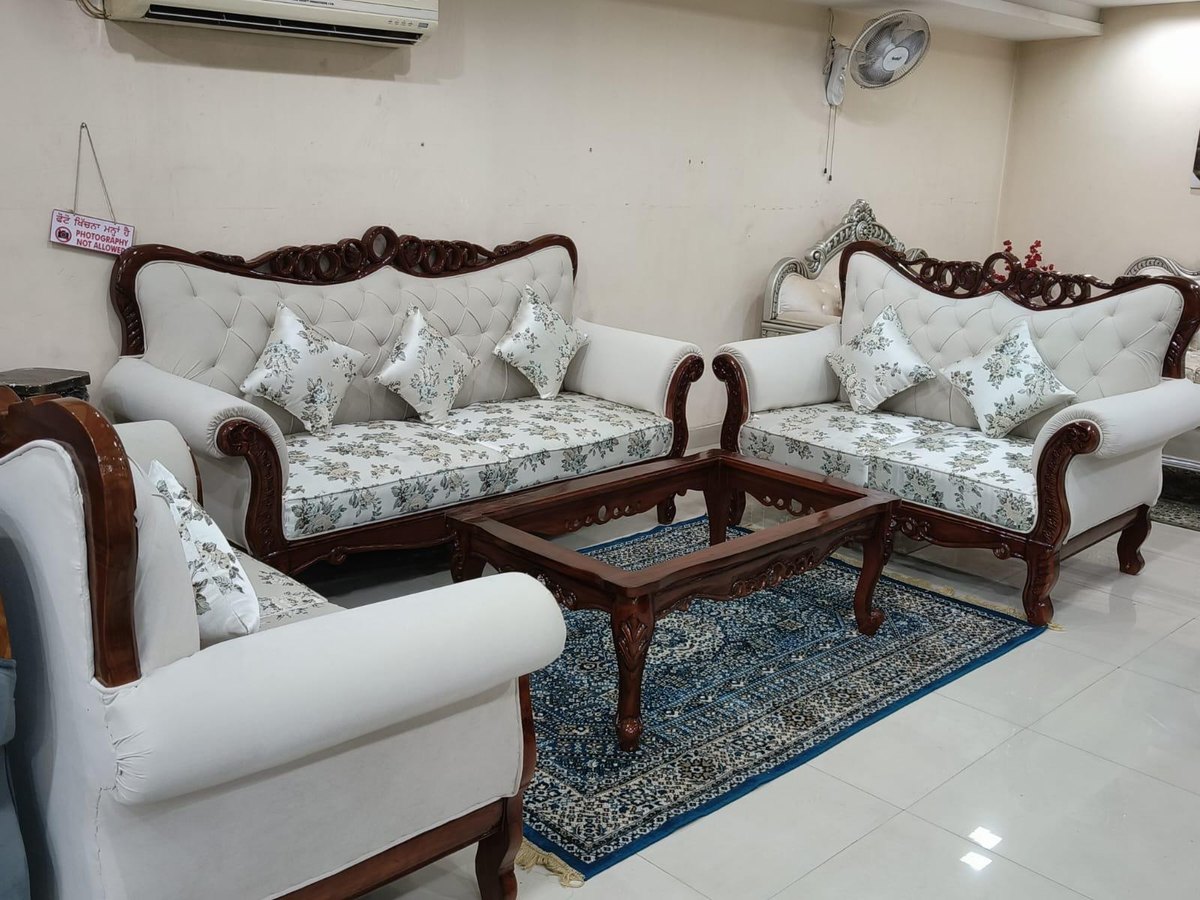
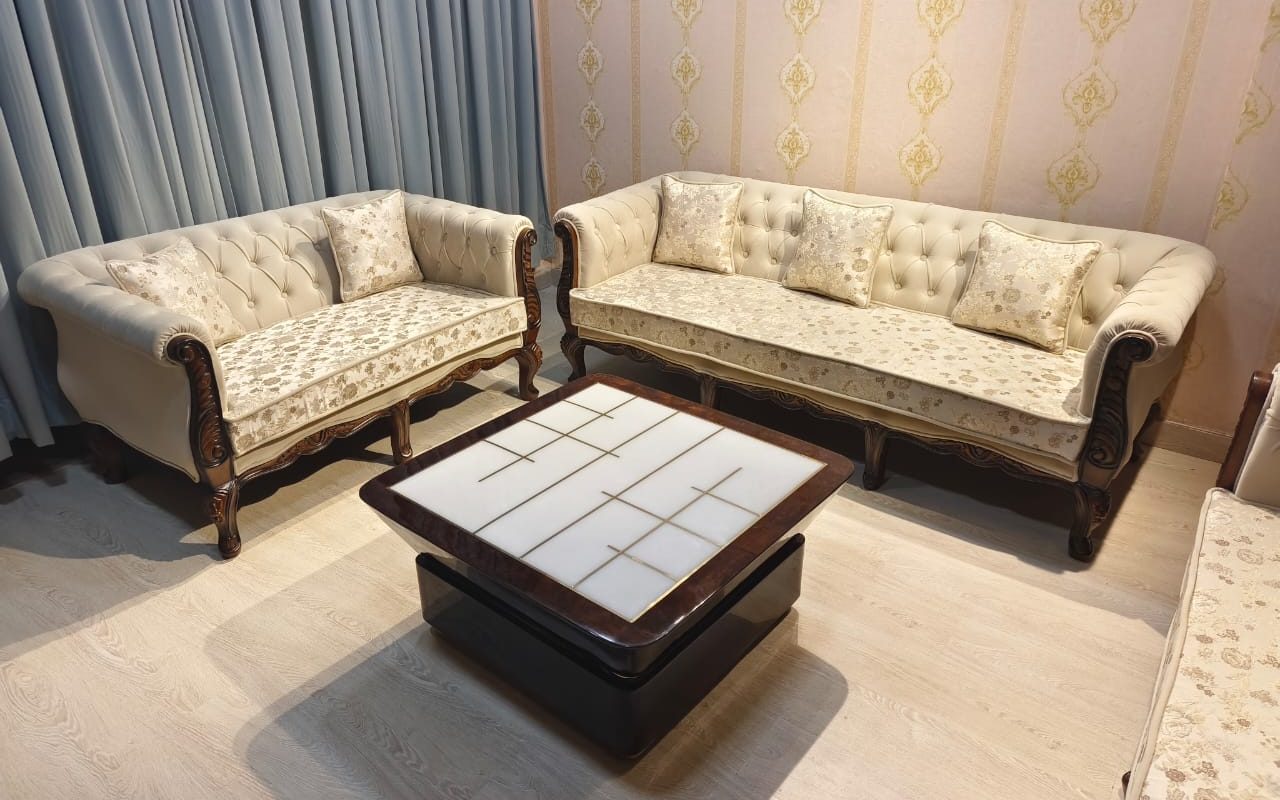
The coffee table should be roughly two-thirds the length of the sofa it serves. A 240 cm three-seater suits a table of about 140–160 cm; a 200 cm sofa, one of 120–130 cm. The proportion keeps the table within reach of everyone on the sofa without blocking the ends, where people step in and out.
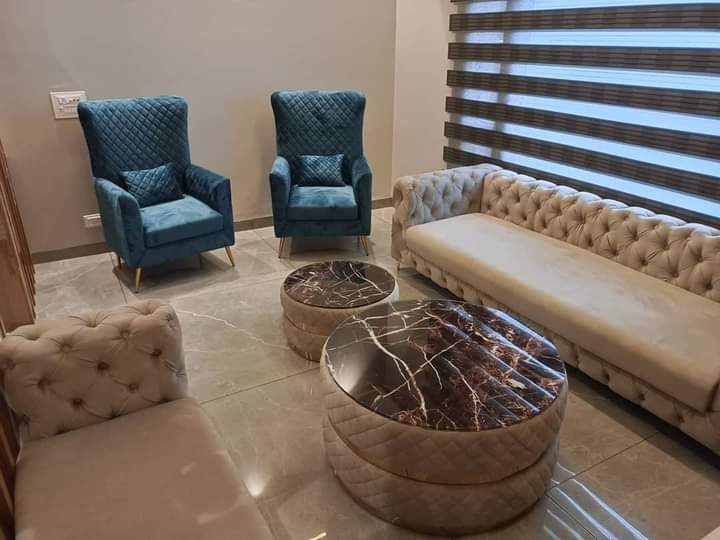
With an L-shaped sofa, size the table to the longer run and set it so that both arms of the L can reach it. In a large villa living room with facing sofas, a single long table often works better than two small ones, or a pair of generous round tables, as in the photograph below, set side by side.
Height: level with the seat, or a little lower
Most sofas have a seat height of 42–45 cm, so the table should be 38–45 cm high: level with the seat or up to 5 cm lower. Low contemporary sofas can take a table of 30–35 cm. A table higher than the seat starts to feel like a dining table, blocks the view across the room and makes the space look smaller.
Distance: 40–45 cm from the sofa
Set the table 40–45 cm from the front edge of the sofa and the armchairs: close enough to put down a cup without standing, far enough to walk between. The walkway past the whole seating group should be around 90 cm where people pass often. These are the same clearances we draw in our guide to sizing a sofa, and they work together: a sofa, table and walkway sized separately rarely fit the room.
Shape: choose by the room, not the catalogue
- Rectangular or oval for a long sofa with chairs at each end. An oval gives the same surface with no corners to walk into.
- Round for tight rooms, busy walkways and homes with small children. Round tables also suit a seating group of chairs rather than a sofa.
- Square for L-shaped sofas, facing sofas that are close together, and majlis layouts, where every seat should be able to reach the table.
- Pairs and nests for rooms that change use: two round tables or a nest can be separated for a party and pushed together for a quiet evening.
In a majlis
A majlis runs on different rules because tables are for serving: coffee, dates, tea and sweets for every guest, often at once. Rather than one coffee table, a majlis usually needs several centre tables or a long low table down the middle, set so that every seat is within easy reach and the host can move around them. Leave 45–50 cm between the seating and the tables to give that room, and choose tops that take hot cups and spilt coffee without complaint. Our majlis layout guide shows how tables sit in each plan.
Side tables: reach is everything
A side table should be within about 5 cm of the height of the sofa or chair arm it stands beside, usually 50–60 cm, so a cup can be reached without twisting. The top needs room for a lamp and a drink together, typically 40–55 cm across. If a lamp sits on it, the bottom of the shade should come to roughly eye level when you are seated, so the bulb is not glaring at you. Every seat in the room should have a surface within arm's reach; that single rule settles how many side tables a room needs.
Materials that last in a Dubai living room
- Marble is beautiful and porous. It etches when acids such as lemon, vinegar or some cleaners touch it, and stains if spills sit. Seal it, reseal it about once a year, and use coasters. Our stone selection guide explains which marbles are the most forgiving.
- Sintered stone and porcelain give a marble or travertine look with far better resistance to stains, heat and etching. The practical choice for families.
- Travertine should be filled and sealed for a table top; unfilled travertine collects crumbs and liquids in its holes.
- Solid wood and veneer need a hard-wearing lacquer or oil finish, and solid timber tops need to be made to allow for movement as air conditioning dries the room in summer and humidity rises in the shoulder months.
- Brass and metal should be lacquered or chosen as a living finish that you are happy to see age.
- Glass should be toughened safety glass; it shows fingerprints and can feel cold in a room full of textiles.
Stone is heavy, which matters for delivery and for the base. Marble weighs about 2.7 tonnes per cubic metre, so a 20 mm top weighs roughly 54 kg for every square metre, and a large table can need two or three people and a base designed to carry it. We specify base, top thickness and delivery together for that reason.
Having tables made
A table is one of the simplest pieces to commission and one of the most satisfying: it can be sized to the gap exactly, finished in the same timber as the sofa frame or the joinery, and topped with a stone chosen from the slab. Tables are made alongside the seating in the same six to ten weeks. See the custom furniture page for the rest of the range.
Want a table sized to the room?
Send the sofa dimensions and a photograph of the room. We will suggest a size, height and top material, draw it in the plan, and quote it with the stone or timber you choose.
Book a Consultation