Sheesham is the wood behind a great deal of the solid furniture sold in the Gulf, and it is one of the two timbers, with teak, that we work with every day in our Al Qusais workshop. It is also sold under several names and in very different qualities, so two “solid sheesham” tables can behave very differently after a Dubai summer. This guide explains what the wood is, how to judge it, how it should be dried and finished, how it compares with teak and oak, and how to check quality before you buy.
The short answer
Good sheesham is heartwood, not pale sapwood, kiln-dried to around 8 to 12% moisture, built with proper joints and finished on every face. Bought that way, it is strong, hard-wearing and handsome, and it costs noticeably less than teak. It is the best value for strength in indoor furniture: chairs, bed frames, sofa frames, sideboards and dining tables of normal size. Choose teak instead for very wide tops, wet rooms and anything that lives outdoors.
What sheesham is
Sheesham, also spelt shisham and sold as Indian rosewood, is Dalbergia sissoo, a hardwood native to the Indian subcontinent and widely grown in India and Pakistan on plantations, farms and along roads and canals. It is a true member of the rosewood family, though it is lighter in colour and more plentiful than the Indian rosewood (Dalbergia latifolia) used in many classic carved pieces.
It is a dense wood, typically around 770 to 800 kg/m³ when dry, heavier than teak at roughly 650 to 700 kg/m³. That density is why sheesham chairs and frames feel solid in the hand, why screws and joints hold so well, and why the surface resists dents better than softer timbers. It is also why a sheesham dining table for eight takes four people to lift.
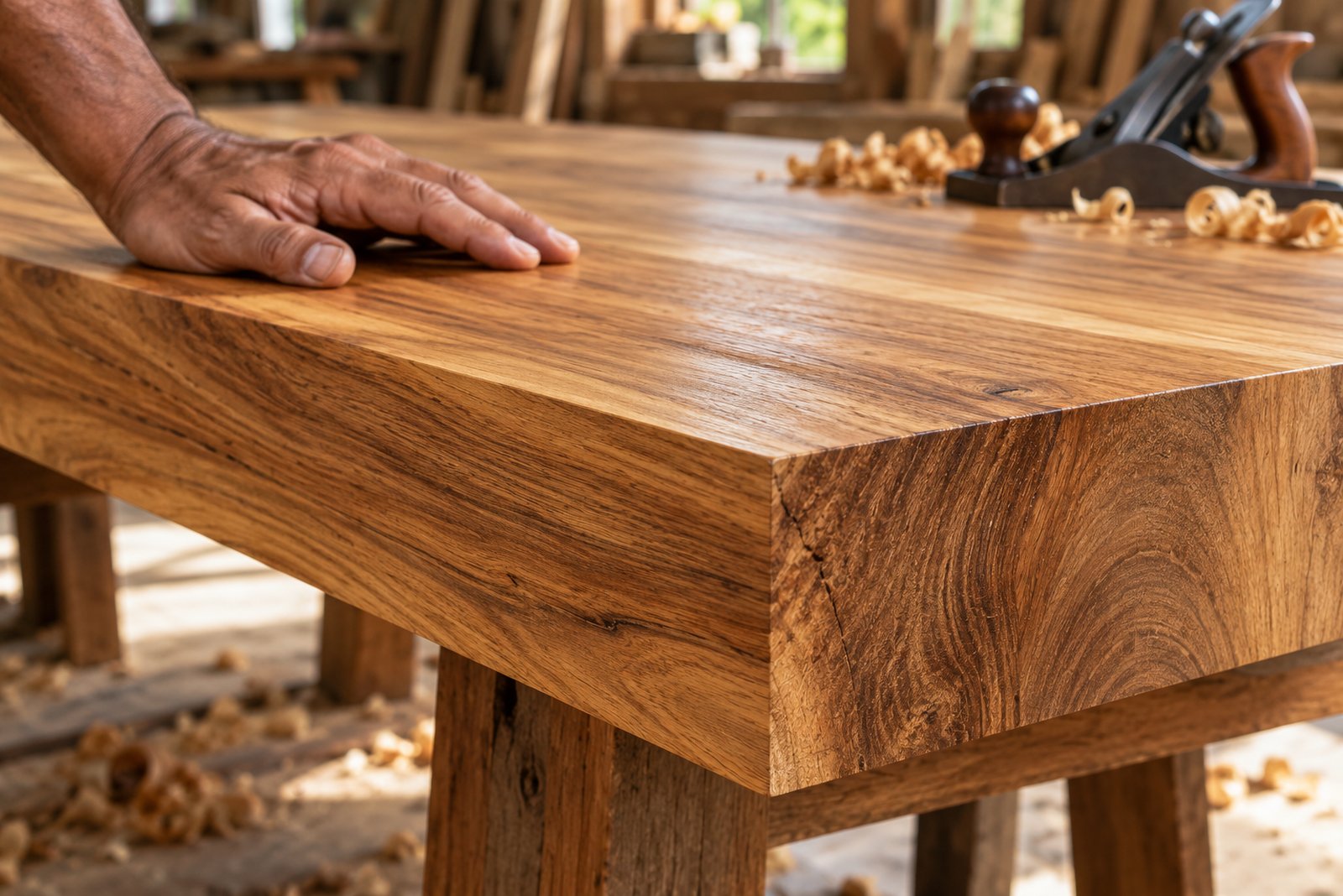
Much of the sheesham in the market comes from trees of moderate diameter, so very wide, clear boards are uncommon. Table tops and panels are glued up from several boards, usually 100 to 200 mm wide, which is normal and, done well, more stable than one wide plank.
Heartwood and sapwood: the grade that matters
Cut a sheesham log across and you see two zones. The heartwood in the centre is golden brown to deep reddish brown, often with darker, almost black streaks. The sapwood is a band of pale cream timber under the bark, usually a few centimetres wide.
- Heartwood is naturally durable, more stable and the part with the colour and figure people buy sheesham for.
- Sapwood is softer, less durable and more attractive to wood-boring insects. It also takes stain differently, which is why cheaper pieces are often stained very dark to hide it.
A little sapwood on a hidden rail is acceptable. Pale streaks on a table top, a chair leg or the front of a drawer are a sign that the maker has not graded the timber. Ask to see an unstained sample of the actual boards, or at least the underside of the piece. Small pin holes with fine powder below them, on any wood, are a sign of insect activity and a reason to walk away.
Seasoning: more important than the species
Fresh-sawn sheesham can hold well over 50% of its dry weight in water. If it is made up before it has been dried properly, it keeps shrinking in the home, and in a Dubai villa running air-conditioning for most of the year that shrinkage is fast. The results are familiar: gaps opening between the boards of a top, joints working loose, panels splitting and drawers that stick and then rattle.
Good practice is to air-dry the boards first, then kiln-dry to around 8 to 12% moisture, close to the level the wood will settle at indoors here, and then let it rest in the workshop before machining. Every board we use is kiln-dried to that range. Ask any maker for the target moisture content in writing; a moisture meter reading takes seconds.
Construction matters too. A solid top must be fixed with buttons or slotted brackets so it can move a millimetre or two across its width, and wide panels should sit in grooves, not be glued all round. The same principles apply to every solid wood, as our guide to solid wood and veneer explains.
Sheesham, teak and oak compared
We build in sheesham and teak, and offer oak and walnut on request for their visible grain. Here is how the first three compare on the points that matter for furniture in Dubai.
| Sheesham | Teak | Oak | |
|---|---|---|---|
| Weight (dry) | About 770–800 kg/m³ | About 650–700 kg/m³ | About 700–770 kg/m³ |
| Hardness and dent resistance | Hard: about half as hard again as teak | Medium-hard | Hard |
| Grip on joints and screws | Excellent | Good | Very good |
| Stability in AC and humidity | Good when properly kiln-dried | Outstanding: barely moves | Moves more than teak |
| Moisture, termites and insects | Resistant (heartwood only) | Highly resistant, thanks to its natural oils | Fair |
| Colour and figure | Golden to deep brown, darker streaks, lively grain | Golden to mid-brown, even, deepening with age | Pale straw to light brown, open grain |
| Price level | Moderate: the best value for strength | High | High, as it is imported |
| Best uses | Chairs, bed and sofa frames, dining tables, sideboards, carving | Large table tops, visible and carved wood, bathrooms, outdoors | Visible pale grain, on request |
In short: sheesham wins on hardness, strength and value; teak wins on stability, moisture resistance and outdoor use; oak is chosen for its pale, open grain rather than for performance in this climate.
Grain, colour and figure
Sheesham has an interlocked, sometimes wild grain, and no two boards are alike. That is part of its appeal, but it has practical effects:
- Colour varies from honey to chocolate within one log. A good maker selects and matches boards so a table top or a set of doors reads as one piece.
- It darkens with light. Like most rosewoods, freshly cut sheesham deepens towards a warmer brown over months in daylight. Move ornaments around in the first year so they do not leave pale shadows.
- The grain can tear when planed, so a well-finished surface needs sharp tools and careful sanding, usually through to 180 or 240 grit before finishing.
- It carves crisply. The density that makes it hard to plane also holds fine carved detail, which is why sheesham is common in classic and carved designs.
Where sheesham works best, piece by piece
- Dining chairs: the joints between the back legs and seat rails take enormous leverage. Sheesham’s grip on mortise and tenon joints makes it ideal.
- Bed frames: dense rails and posts hold bed bolts firmly and stay quiet.
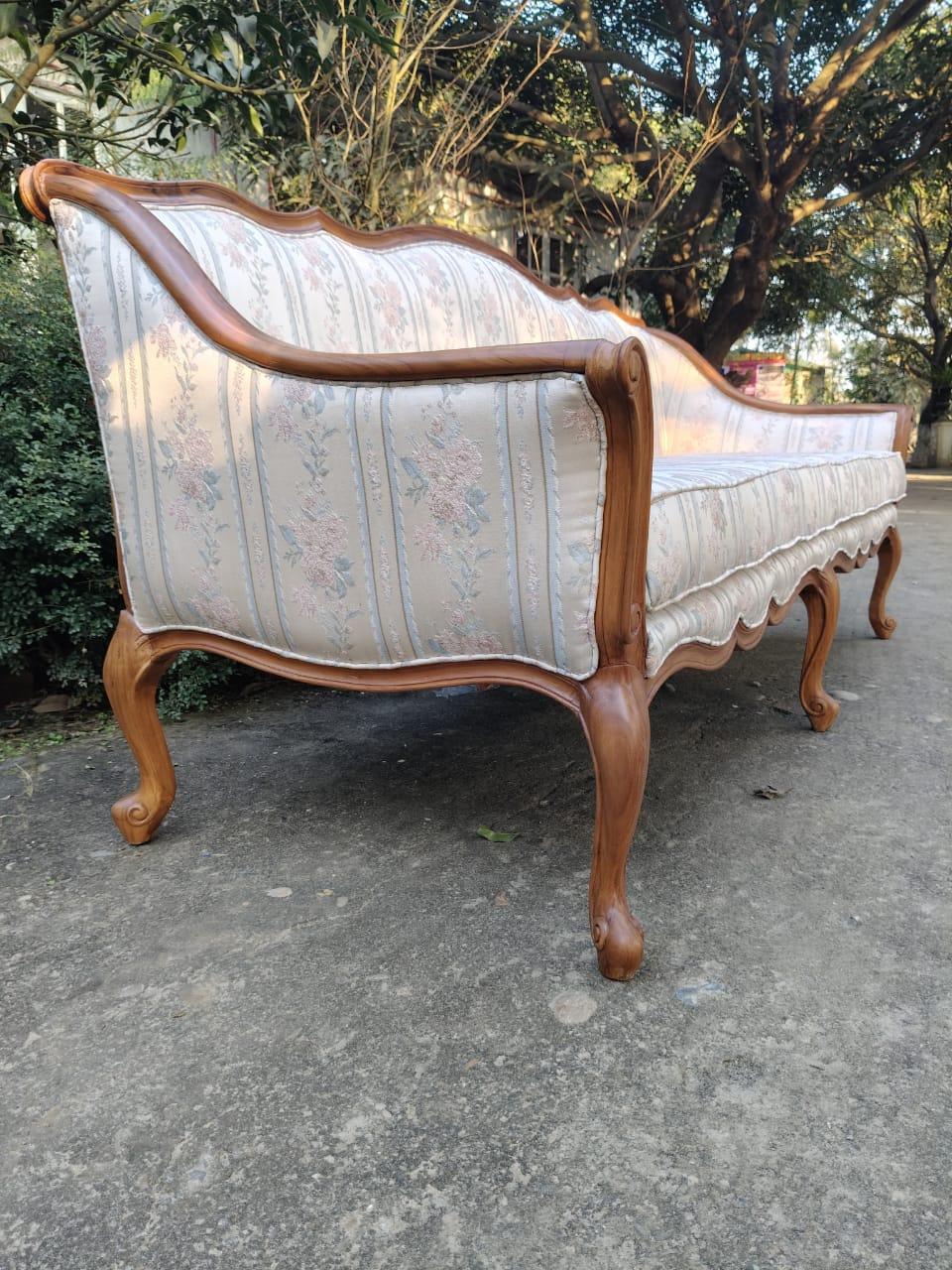
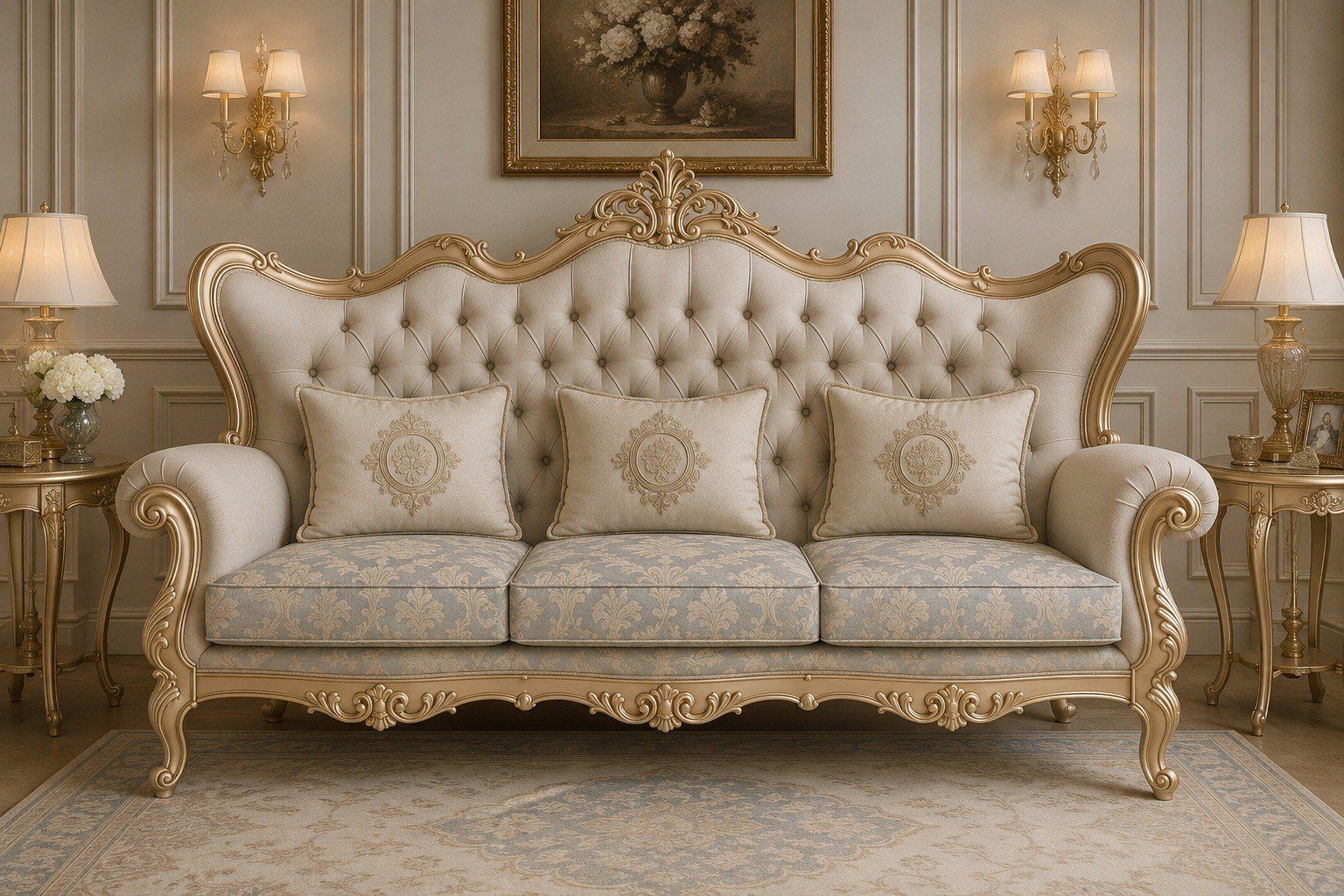
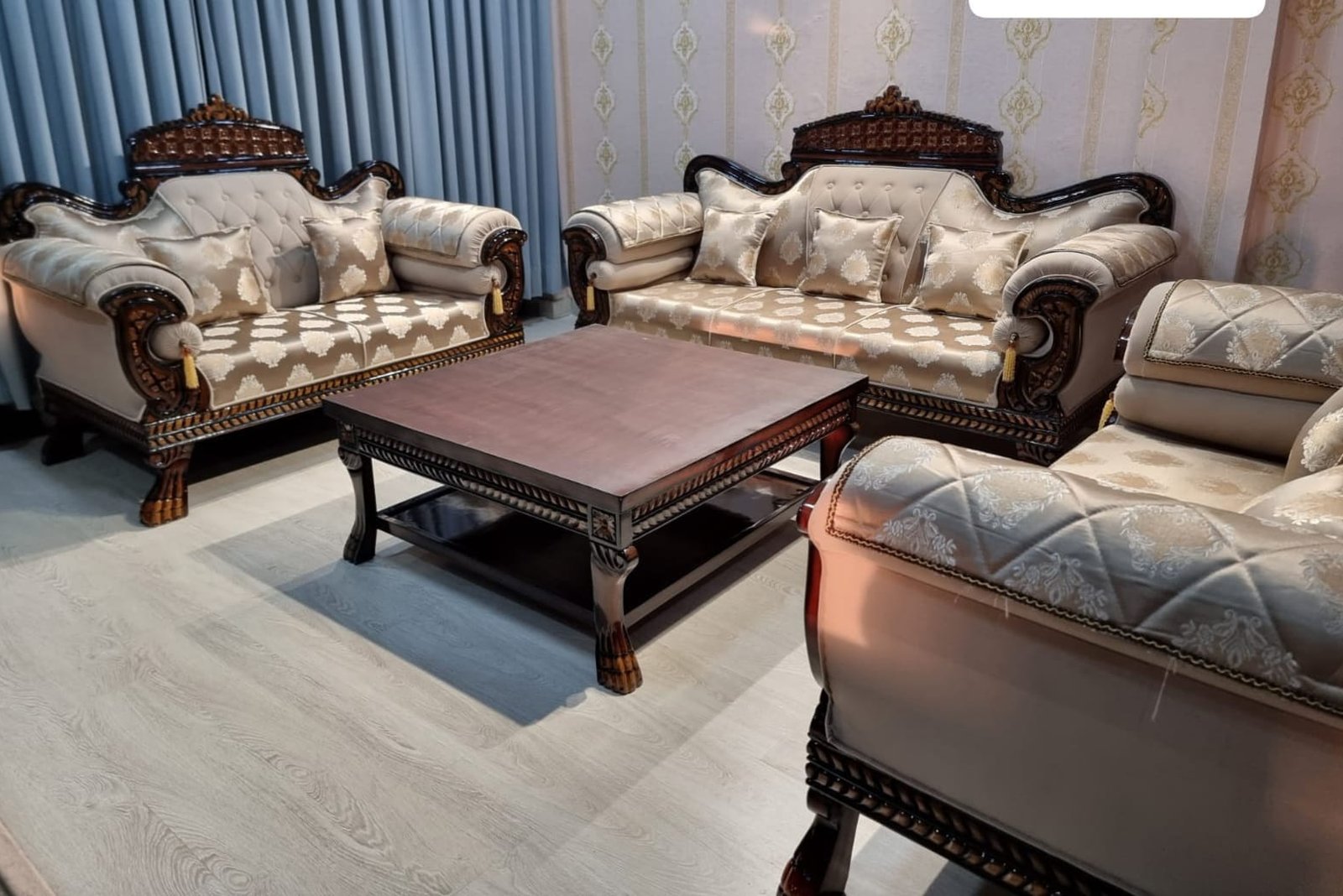
- Sofa frames: hidden frames in sheesham are strong and take staples and screws repeatedly through re-upholstery.
- Dining tables: excellent for 6 to 8-seater tops of normal width. For very wide or very long tops, teak’s stability is the safer bet.
- Sideboards, chests and bedside tables: a warm, figured face with frame-and-panel construction that allows for movement.
Finishes that suit sheesham
Polyurethane (PU) lacquer is the most practical choice for dining tables and anything in daily use. A two-pack PU in matt or satin resists water, heat marks and household cleaners, and keeps the colour even.
Melamine or NC lacquer is common on ready-made furniture. It looks good at first but is less resistant to heat, alcohol and wet glasses, so it suits sideboards and bedside tables better than tops.
Oil and hardwax oil give a natural, low-sheen look that is easy to repair: a scratch can be lightly sanded and re-oiled. They need re-oiling every 6 to 12 months on a busy table, and they mark more easily with water rings.
Stains should be used to even out colour, not to disguise sapwood. If a piece is stained so dark that you cannot see the grain, ask why.
Whatever the finish, the underside and the inside of carcasses should be sealed too. A top finished on one face only takes up and loses moisture unevenly, and that is how tops cup.
Common faults and what causes them
- Gaps between boards or splits at the ends: timber that was not dried properly, or a top screwed down rigidly.
- A top that rocks or cups: one face sealed and the other bare, or wide flat-sawn boards.
- Pale patches under dark stain: sapwood that should have been cut away.
- A finish that stays tacky or peels: the wrong finish for the wood, or poor surface preparation.
- Wobbly chairs within a year: screws or single dowels where mortise and tenon joints were needed.
How to check the quality of sheesham furniture
- Look underneath and inside. The same dark heartwood should appear on hidden parts as on the face. Bare, pale or rough wood underneath tells you how the rest was made.
- Check for sapwood. Pale cream streaks on visible parts, or patches where the stain looks blotchy, are sapwood.
- Run your hand along the glue lines of a top. Boards should be flush, with tight, almost invisible joints and matched colour.
- Lay a straightedge across a top. Gaps of more than about 1 mm across a metre suggest cupping.
- Rock chairs and tables. A well-jointed frame does not rack or creak when you push a corner.
- Open drawers. Look for dovetailed or properly jointed corners and solid drawer sides, not stapled board.
- Ask how the top is fixed. Buttons, slotted brackets or figure-of-eight fixings are right; screws straight through are not.
- Get it in writing: species, heartwood, moisture content (around 8 to 12%), joint types and finish for each part.
Caring for sheesham in a Dubai home
- Keep it out of the direct blast of AC vents and out of strong afternoon sun through glass.
- Dust with a soft, dry cloth; wipe spills straight away with a damp cloth and dry it.
- Use mats under hot dishes and coasters under glasses, especially on oiled or NC-lacquered surfaces.
- Avoid silicone polishes and ammonia-based sprays; they build up and make later repair harder.
- Re-oil oiled pieces once or twice a year. Lacquered pieces need only a mild soap solution.
- Expect a little seasonal movement in the first year as the piece settles to your home.
Our wider guide to furniture that lasts in Dubai’s climate covers sun, humidity and AC in more depth.
Where sheesham is not the best choice
Outdoors in full sun, around pools and in wet rooms, teak is the safer wood: its natural oils resist moisture and it moves less. For a very wide or very long table top, teak’s stability also gives a larger margin for error. And where a client wants a pale, open grain, oak on request is the better look.
The bottom line
Sheesham is a serious furniture wood: dense, strong, beautiful and good value. Its reputation suffers only when it is sold green, full of sapwood or under a heavy stain. Ask the right questions, check the underside and the joints, and it will outlast most of what is in the room. If you are planning a table, our guide to dining tables and chairs made to measure covers size, wood and finish, and you can see solid sheesham and teak tables on our dining page.
Want to see solid sheesham before you choose?
Visit our Al Qusais workshop to see sheesham and teak being machined and finished, or send us your sizes and we will quote with dimensioned drawings.
Book a Consultation