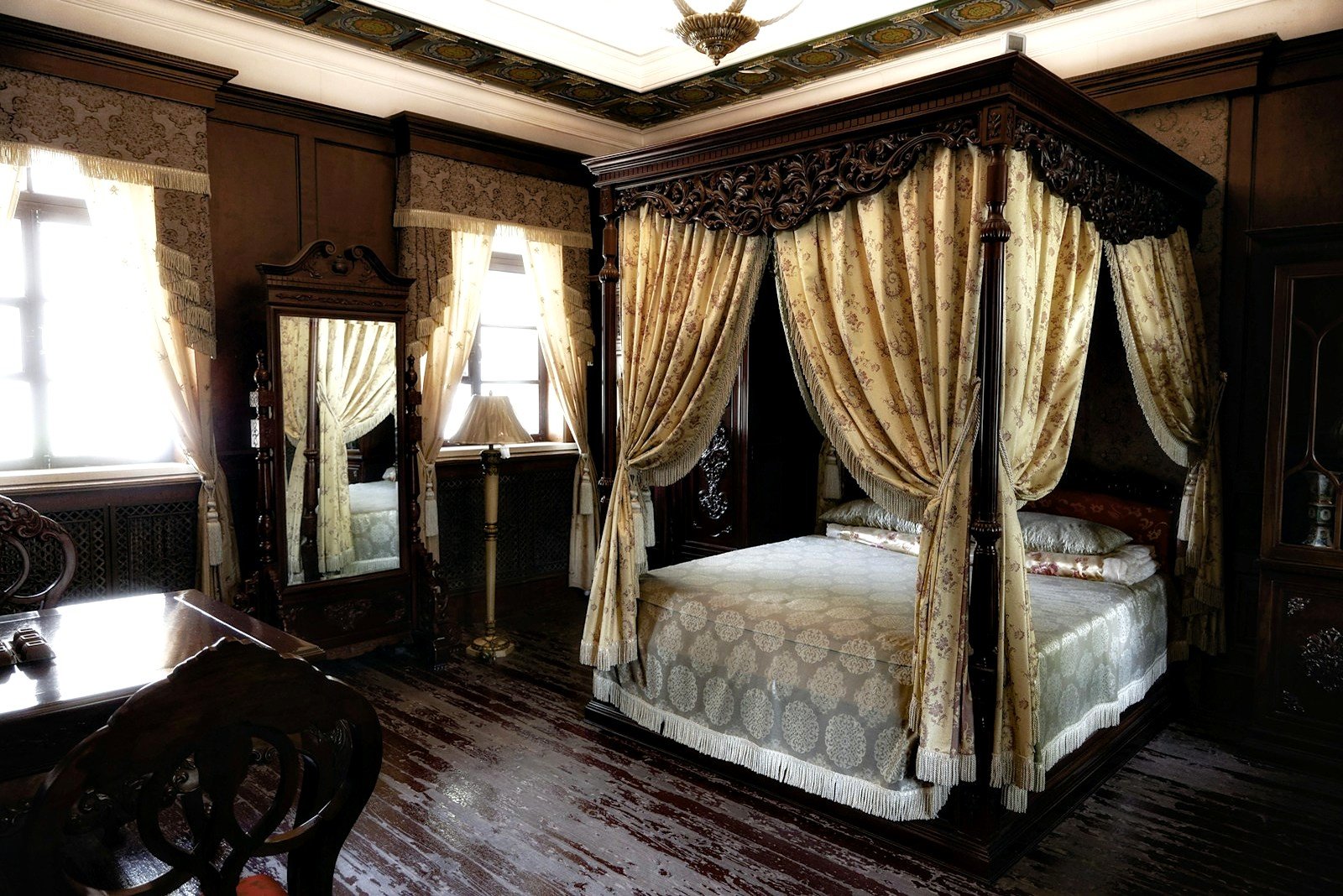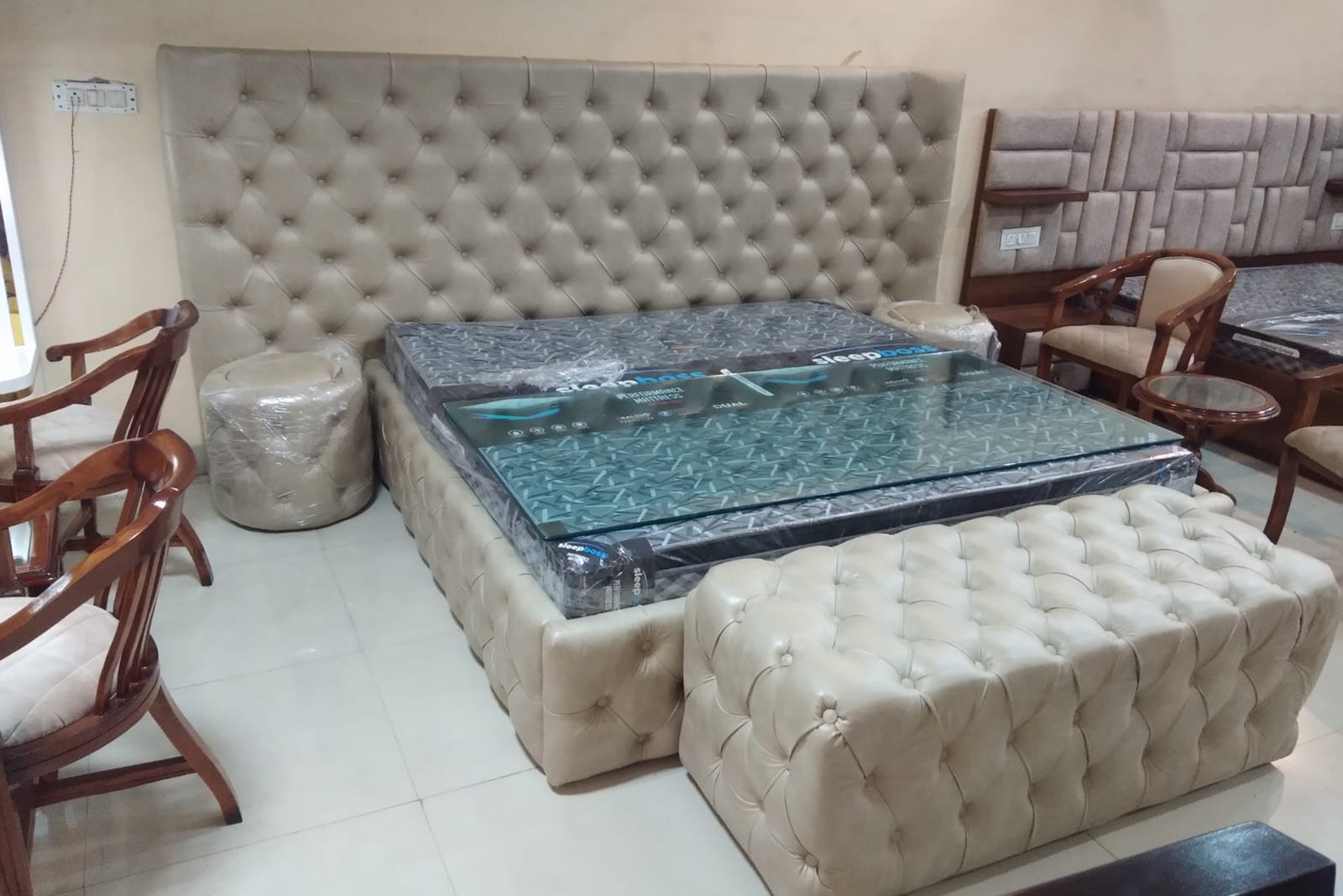
A headboard does more work than most people expect. It is the first thing you see when you walk into the bedroom, the thing you lean against to read, and the surface that meets your hair, skin and hair oil every night. A well-made upholstered headboard makes a simple bed look finished; a badly proportioned one can make a large bedroom feel cramped or a small one look bare. Here is how to choose the style, get the size right for UAE bed sizes, decide how to mount it, and pick a fabric that still looks clean in five years.
The short answer
Choose the style for the room: a plain panel for calm and simplicity, a wingback for enclosure, channel tufting for a soft contemporary look, and buttoning for a classic one. Make it around 1,200–1,400 mm tall in an average room, at least as wide as the bed, mount it on the wall if you want it wider than the bed, and use a mid-tone performance fabric or a wipeable leather where heads rest.
The four main styles
Panel. A flat or gently padded rectangle, sometimes with a piped or welted edge. It is the most versatile style and the easiest to keep clean, because there are no seams or buttons to collect dust. Panels can be square-cornered, soft-cornered with a 50–100 mm radius, or arched. Padding is usually 50–80 mm of foam over a plywood or solid timber back, wrapped in a layer of polyester wadding to round the edges.
Wingback. A panel with side wings that wrap forward, typically 150–250 mm deep. Wings give a sense of shelter and block light from a bedside lamp on the other side, which partners on different schedules appreciate. They need a little more space: allow for the wing depth when you plan bedside tables, or the drawers will not clear.
Channel-tufted. Vertical or horizontal padded channels, usually 100–200 mm wide. Narrow channels look tailored; wide ones look soft and relaxed. Each channel is filled separately, so the foam has to be cut precisely and the fabric stitched or pulled into each groove. Velvet and smooth leathers show channels best; heavily textured weaves blur them.
Buttoned. Either a shallow grid of buttons on a flat panel, or deep diamond buttoning in the Chesterfield manner, where the fabric is folded into pleats between buttons. Deep buttoning is the most labour-intensive of the four, and it needs a fabric with some give; very stiff weaves crease badly at the pleats. Buttons should be tied through the back board and anchored, not glued, or they will pull out when people lean against them.
The styles side by side
| Panel | Wingback | Channel-tufted | Buttoned | |
|---|---|---|---|---|
| Look | Calm, simple, modern or classic | Enclosed, tailored, a little dramatic | Soft, contemporary, tactile | Classic and formal (deep) or neat (shallow) |
| Typical padding | 50–80 mm foam plus wadding | 50–80 mm, wings 150–250 mm deep | Each channel filled separately, 100–200 mm wide | Deep buttoning pleats the fabric between buttons |
| Best fabrics | Almost any, including patterns | Plains and fine textures | Velvet, smooth leather, flat weaves | Fabrics with some give; soft leather |
| Cleaning | Easiest: no seams or buttons | Easy; dust collects where wings meet the panel | Dust settles in the grooves | Dust settles in pleats and round buttons |
| Workshop time | Least | Moderate | High | Highest for deep buttoning |
Heights that work
Measure from the floor, not from the mattress. Most beds put the top of the mattress at around 550–650 mm, so:
- 1,000–1,100 mm: a low headboard, for children’s rooms, under windows or in rooms with a low ceiling. You will see 400–500 mm above the mattress, enough for pillows but not much to lean against.
- 1,200–1,400 mm: the comfortable standard for ceilings of 2.7–3.0 m. Enough padded height to sit up and read with your head supported.
- 1,600–2,000 mm and above: statement headboards for master bedrooms with high ceilings. Above about 1,800 mm, a headboard is usually better mounted on the wall than on the bed.
A useful rule is for the headboard to fill roughly the lower third to half of the wall behind it. Before fixing a height, check where your wall lights, switches and sockets sit, and whether a window, curtain track or air-conditioning grille is in the way. If you like to sit up in bed, the padded zone should reach at least 300 mm above the top of your pillows.
Widths for UAE bed sizes
The mattress sizes most often used in the UAE are 90 × 200 cm (single), 150 × 200 cm (king), 180 × 200 cm (super king) and 200 × 200 cm (emperor). Names vary between retailers, so always work from centimetres. A bed-mounted headboard is normally the width of the bed frame, which is the mattress plus 50–100 mm a side. A wall-mounted headboard can run behind the bedside tables and look built-in:
| Mattress (UAE) | Bed-mounted headboard width | Wall-mounted, behind two 500 mm bedside tables |
|---|---|---|
| Single 90 × 200 cm | About 1,000–1,100 mm | About 1,900–2,100 mm (or one table: 1,500 mm) |
| King 150 × 200 cm | About 1,600–1,700 mm | About 2,500–2,700 mm |
| Super king 180 × 200 cm | About 1,900–2,000 mm | About 2,800–3,000 mm |
| Emperor 200 × 200 cm | About 2,100–2,200 mm | About 3,000–3,200 mm |
Full-width headboards that run wall to wall hide uneven walls and look architectural, but measure the room twice: plaster corners are rarely square, and the panel should finish 5–10 mm short of each wall. Leave at least 600–750 mm of walking space beside each side of the bed you use. For more on bed sizes, frames and base types, see our guide to custom beds in Dubai.
Wall-mounted or bed-mounted
Bed-mounted headboards bolt to the bed frame with steel brackets or through-bolts. They are self-contained: when you move, the bed and headboard go together. The drawbacks are size, because a very tall board on two bolts can rock, and the gap between headboard and wall, which collects dust and lets pillows fall through.
Wall-mounted headboards hang on a cleat, a pair of interlocking bevelled rails, one fixed to the wall and one to the back of the board. They sit tight to the wall, can be any size, and the bed can be pulled out for cleaning without disturbing them. In a rented apartment, check what you are allowed to fix to the wall. Many Dubai partitions are blockwork and take proper anchors, but some are plasterboard and need the cleat fixed into studs or a backing plate.
Whichever you choose, the board behind the padding should be solid. We build headboard frames in kiln-dried teak or sheesham, dried to 8–12% moisture, with a plywood face for the upholstery, so the board stays flat and the fixings bite into hardwood. Oak and walnut are available on request where a visible timber surround is wanted.
Fabrics that resist hair oil and marks
Hair oil is the problem nobody mentions in the showroom. Coconut, argan and almond oils are widely used in UAE homes, and over a few months they leave a darker patch exactly where heads rest. Lotions, make-up and phone screens add to it. Some practical rules:
- Choose a tight, flat weave in polyester, olefin or a performance blend with a stain-resistant finish. Oil sits on the surface long enough to be blotted. Our guide to reading an upholstery spec sheet explains cleaning codes; for a headboard you want W or W/S.
- Pick a mid-tone. Greige, taupe, stone and soft blue hide an oil shadow far better than ivory or pale grey.
- Be careful with velvet. Cotton and viscose velvets crush and absorb oil; polyester performance velvets are much better behaved.
- Avoid pale linen and silk at head height. They look beautiful and mark quickly.
- Consider leather or a good faux leather. Pigmented (corrected-grain) leather and quality faux leathers wipe clean; pale aniline leather will still absorb oil and darken.
Abrasion is less of an issue on a headboard than on a sofa seat; around 25,000 Martindale rubs is plenty. What matters more is cleanability and colour. The most practical answer of all is a removable cover with a zip or hook-and-loop fixing, or a separate padded panel at head height that can be taken off and cleaned. You can see our performance collections on our upholstery fabrics page, and our guide to choosing upholstery fabric covers weave and fibre in more depth.
Matching the headboard to the room
Master bedroom. This is where a tall wall-mounted or wingback headboard earns its place. In a room with a 3.0–3.3 m ceiling, a headboard of 1,600–1,800 mm across the full width of the bed and bedside tables anchors the room in a way a retail headboard cannot.
Guest room. Keep it simple and durable: a panel or shallow-buttoned headboard in a mid-tone performance fabric, around 1,200 mm tall, bed-mounted so the room can be rearranged.
Children’s rooms. A lower panel of 1,000–1,100 mm with soft corners, in a washable fabric or with a removable cover. Avoid buttons on beds for young children, as they can be pulled off.
Apartments. Bed-mounted headboards are easier for tenants. If a wall-mounted one is wanted, the cleat leaves only a few small fixing holes to fill when you leave.
Details worth asking about
- Piping and welts: a contrast piping sharpens a panel; a self-piping keeps it quiet.
- Back finish: a lined or upholstered back if the headboard will be seen from behind, for example where the bed stands in the middle of the room.
- Integrated lights and sockets: reading lights and USB points can be built into a wall-mounted board, but plan the wiring with your electrician before you order.
- Timber surround: a solid teak or sheesham frame around the upholstered panel protects the edges and is easier to dust.
- Spare fabric: keep a metre from the same dye lot for future repairs or matching cushions.
A quick checklist before you order
- Mattress size confirmed in centimetres
- Ceiling height, lights, sockets and switches measured
- Height chosen: 1,000–1,100, 1,200–1,400 or 1,600 mm and above
- Bed-mounted or wall-mounted decided, and wall construction checked
- Style chosen with cleaning in mind
- Mid-tone, cleanable fabric (W or W/S) or wipeable leather at head height
- Removable cover or head panel considered
- Solid hardwood frame behind the padding
Caring for it
Vacuum the headboard every week or two with a soft brush, working along channels and around buttons. Blot spills at once with a white cloth rather than rubbing. Pillowcases changed often, and a silk or satin pillowcase if you oil your hair at night, slow the build-up of oil on the fabric behind. Keep the headboard out of direct afternoon sun if you can, or use lined curtains: strong UAE sun fades even good fabrics on a west-facing wall.
The bottom line
Choose the style for the mood of the room, the height for your ceiling and how you use the bed, and the mounting for whether you are staying or moving. Then choose the fabric for the place your head actually rests: a mid-tone, tightly woven, cleanable cloth or a wipeable leather. We make upholstered beds and headboards to measure on solid hardwood frames, with dimensioned drawings before anything is cut; see our beds and bedroom furniture for the range.
Planning a new headboard?
Send us your wall width, ceiling height and bed size. We will draw the headboard to scale and help you choose a fabric that suits how you use the bed.
Book a Consultation