Ramadan is the most intensive hosting month in any Dubai villa's year. Across thirty evenings of iftar, the majlis hosts guests every night — sometimes immediate family, sometimes extended clan, sometimes business and community guests, and on a handful of evenings a peak of forty or more. The villa that hosts well in Ramadan tells you everything about how the room was designed. This guide covers the planning and design moves that separate a great iftar majlis from one that struggles under sustained hosting.
Plan for the Ramadan peak, not the average
The most consistent design error: sizing the majlis for regular hosting and finding it overwhelmed during Ramadan. The Ramadan peak count is typically 1.6 to 2x the regular hosting count.
- Regular hosting count: 12 → Ramadan peak: 22-26
- Regular: 18 → Ramadan peak: 30-36
- Regular: 25 → Ramadan peak: 45-55
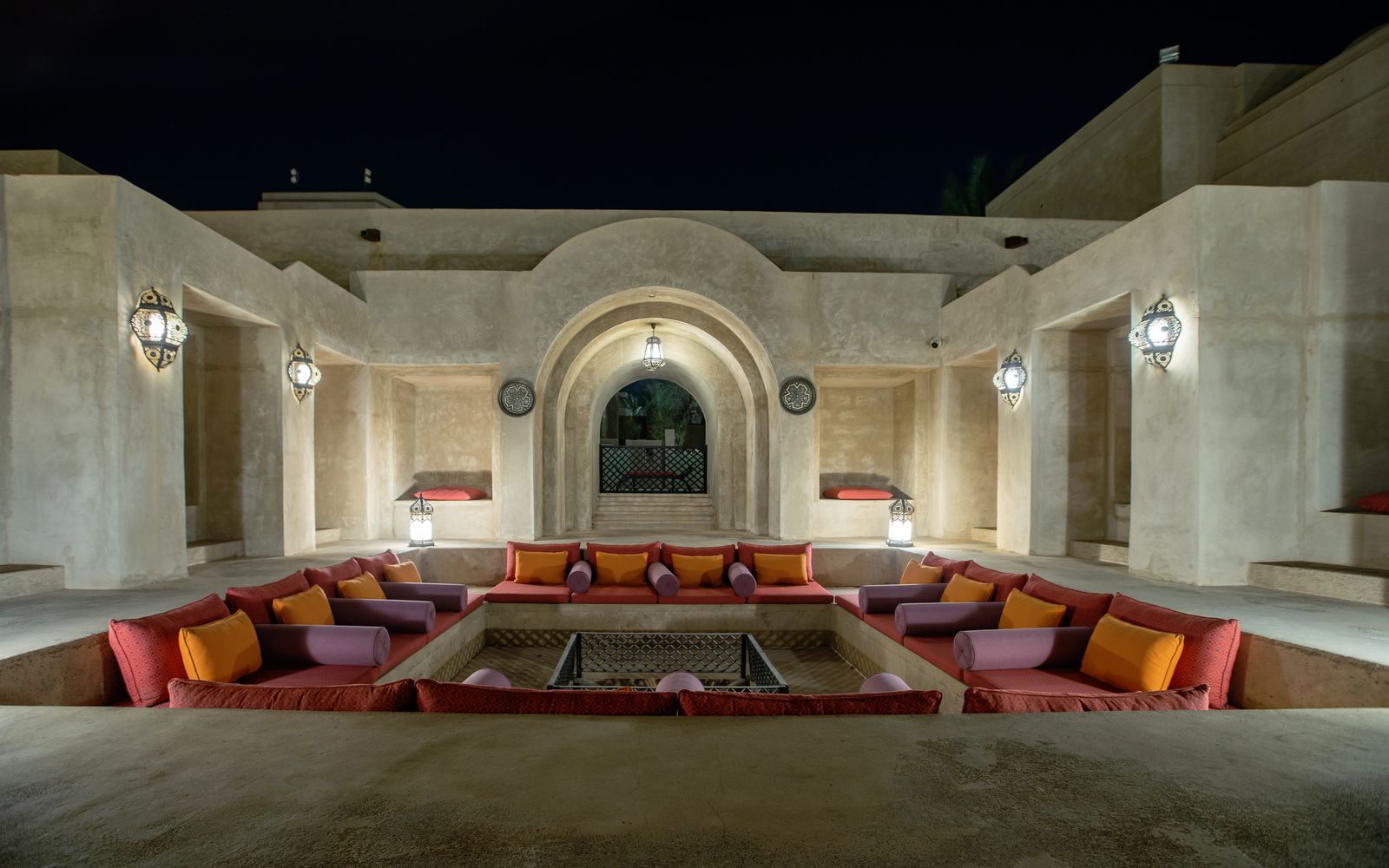
The majlis should accommodate the peak comfortably. For very large families where peak exceeds 40, the design strategy combines a primary indoor majlis plus a coordinated outdoor or extension majlis used during Ramadan and large occasions.
Layout choices for iftar
Among the six majlis layouts we covered in the majlis layouts guide, two work best for iftar hosting:
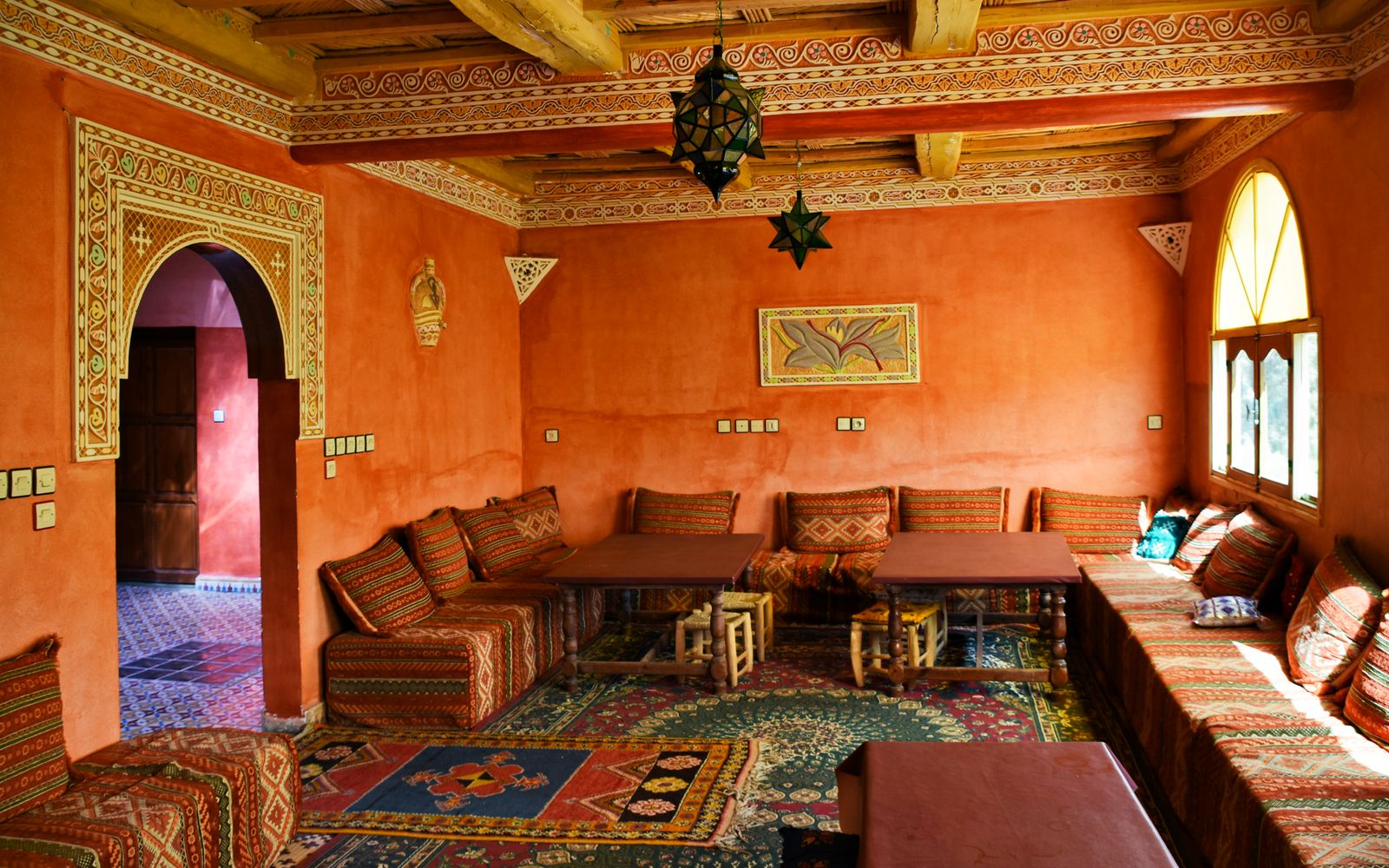
The classical perimeter U
Fixed seating along three walls, central majlis table or low-table cluster. Maximum guest count with consistent comfort. The default for traditional families.
The dual U (split layout)
For very large rooms or large hosting families — two coordinated U-shaped seating groups arranged along the long axis of the room. Each group becomes a conversation zone. Common in larger villa majlis spaces (70+ m²).
Avoid H-shape or L-shape for Ramadan peak — they cap at 18-20 guests effectively and feel cramped under iftar load.
Seating depth and comfort for long evenings
Iftar hosting extends from sunset prayer through dinner, qahwa service, dessert, and late conversation — often three to four hours seated. The seating specification has to be comfortable for that duration:
- Seat depth: 85-95 cm (deeper than a regular sofa) for relaxed long-evening seating
- Seat height: 42-46 cm (slightly lower than dining) for relaxed reclining
- Seat foam density: 45+ kg/m³ for sustained support without sag
- Back cushion height: 65-80 cm including back pillow to support shoulder and head
- Side bolsters: traditional Khaleeji majlis includes large side bolsters at the corner of each seat for elbow rest
For full sofa construction detail see our bespoke sofa guide.
The service flow
Iftar involves multiple food and beverage services across the evening, all requiring kitchen-to-majlis path:
- Breaking the fast: dates, water, sometimes laban or rose-flavoured drink at sunset prayer time
- Iftar appetisers: light course (samosas, fattoush, soup) immediately after breaking the fast
- Main course: served buffet-style or seated 15-30 minutes after appetisers
- Qahwa and dates service: traditional Arabic coffee in dallah, presented across the seated group
- Dessert: kunafa, qatayef (traditional Ramadan), sometimes ice cream and fresh fruit
- Late tea or coffee: for guests who stay for extended conversation
Design implications:
- Dedicated service entrance to the majlis — not the main entrance guests use
- Adjacent prep kitchen or scullery, not the main show kitchen, so heavy iftar cooking does not impact the formal kitchen
- Built-in qahwa station or service buffet within the majlis or adjacent
- Sufficient surface area for plates, glasses, dallah, dates trays during multi-course service
Lighting for iftar
Iftar lighting transitions through three distinct moods across the evening:
Pre-iftar (sunset)
Bright, energetic. Guests arriving, fast about to break, anticipation. Full ambient lighting at 80-100% with statement chandelier on, accent lighting on.
Iftar service and dinner
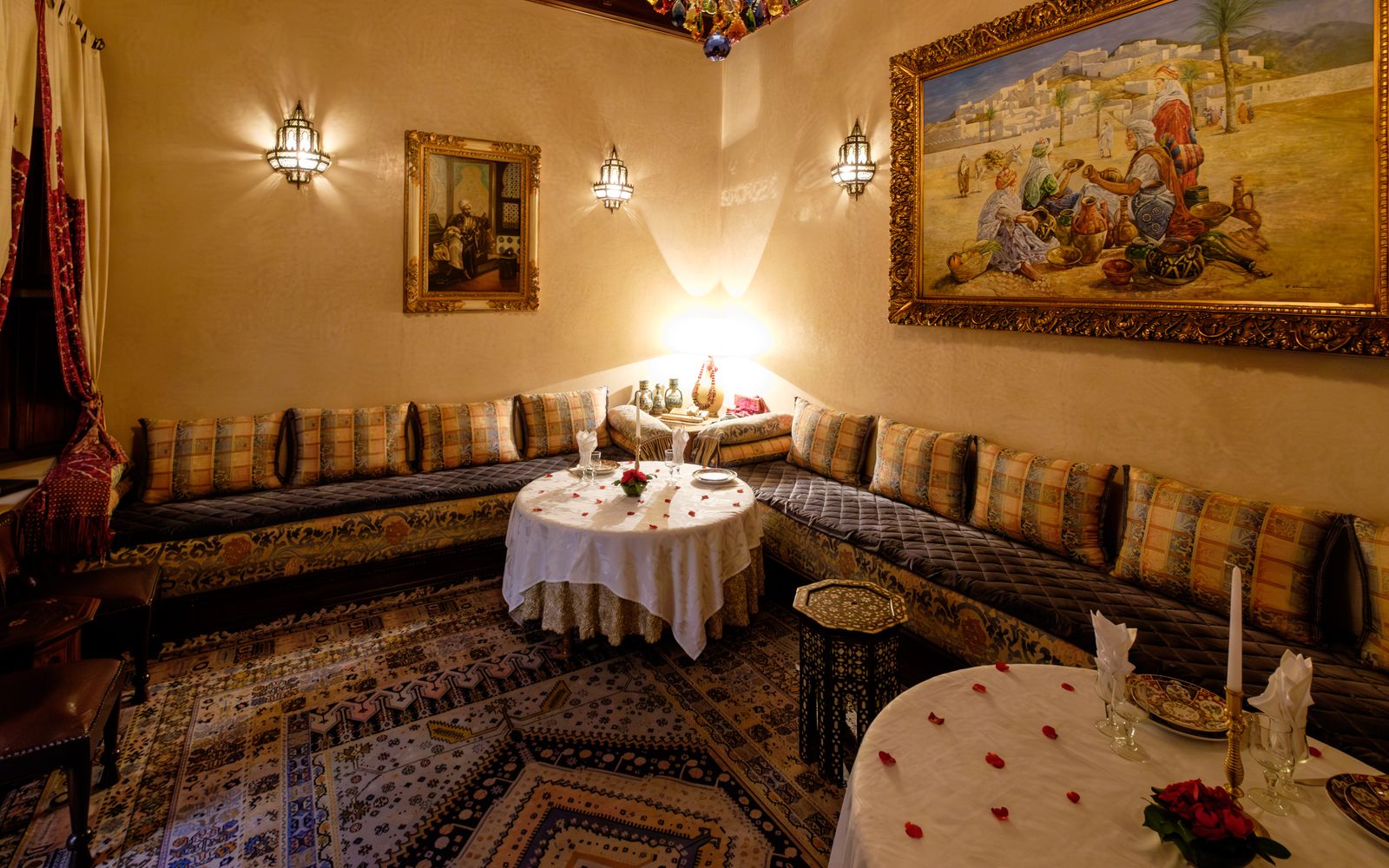
Warm, welcoming. Lighting dimmed to 60-75%. Chandelier still on but softened. Table-top lighting (table lamps, console lamps) come into play.
Late conversation
Atmospheric, intimate. Lighting at 25-40%. Cove lighting becomes the primary illumination. Floor lamps and table lamps at low warm output. Statement chandelier sometimes off entirely.
Specification
- All circuits dimmable via Lutron or equivalent
- Three pre-programmed scenes minimum (pre-iftar / dinner / late)
- 2700-3000K colour temperature throughout
- CRI 90+ for accurate colour rendition of food and traditional textiles
For comprehensive lighting strategy see our lighting design guide.
Heritage cues without cliche
The most common Ramadan design failure is over-decoration — every surface laden with stars, crescents, lanterns, fabric drapings, Arabic ornament. The result reads as themed restaurant rather than a serious cultural home.
Heritage works best when concentrated:
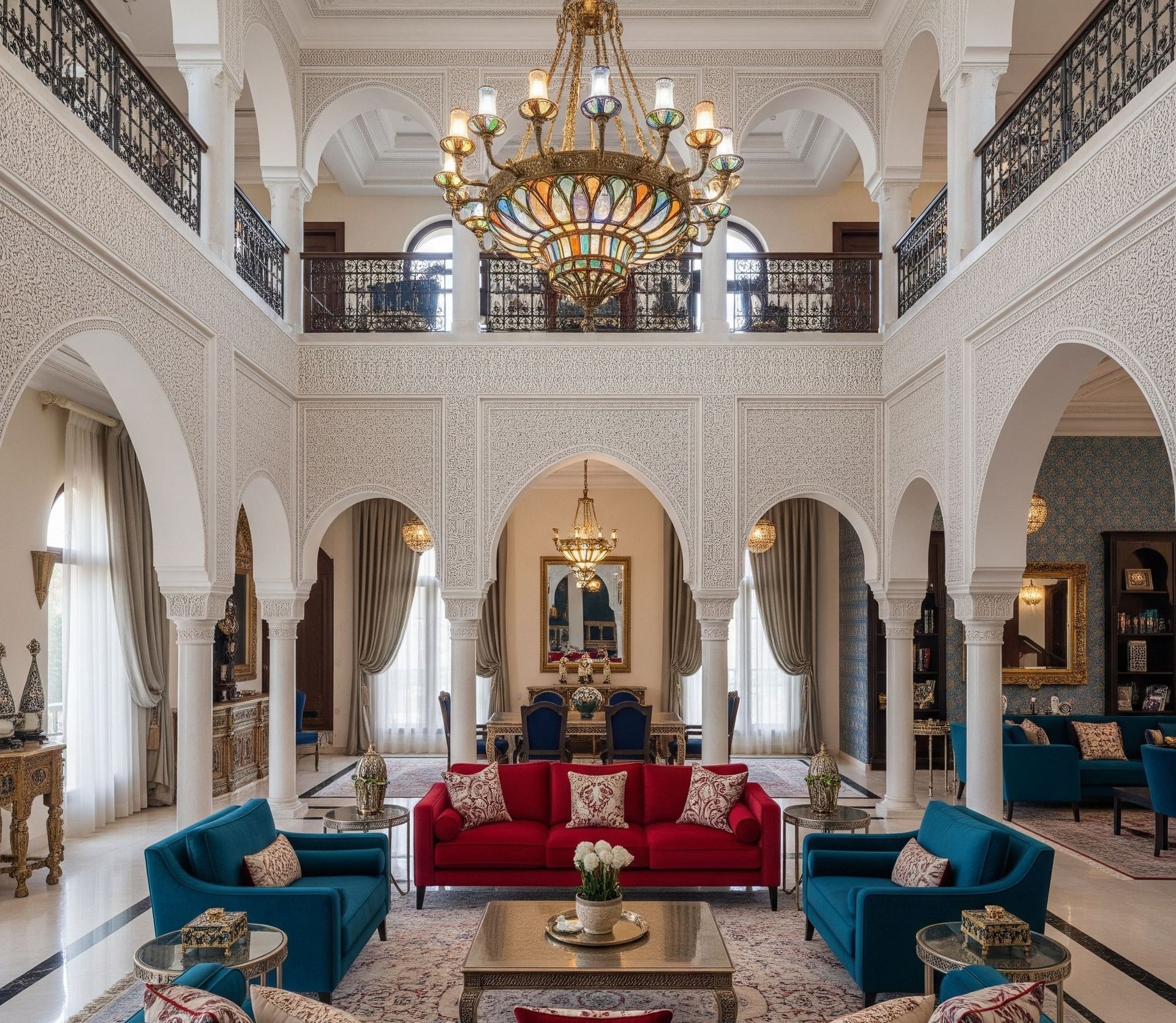
- One feature wall — carved gypsum, mashrabiya screen, hand-painted ornament, or a feature stone calligraphy panel
- One large artwork or framed Quranic calligraphy on the entry wall
- Traditional service objects deployed during hosting — dallah for qahwa, bukhour burner with oud, traditional dates serving tray on a brass platter
- Seasonal textile changes — heavier cushion fabrics, jewel-tone throw cushions, accent rugs — brought out for the Ramadan month then put back into storage
- Fresh dates and water glasses on the central majlis table from day one of Ramadan onward
Avoid: over-the-top fairy lights, sticker decals on walls, fabric ceiling drapings, generic mass-market lantern displays, full-room transformation that looks borrowed rather than rooted.
Climate and comfort under sustained use
Iftar happens in the Dubai summer cycle (Ramadan moves through the calendar). With 30+ guests in a closed room, the cooling load is significant:
- AC capacity: design for the peak guest count, not the empty-room load. A 60 m² majlis hosting 30 guests in summer needs roughly 4-6 tons of cooling deployed.
- AC diffuser placement: away from seated positions. Cold air on the back of the neck during a long iftar ruins comfort.
- Ventilation: dedicated fresh air supply for sustained large-group occupancy; CO2 builds in airtight majlis spaces over a 3-hour iftar
- Bukhour ventilation: some families burn oud during iftar; localised extraction in the majlis preserves the experience without permeating other rooms
The outdoor or terrace iftar program
An increasing number of Dubai villas now include a dedicated outdoor iftar program — pergola-covered terrace, integrated misters and ceiling fans, outdoor majlis seating in marine aluminium with Sunbrella upholstery. This:
- Provides overflow capacity for large iftar gatherings
- Connects iftar to the traditional outdoor / desert hosting culture
- Allows the indoor majlis to remain protected for daytime privacy
For outdoor specification, see our outdoor furniture guide.
The Ramadan-ready checklist
- Majlis sized for Ramadan peak count, not regular hosting
- Perimeter U or dual U layout for capacity
- Seat depth 85-95 cm with bolster pillows for long evenings
- Service path from prep kitchen to majlis is clear of guest flow
- Qahwa station or buffet integrated
- Three lighting scenes programmed, all dimmable, all at 2700-3000K
- One concentrated heritage feature (wall, art, or panel) — not distributed ornament
- AC capacity sized for peak guest load with diffusers away from seated positions
- Bukhour extraction localised to the majlis
- Outdoor terrace iftar program for overflow if family hosts at scale
The bottom line
A great iftar majlis is a year-round room that is at its most-used during Ramadan. The room that handles iftar at peak is the one designed with hosting reality at the centre — sized for peak, seated for endurance, lit in layers, equipped for serial multi-course service, anchored by heritage cues that signal the season without overstating it. Design it properly once and it hosts effortlessly for years.
If you are designing or renovating a majlis with Ramadan hosting in mind, our team handles full majlis design, custom seating manufacturing and joinery from our Al Qusais workshop. Book a consultation at the showroom or on site at your villa.
Designing a majlis for Ramadan hosting?
Book a complimentary majlis design consultation. We'll review your hosting brief, propose the right layout for your peak count, and return a complete design with budget within two weeks.
Book a Consultation