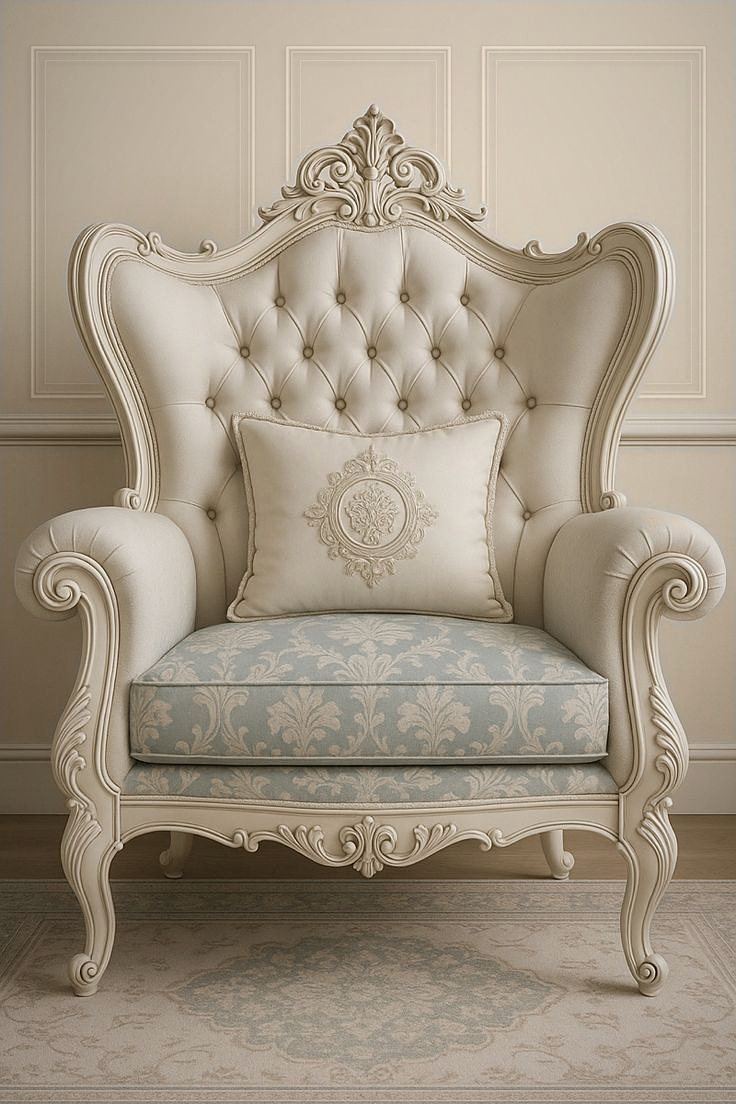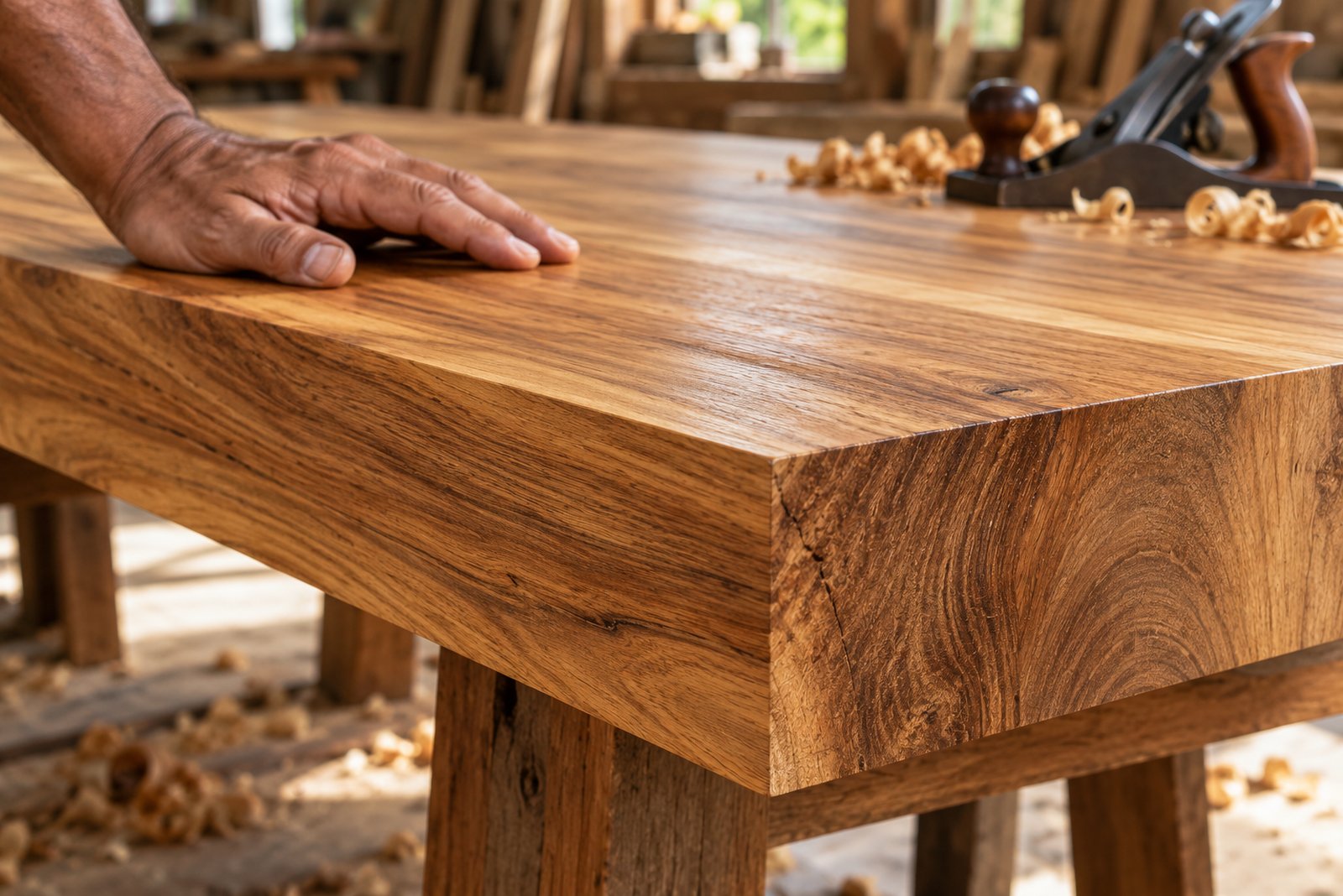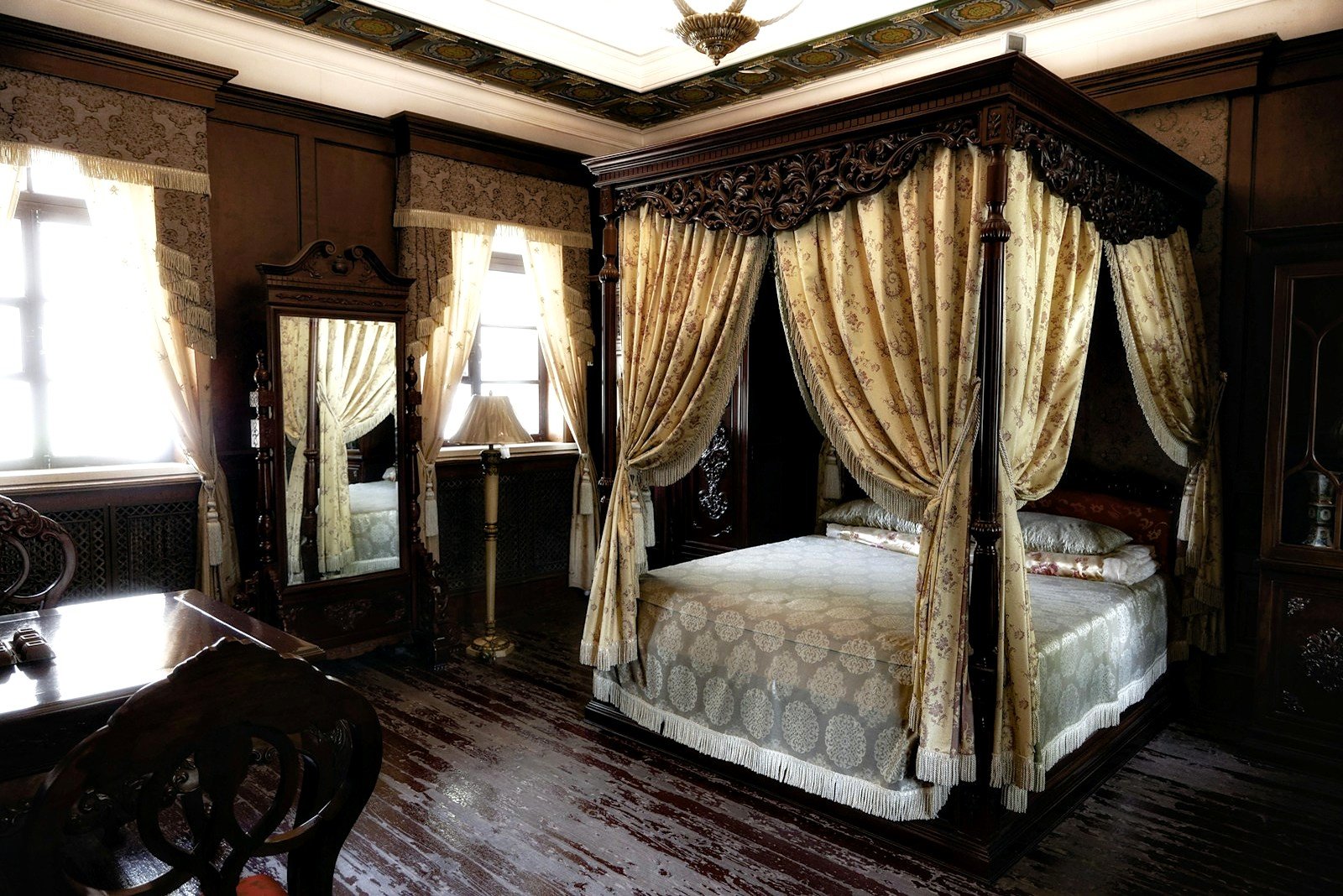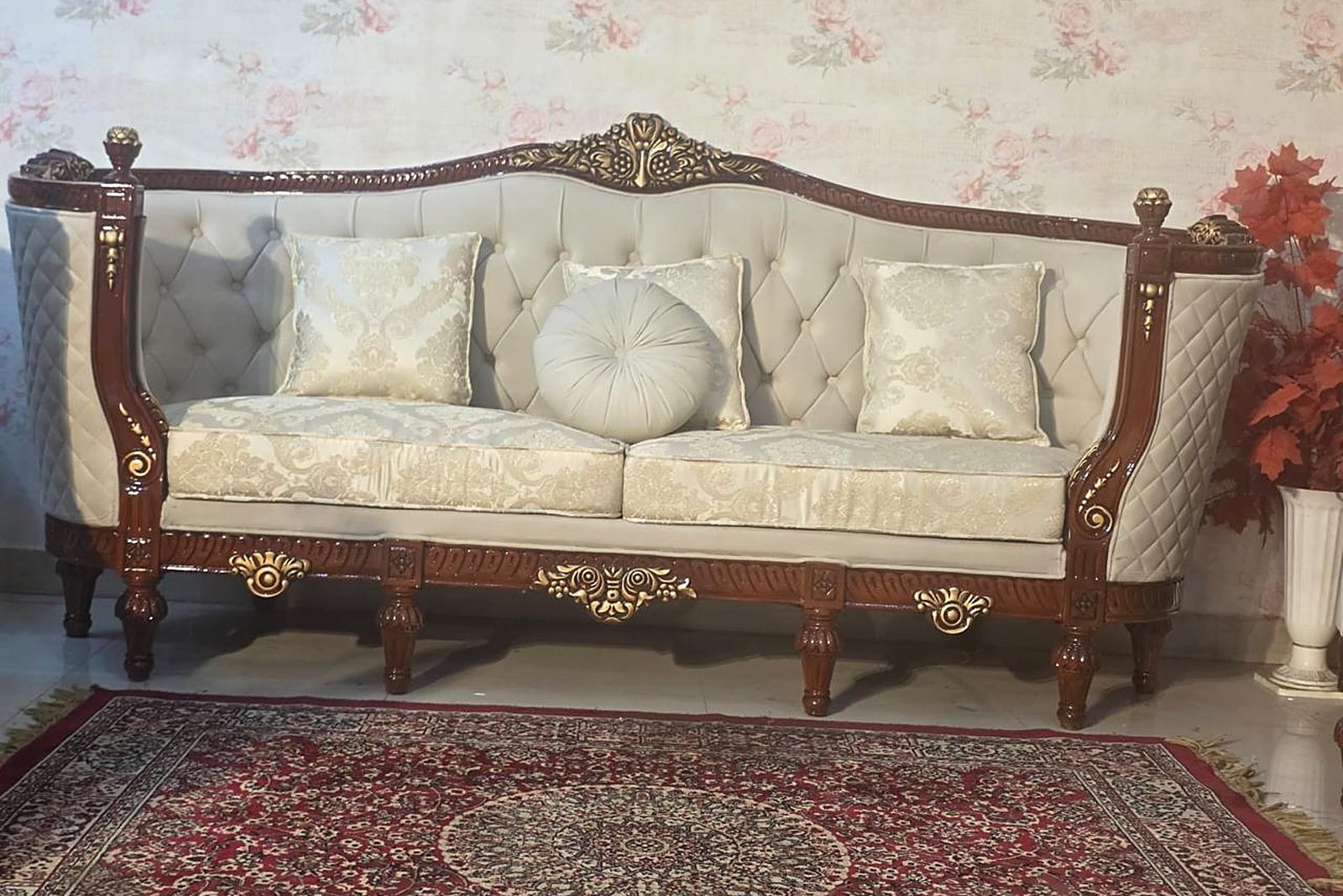
Two carved armchairs can look identical in a catalogue photograph and be worlds apart in a showroom. One has a solid teak frame with hand-cut carving and deep buttoning that will hold its shape for decades; the other is MDF with resin mouldings glued on and staples where joints should be. Price alone will not tell you which is which. These ten checks will.
The short answer
Lift it, look underneath and inside, run your fingers over the carving, open the drawers, look closely at the gold, and ask for the timber, the joinery and the finish in writing. Quality classic furniture is heavy, solid, cleanly finished where you cannot see, and honest about what it is made of.
1. The timber
Ask which species the frame is, and look for yourself. Underneath a seat, inside a drawer or at the back of a cabinet, solid timber shows real grain on the edges and end grain on cut ends. MDF and particleboard show a uniform fibrous or chipped edge, often taped or painted over. Our guide to solid wood and veneer explains where veneer is legitimate and where it is a shortcut.
2. The carving
Hand carving has crisp, confident cuts, deep undercuts that cast real shadows, and small differences between the left and right sides. Machine (CNC) carving is perfectly symmetrical and often soft-edged. Resin or plaster appliqués are glued onto a flat panel, feel cold and light when tapped, and can show a seam or a pattern that repeats exactly. Both CNC and resin have their place at lower budgets; they should simply be described honestly.
3. The joints
Frames should be held by mortise-and-tenon or dowelled joints, glued, with corner blocks glued and screwed into seat frames. Staples and plain screws into end grain are a sign of a frame that will loosen. On cabinets and chests, drawers should be dovetailed rather than stapled.
4. The weight and the rock test
Lift a corner. Solid hardwood is heavy. Then sit down and rock gently from side to side: a well-made chair or sofa feels completely rigid, with no creak or movement in the frame.
5. The finish, especially where nobody looks
Look along the surface against the light: the finish should be even, with no runs, dust pimples or dry patches. Then look into the recesses of the carving and underneath. A good maker seals the inside and underside too, which keeps the timber stable in an air-conditioned room. Unfinished undersides are a common corner cut.
6. The gilding
Real gold or metal leaf, laid by hand and burnished, has depth and soft variation, with very fine overlaps where one leaf meets the next. Metallic gold paint looks flat and uniform, and wears through to a darker base on edges that are touched. Neither is wrong, but you should know which you are paying for.
7. The upholstery
Press the seat and the arms. Good classic seating has a sprung or webbed base, high-density foam wrapped in fibre, and arms padded so you cannot feel the frame. Deep buttoning should be even in depth and tension, and patterned fabrics should be centred and matched across seat, back and arms. For the full process, read how a hand-carved sofa is made.
8. The hardware
Handles, escutcheons and mounts on good classic cabinets are cast metal with a proper plated or lacquered finish, fixed with matching screws or posts. Lightweight plated plastic or pressed tin is a sign the rest of the piece may be built to the same standard.
9. Drawers, doors and backs
Drawers should run smoothly and close square, ideally on wooden runners or quality metal slides. Doors should hang evenly with consistent gaps. Look at the back panel: solid timber or good plywood is a sign of care; thin hardboard pinned on is not.
10. The paperwork
Ask for the timber species, the type of joinery, the finish and the upholstery specification in writing, along with a drawing for made-to-order pieces and a warranty on the frame. A maker who builds properly is happy to put it on paper.
The checklist
- Real timber visible underneath and inside, with the species confirmed.
- Crisp, deep carving, not glued-on mouldings sold as carving.
- Mortise-and-tenon or dowelled joints, corner blocks, dovetailed drawers.
- Heavy and rigid when lifted and rocked.
- An even finish everywhere, including recesses and undersides.
- Gold leaf or gold paint, honestly described.
- Sprung or webbed seats, even buttoning, matched patterns.
- Cast metal hardware.
- Smooth drawers, even doors, a solid back.
- Specification, drawing and warranty in writing.
The bottom line
The difference between an heirloom and a lookalike is mostly in places the catalogue photograph does not show. Lift it, look underneath, feel the carving and ask the questions. For the timbers behind good classic furniture, see teak or rosewood for classic frames.
Commissioning a classic piece?
Tell us what you have in mind. We will show you timber, carving and finish samples and put the full specification in writing.
Book a Consultation