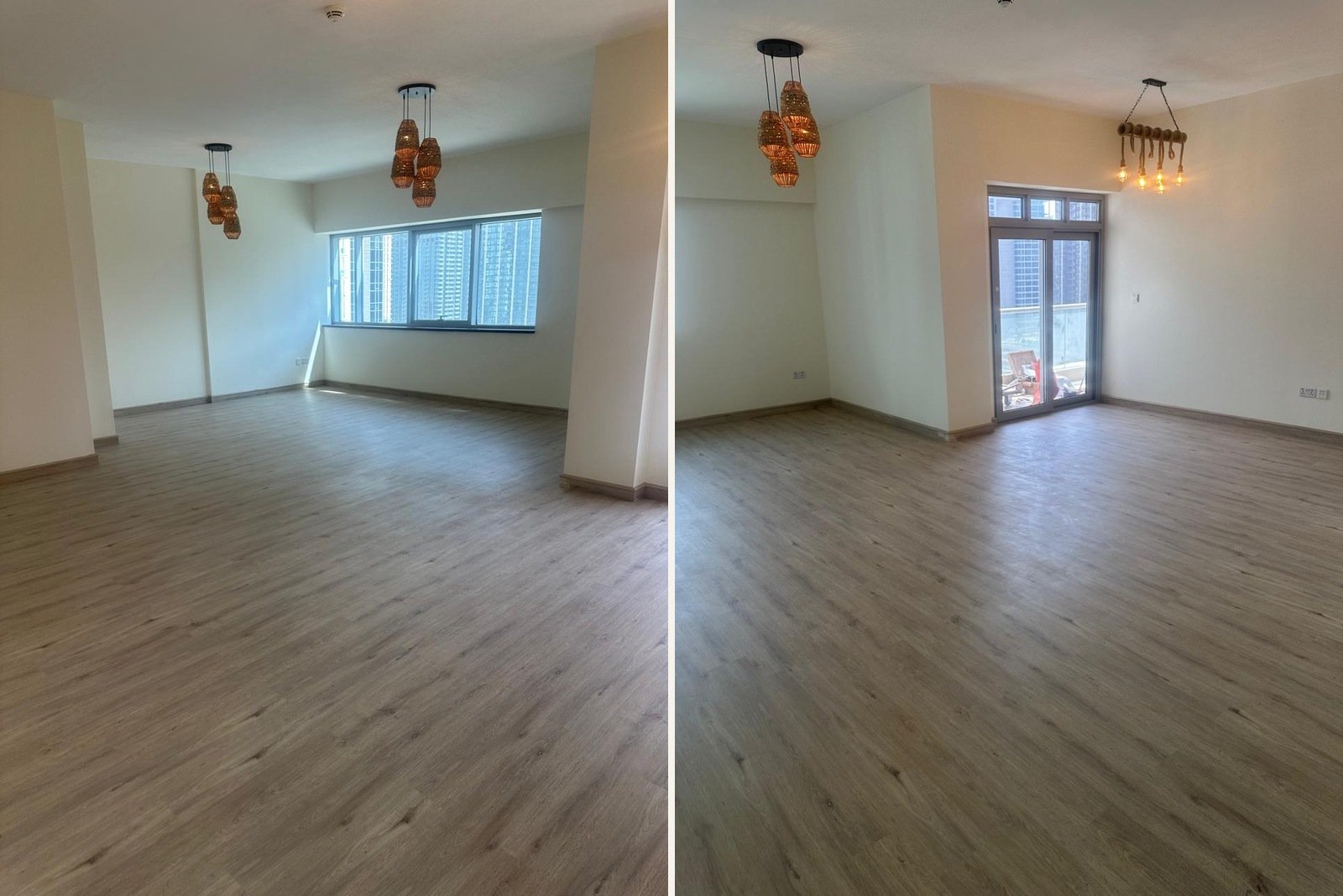
Luxury vinyl tile has quietly become one of the most specified floors in Dubai apartments, offices and retail. It is quick to install, often straight over existing tiles, warm and quiet underfoot, waterproof, and the best products are convincing reproductions of oak or stone. It is also easy to get wrong: the wrong core in a sunny room, too thin a wear layer in a hallway, or an uneven subfloor that telegraphs through. Here is how to specify it properly.
The short answer
Choose LVT for bedrooms, living rooms, offices and retail where you want speed, comfort and quiet. Pick a wear layer of at least 0.5 mm for living areas and corridors, and a commercial-rated 0.55 mm or more for offices and shops. Use a rigid SPC core or a glue-down product in rooms with strong sun, leave the specified expansion gaps, and prepare the subfloor properly. Keep porcelain tile for showers and anywhere water stands.
What LVT actually is
LVT is a layered product. From the top down: a clear wear layer that takes the abrasion, a printed decorative layer that gives the wood or stone look, a core, and a backing. The core is what separates the families you will be offered:
- Flexible LVT: a traditional vinyl core. Usually glued down. Quiet, warm and the standard in commercial interiors.
- SPC (stone plastic composite): a rigid core with mineral content. Usually a floating click system. More stable in temperature changes and more forgiving of minor subfloor imperfections.
- WPC (wood plastic composite): a thicker, softer rigid core. Comfortable underfoot but generally less dent-resistant than SPC.
Glue-down or click?
Glue-down LVT is bonded to a smooth, levelled subfloor. It is the most stable option, the best under rolling chairs and heavy traffic, and individual planks can be replaced. It needs more preparation and a professional installer. Click systems float over the subfloor, often with an integrated underlay, so they go in faster and can be laid over sound existing tiles. They need an expansion gap at every wall and fixed object, and they show subfloor unevenness more.
Which wear layer?
- About 0.3 mm: bedrooms and light residential use.
- About 0.5 mm: living rooms, kitchens and hallways in homes.
- 0.55 mm and above: offices, retail, hospitality, and homes with pets or heavy traffic.
Overall plank thickness tells you less than the wear layer does. Always ask for the wear layer in millimetres and the use class on the product data sheet.
LVT in Dubai’s heat
In air-conditioned interiors, good LVT is more dimensionally stable than solid timber. The problem rooms are those with floor-to-ceiling glass that takes direct sun for hours, where the floor surface can get far hotter than the room. Vinyl expands with heat, and cheaper products can fade.
- Choose a rigid SPC core or a glue-down product rated for high-temperature areas for sun-facing rooms.
- Look for UV-stabilised finishes, and use blinds or solar film on the glazing.
- Leave the manufacturer’s expansion gap at walls and fixed elements, often around 8 to 10 mm, covered by skirting.
- Let the boxes acclimatise in the air-conditioned room before installation, as the manufacturer specifies.
LVT, porcelain or engineered wood?
- Porcelain tile is harder, cooler and unbeatable in wet areas, but slow and disruptive to install, cold-looking in bedrooms and noisy in apartments.
- Engineered wood is the real thing and can be sanded a few times, but it is more expensive and less tolerant of water and humidity swings.
- LVT is fast, quiet, waterproof and softer underfoot. It cannot be refinished, so worn or damaged planks are replaced rather than repaired.
Can LVT go in a bathroom?
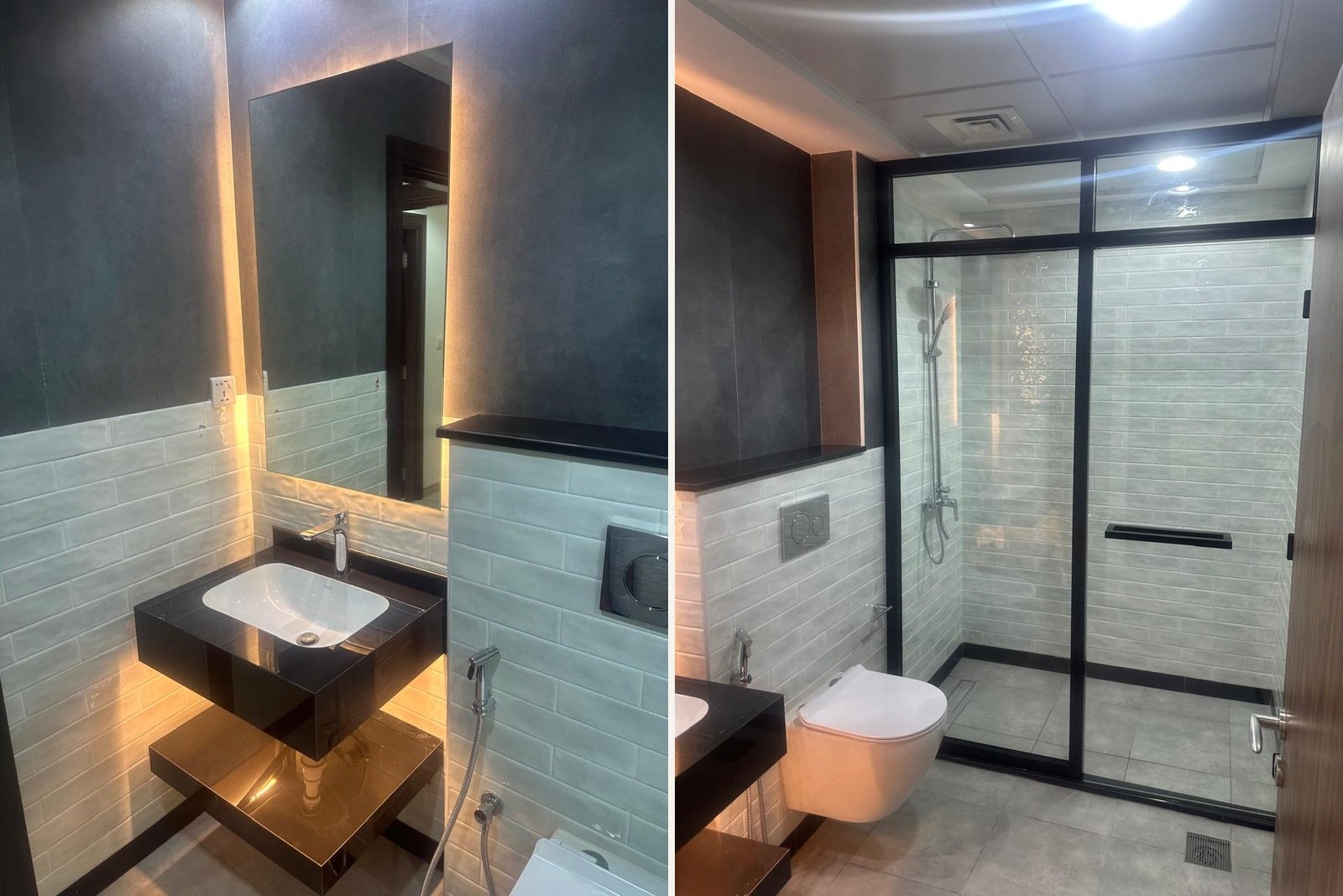
The planks are waterproof, which is why LVT is sold as bathroom-friendly. In a guest WC or powder room with the perimeter sealed, it can work well. Inside a shower, or in any bathroom where water regularly sits on the floor, we still specify porcelain tile over a tested waterproofing membrane, because water that gets under a floating floor at the edges has nowhere to go. Our bathroom renovation cost guide covers what that involves.
Getting the subfloor right
LVT follows the floor beneath it. For click systems, many manufacturers allow only around 3 mm of deviation over roughly two metres, and glue-down products need a smooth, fully levelled surface. Over old tiles, grout lines and lippage are ground down or skimmed with levelling compound, and loose or hollow tiles are replaced first. Skipping this step is the most common reason an LVT floor shows lines, clicks or lifts at the joints a few months later.
Installation and care
A typical bedroom or living room can be laid in a day, a full apartment in a few days, with little dust and no wet trades. Afterwards, sweep or vacuum regularly, damp-mop with a neutral cleaner, put felt pads under furniture and use castor mats under office chairs. Avoid steam mops, abrasive pads and rubber-backed mats, which can mark some vinyl surfaces.
How to compare quotes
- The exact product, core type, plank size and wear layer in millimetres.
- Subfloor preparation: grinding, levelling compound and tile repairs.
- Underlay, if not integrated, and the adhesive for glue-down products.
- Skirting, door thresholds, stair nosings and transition trims.
- Removal of existing flooring, if needed, and the warranty on product and installation.
The bottom line
LVT is one of the fastest ways to transform a Dubai apartment or office, provided the core suits the room, the wear layer suits the traffic and the subfloor is properly prepared. Keep it out of showers, protect it from hours of direct sun, and it will look good for many years. For a whole-home project, see our guide to interior design and fit-out costs in Dubai.
Thinking about LVT for your home or office?
Tell us the rooms and rough areas. We will survey the subfloor, bring samples to see in your light, and quote the preparation, product and trims line by line.
Book a Site Visit