An outdoor kitchen is one of the most requested additions to a Dubai villa — and one of the most frequently done badly. The failure mode is almost always the same: an indoor kitchen specification pushed outdoors, where 50°C summers, 90% August humidity and salt-laden coastal air destroy it within a year. Cabinet carcasses swell, hinges seize, 304 stainless pits and blooms rust, and the marble worktop stains under the first spilled marinade. A proper outdoor kitchen is a different discipline. This guide covers the materials, structure, services and layout that let an alfresco kitchen and BBQ pavilion survive Dubai and actually get used.
Materials that survive Dubai outdoors
Material selection is not a finishing decision here — it is the whole project. The environment attacks on three fronts at once: sustained heat that can push a dark surface in direct sun past 70°C, humidity that swings from 30% by day to 90%+ on summer nights, and airborne chloride from the Gulf that behaves like a permanent salt spray on any villa within a few kilometres of the coast — which is most of them.
316-grade marine stainless steel
The single most important specification. Standard 304 stainless — the default for indoor appliances and cabinetry — will pit and develop “tea staining” (a brown surface bloom) within one Dubai summer near the coast. Marine-grade 316, with 2-3% molybdenum, resists chloride corrosion dramatically better. Insist on 316 for the cabinet carcasses, doors, drawer runners, fasteners and the BBQ itself. Brushed or bead-blasted finishes hide fingerprints and water spotting better than mirror polish.
Porcelain and sintered-stone worktops
The worktop takes direct sun, hot pans, marinades, citrus and grill splatter. Natural marble and most granites are the wrong answer — marble etches and stains, and dark granite absorbs heat and fades under UV. Specify full-body porcelain or sintered stone (Dekton, Neolith, Laminam and similar) at 12 mm or 20 mm. These are UV-stable, non-porous, thermal-shock resistant and effectively stain-proof. A 20 mm slab with a mitred edge gives a substantial worktop that shrugs off a 250°C pan straight off the grill.
Powder-coated marine aluminium
For the pavilion frame, pergola and any structural steel, marine-grade aluminium with an architectural powder-coat (ideally a marine-warranty coating such as those in the Interpon D2525 class) resists both corrosion and UV chalking. Aluminium will not rust the way mild steel does when the coating is inevitably chipped, which matters over a 15-20 year life outdoors.
Teak and thermally-modified timber
Where warmth is wanted — a bar front, a slatted ceiling, cabinet fascias — teak is the benchmark. Its natural oils resist water and insects, and it silvers gracefully if left unoiled. Thermally-modified ash or accoya are lower-cost alternatives with similar stability. Avoid untreated softwoods, standard plywood and any MDF-core product entirely; they have no place outdoors in this climate.
A useful rule for the whole build: assume every material will be tested by heat, water and salt at once, and specify to marine standards rather than to what suits a shaded European terrace.
The pavilion: shade and orientation
In Dubai, shade is not a comfort upgrade — it makes the space usable at all and protects the appliances from thermal cycling. The pavilion is the second decision after materials, and the two are linked: the structure carries the fans, lighting, extraction and often the water and gas runs.
- Orientation: position the cooking zone so the prevailing afternoon sun falls on a solid or louvred wall, not on the cook or the worktop. A north or north-east facing working line keeps the harshest western sun off the space during the hours it is most used.
- Roof type: a solid insulated roof gives the best heat performance; a motorised louvred (bioclimatic) pergola offers flexibility — closed for shade and rain, angled to vent hot air, or open on a mild evening.
- Height: a ceiling of 3.0–3.3 m keeps the space airy and gives heat and grill smoke room to rise away from the cook, matching the proportions of the villa it sits beside.
- Screening: louvred aluminium or timber screens on the west and south sides cut low-angle glare and afternoon heat gain while keeping the space open to the garden.
Do not site a BBQ under an unventilated solid soffit or a timber pergola with tight-spaced rafters. Grill heat and grease-laden smoke need somewhere to go, and the wrong roof turns a pleasant pavilion into a smoke trap and a fire risk.
Ventilation and grill clearances
This is the area most often ignored in Dubai outdoor kitchens, and the one that causes the most damage — scorched soffits, smoke-stained ceilings and, occasionally, dangerous heat build-up. A built-in grill throws far more heat than an indoor hob and must be treated accordingly.
- Overhead clearance: maintain the manufacturer's specified clearance to any combustible surface — typically a minimum of 90 cm to a timber ceiling and considerably more for a fully enclosed hood. When in doubt, keep the grill under open sky or a non-combustible soffit.
- Side clearances: allow the specified gap (often 15–25 cm) between a built-in BBQ and any adjacent cabinetry or wall, and line the cut-out with the insulating jacket the maker supplies. This stops the enclosure and neighbouring materials from cooking.
- Extraction: if the grill sits under a roof, install an outdoor-rated extraction hood sized to the appliance — roughly 1,000–1,500 m³/h for a large BBQ — ducted to open air. A wood-fired or charcoal oven needs its own flue.
- Ventilation cut-outs: a fully enclosed island housing a gas BBQ or a gas bottle must have low and high ventilation openings so any leaking LPG (which is heavier than air) cannot pool inside the cabinet.
Appliances and the outdoor work triangle
The anchor of any outdoor kitchen is the grill, and everything else is planned around it. The classic indoor work triangle — the path between cold storage, prep and cooking — applies outdoors too, adapted to the way people host in a Dubai garden, where the cook is part of the party rather than hidden in a back kitchen.
A well-specified pavilion typically includes some combination of:
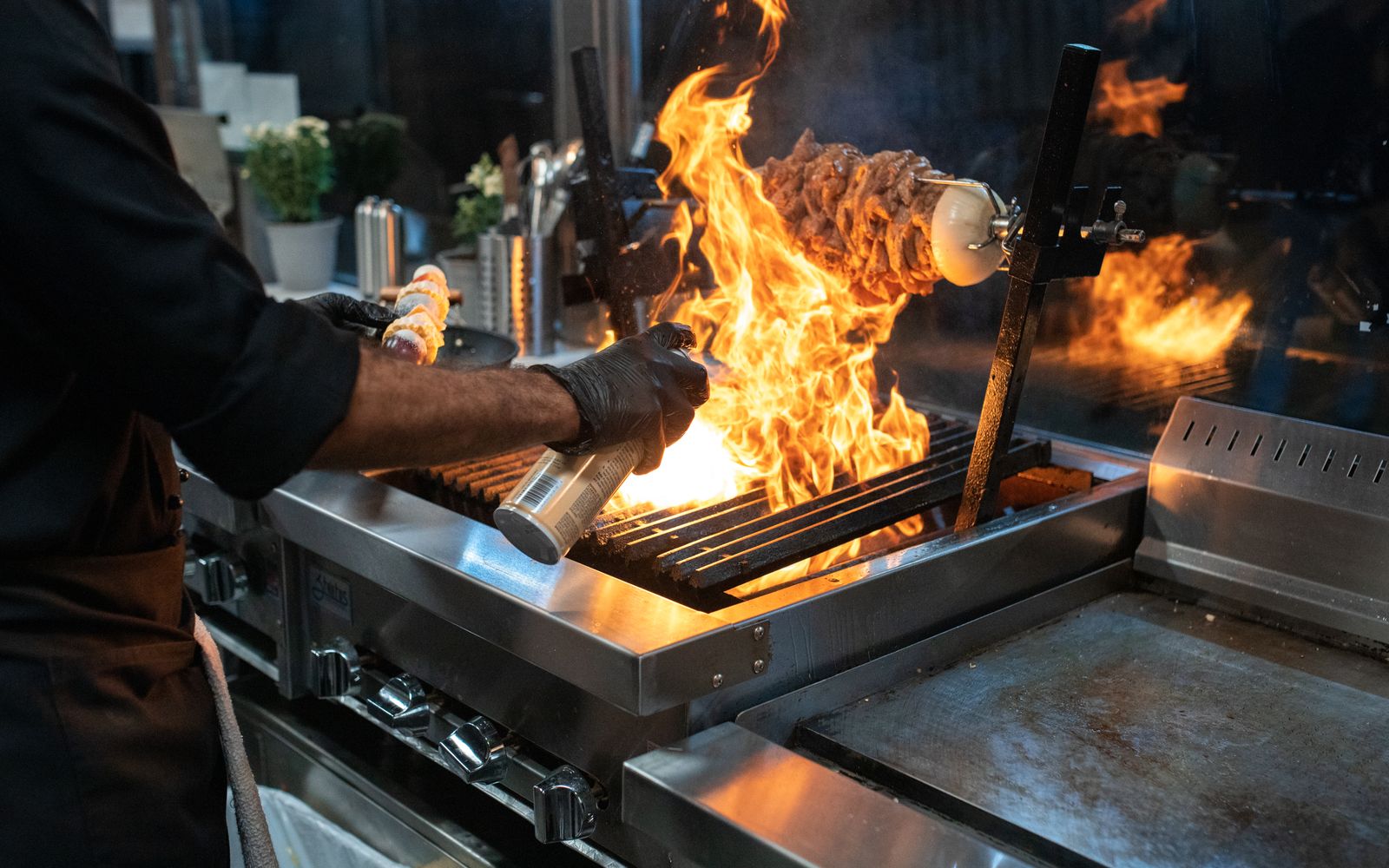
- Built-in BBQ: gas for convenience and control, charcoal for flavour, or a hybrid. A 90–120 cm built-in grill in 316 stainless suits most families; side burners handle sauces and sides.
- Teppanyaki plate / plancha: a flat steel griddle for seafood, vegetables and the theatre of cook-in-front-of-guests service that suits alfresco hosting.
- Pizza or charcoal oven: a wood-fired pizza oven or a kamado (ceramic charcoal oven) extends the menu well beyond grilling and becomes a social focal point.
- Outdoor fridge and ice maker: a 316-rated undercounter fridge (indoor units rust and their compressors struggle in the heat) plus, for larger set-ups, a dedicated ice maker and a beverage drawer.
- Sink and prep zone: a stainless sink with hot and cold supply, framed by generous porcelain worktop each side — the single biggest quality-of-life addition, since it minimises trips back to the indoor kitchen.
- Storage and warming: sealed 316 drawers for tools, a warming drawer to hold finished food, and a bin drawer.
Every appliance must be outdoor-rated. Bringing an indoor fridge, hob or oven outside voids the warranty and invites early failure — sealed outdoor electronics, gasketed doors and marine-grade housings exist precisely because the standard versions do not survive. Arrange the layout so the cook can move fridge → prep sink → grill in a tight arc, with a landing surface of at least 40 cm on each side of the BBQ for plates and platters.
Utilities: gas, water, power and drainage
An outdoor kitchen is a wet, powered, gas-fed installation exposed to the weather, so the services behind the finishes matter as much as the appliances. Design them in from the start — retro-fitting gas and drainage into a finished terrace is disruptive and expensive.
- Gas: either a concealed, ventilated LPG bottle store or, where available, a piped natural-gas connection with an isolation valve. All gas work must be carried out by a certified installer and pressure-tested; the bottle enclosure must be ventilated top and bottom.
- Water: hot and cold supply to the sink, with pipework insulated and, ideally, a local shut-off. Standing water in exposed pipes reaches uncomfortable temperatures in summer, so a small point-of-use heater or recirculation loop helps.
- Drainage: the sink needs a proper trapped waste to the villa's greywater or foul drain — not a soakaway that will smell. The floor around the kitchen should fall to a channel drain so wash-down water and rain clear quickly.
- Power: all outdoor sockets and connections must be weatherproof (IP65 or better) and RCD-protected. Plan enough dedicated circuits for the fridge, ice maker, lighting, fans and any powered extraction, and route cabling in UV-stable conduit.
- Weatherproofing: even in a “dry” climate, Dubai gets intense winter downpours and constant morning dew. Seal all penetrations, fall worktops very slightly to drain, and fit purpose-made covers over the BBQ and appliances when the space is idle through the hottest months.
Cooling: fans, misters and comfort
Shade alone is not enough for much of the year. Active cooling is what turns a handsome pavilion into a space the family uses rather than admires. Two systems do the heavy lifting, best deployed together.
- Ceiling fans: large-diameter outdoor-rated fans (140–180 cm) moving air at 3–4 m/s create an evaporative wind-chill on the skin and, just as importantly, keep grill smoke and still humid air moving. Mount them where the blades clear the cooking heat.
- High-pressure misting: a proper high-pressure system (around 70 bar) atomises water into a fog so fine it evaporates before it wets anything, dropping the felt temperature by 8–12°C. Low-pressure garden misters, by contrast, leave everything damp and are counter-productive in humidity — specify high-pressure or nothing.
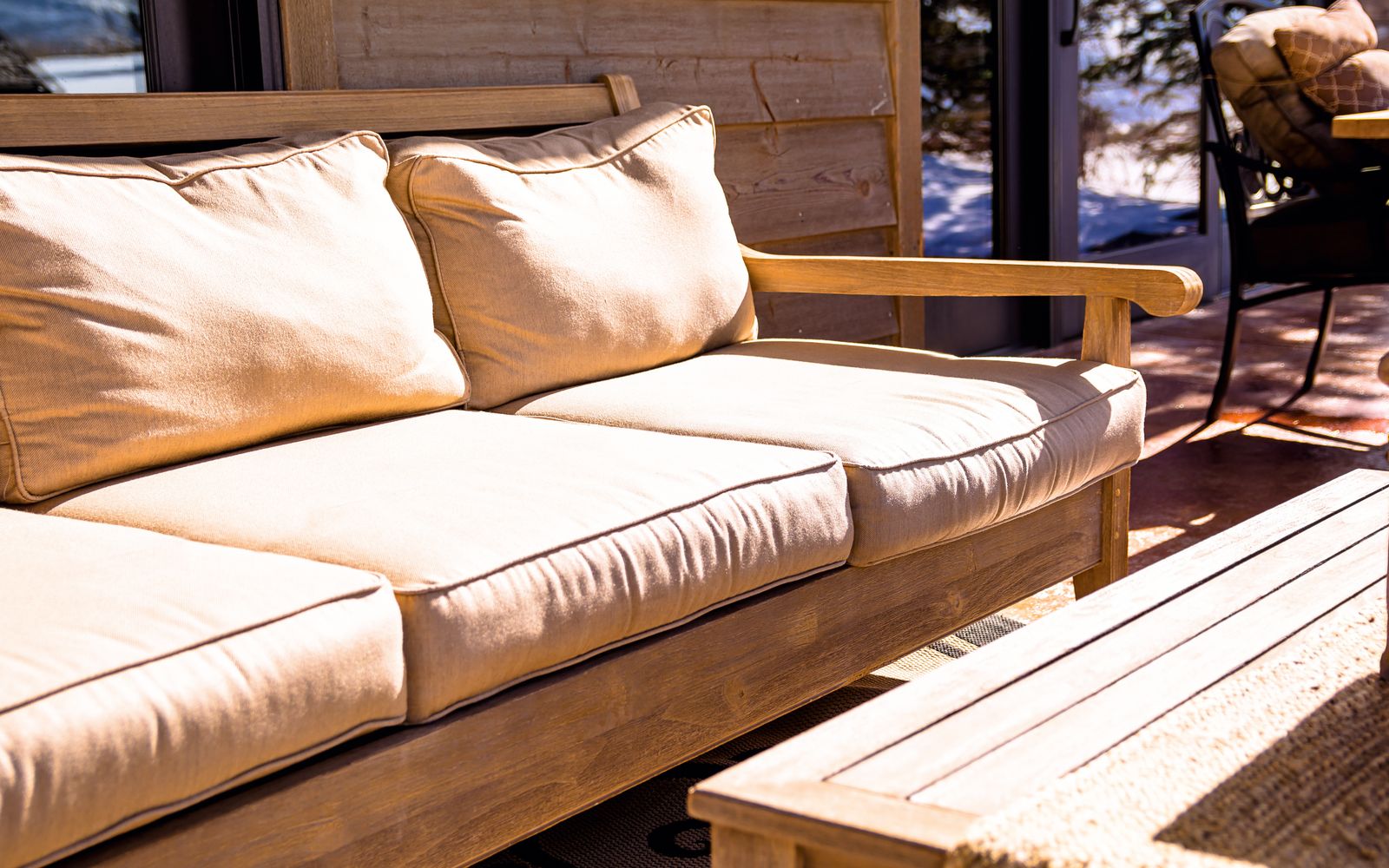
Combined, fans and high-pressure misting extend comfortable use across the long autumn-to-spring season and make summer evenings tolerable. For the seating and lounge side of the space, our outdoor furniture summer guide covers the upholstery, frames and fabrics that survive alongside the kitchen.
Integrating with the pool deck and terrace
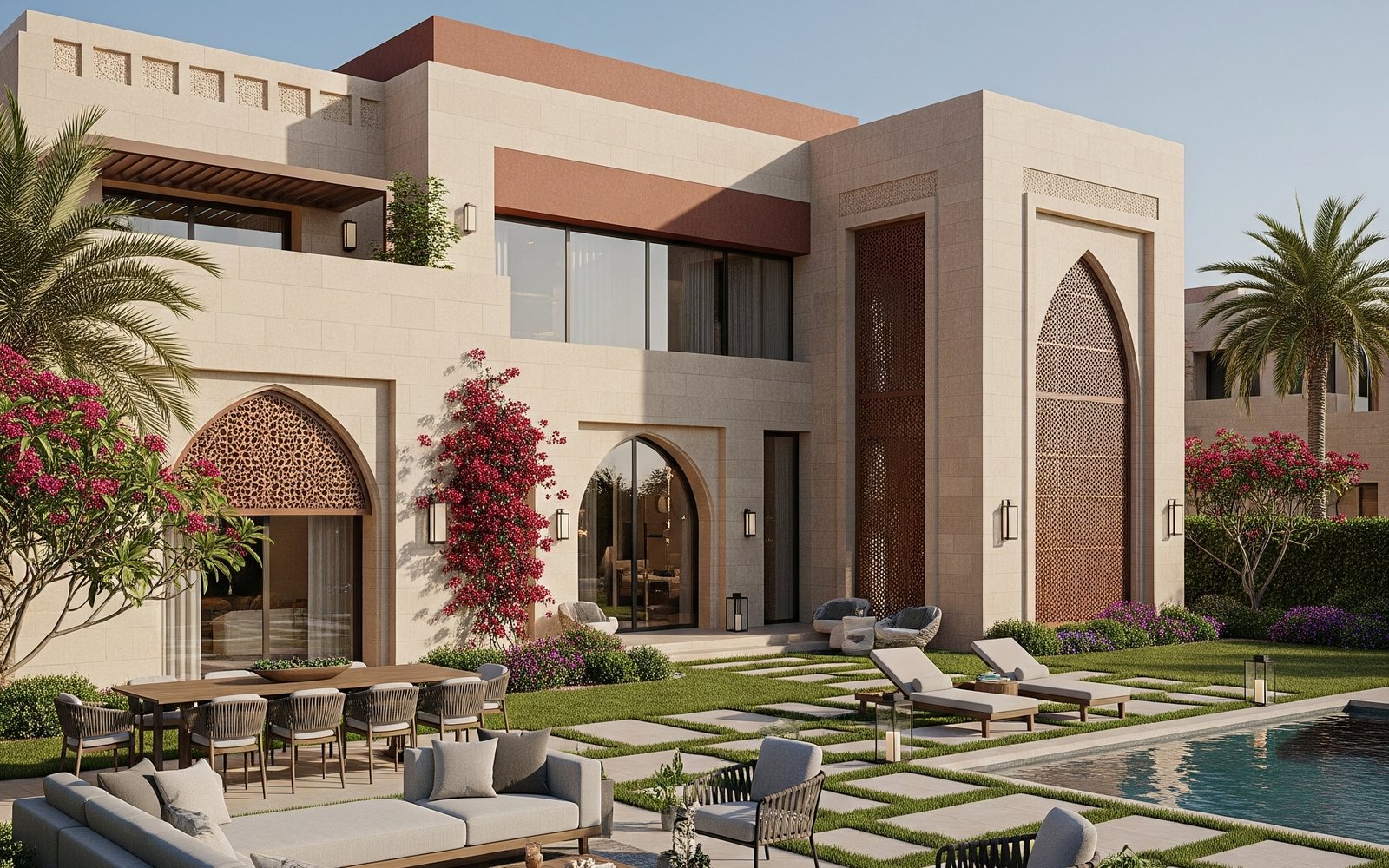
An outdoor kitchen rarely stands alone. At its best it is one zone in a coherent outdoor room that flows from the pool deck through a dining terrace to a lounge, so guests move naturally between swimming, eating and relaxing.
- Continuity of materials: carry the deck and paving palette through to the kitchen plinth and worktop so the space reads as one composition rather than a bolt-on. Our outdoor terrace and pool deck design guide goes deep on decking, paving and levels.
- Sightlines: place the grill so the cook faces the guests and the pool, not a blank wall — the whole appeal of alfresco cooking is that the host stays in the gathering.
- Circulation and safety: keep hot appliances and gas storage away from the immediate pool edge and from the main wet circulation route, and detail non-slip, low-glare flooring around the working zone.
- Lighting: layer task lighting over the worktop and grill with softer ambient light over the dining and lounge areas so the space works after dark, when most Dubai outdoor cooking happens.
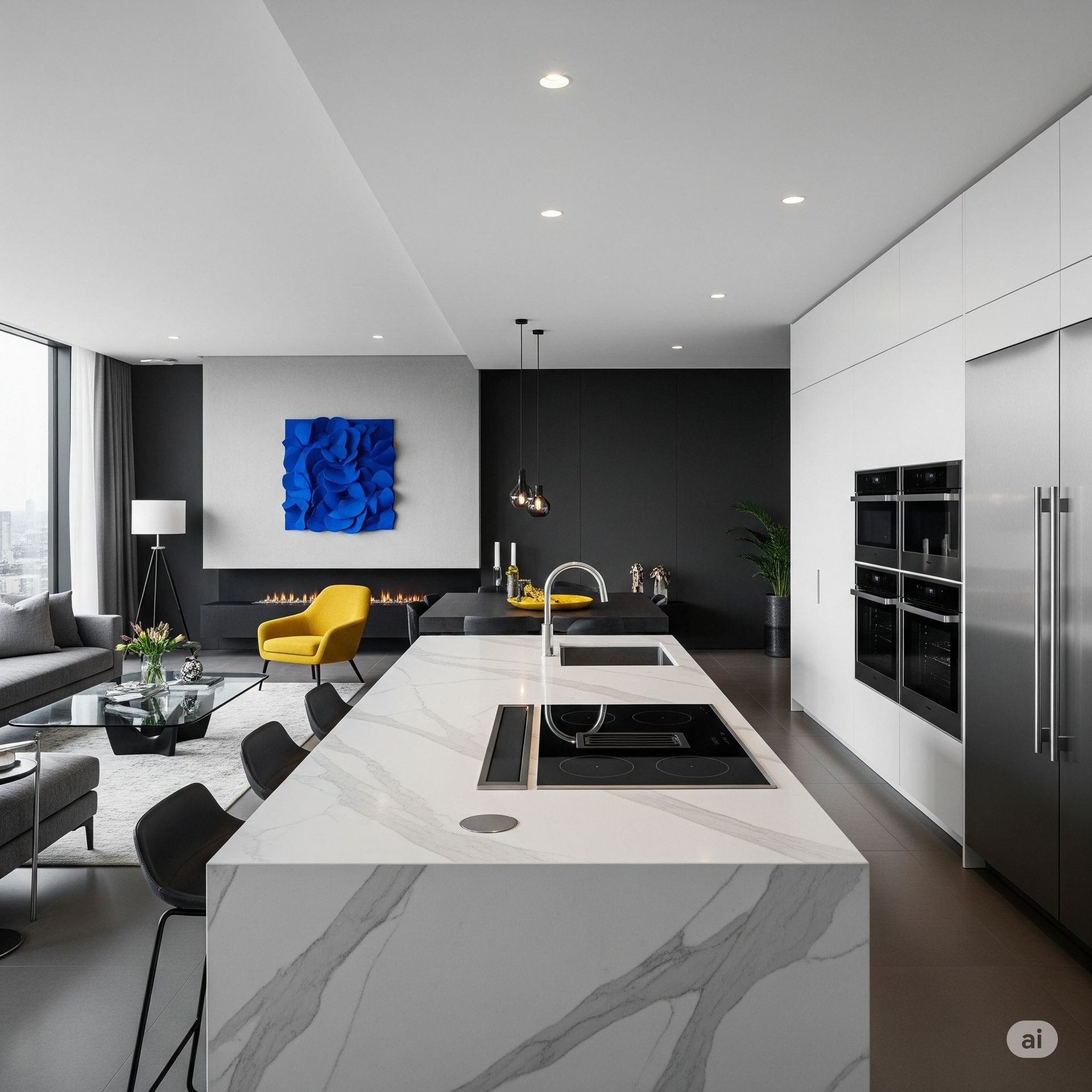
The same rigour that goes into a bespoke indoor kitchen applies here — the principles in our luxury kitchen design guide on ergonomics, storage and work zones translate directly, only with marine-grade materials and open-air services.
Year-round versus winter-season use
Be honest at the design stage about how the space will actually be used, because it changes the specification and budget. Two broad strategies work in Dubai.
- Year-round: a fully shaded, insulated-roof pavilion with ceiling fans, high-pressure misting and generous screening can be used on most evenings all year, and comfortably by day for roughly eight months. This is the fuller, more serviced build — more structure, more cooling, more appliances — and it earns its keep for families who host constantly.
- Winter-season: a lighter pergola-based kitchen used intensively from October to April and effectively closed down for the peak of summer. The appliances are covered and the space rested through July and August. This costs less and suits families whose outdoor life is genuinely seasonal.
Neither approach makes July and August midday cooking realistic — at 45–50°C in full daylight, no amount of shading makes standing over a grill pleasant, and almost everyone cooks at night in high summer. Designing around that reality produces a kitchen that gets used for years rather than admired for one season.
The bottom line
A great outdoor kitchen in Dubai is an exercise in respecting the climate. Specify to marine standards — 316 stainless, porcelain and sintered stone, powder-coated aluminium and teak — shade and orient the pavilion properly, ventilate the grill, run the gas, water, power and drainage cleanly, and cool the space with fans and high-pressure misting. Plan the work triangle so the cook stays in the party and the layout flows into the pool deck and terrace. Do that, and the space survives the heat, humidity and salt, and hosts effortlessly for a decade or more.
If you are planning an outdoor kitchen or BBQ pavilion for your villa, our team handles the full design, marine-grade cabinetry and joinery, and coordination of the structure and services from our Al Qusais workshop. Book a consultation at the showroom or on site in your garden.
Planning an outdoor kitchen?
Book a complimentary outdoor kitchen consultation. We'll review your site, orientation and hosting brief, propose the right pavilion, appliances and material palette for the climate, and return a complete design with budget.
Book a Consultation