From October to April, the terrace is often the busiest part of a restaurant or hotel in the UAE: rooftop lounges, beach clubs, shisha terraces and garden cafés that fill every evening. Then comes a summer of 45 °C afternoons, high humidity on the coast and furniture left out in the sun for months. Home outdoor furniture is not built for that combination. Here is what to specify when the terrace is commercial.
The short answer
Choose frames in solid teak or powder-coated aluminium, any stainless steel in grade 316, cushions in solution-dyed outdoor fabric over quick-dry foam, tables with stable, weighted bases, and planters in GRP where weight matters. Plan for wind on rooftops, heat on dark surfaces, and somewhere to store cushions in summer.
Frames that survive daily service
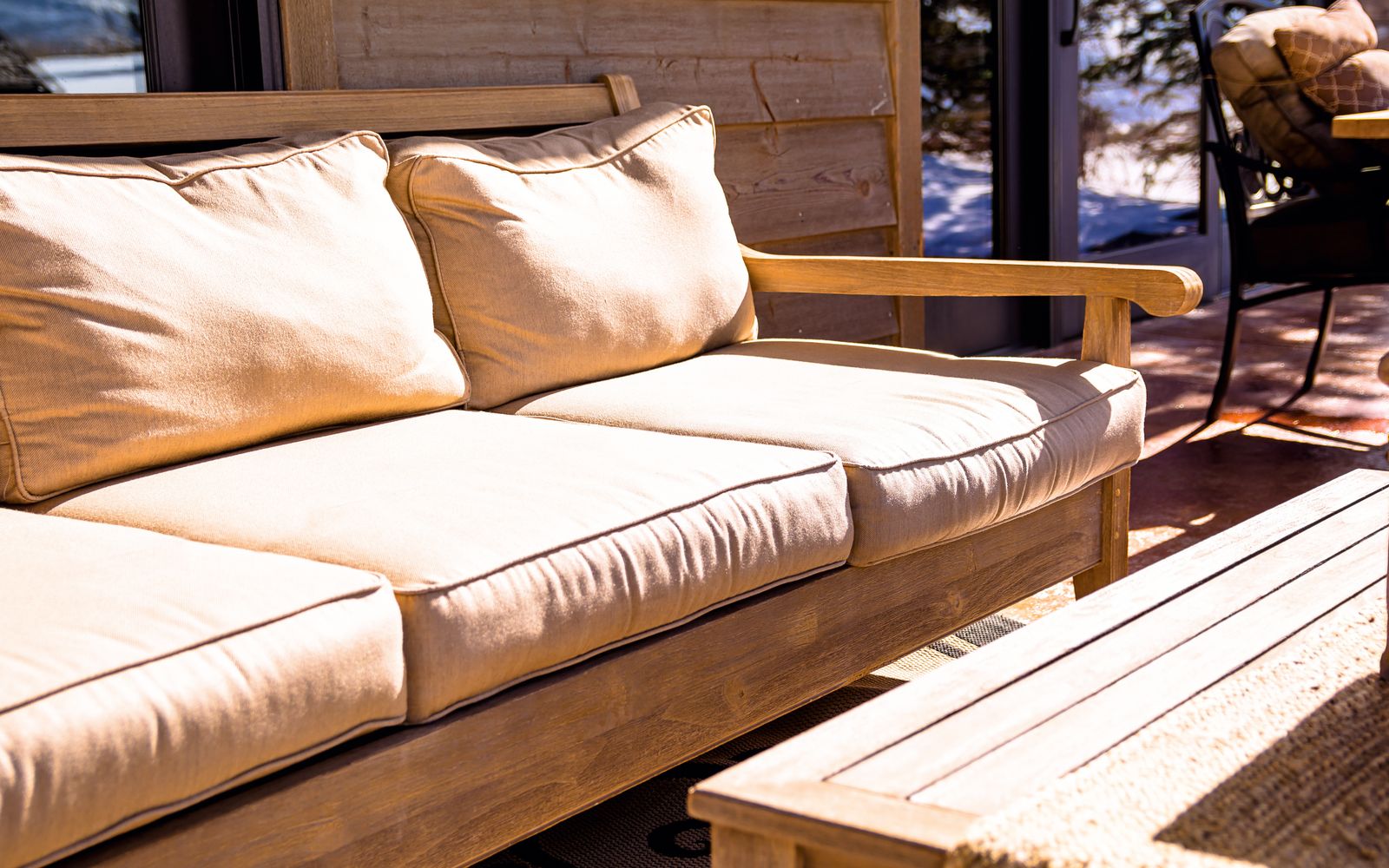
Solid teak. Teak’s natural oils make it resistant to moisture, rot and insects, and it stays cooler to the touch than metal. Left unoiled, it weathers to a soft silver-grey within months, which many venues like; oiled or sealed, it keeps its honey colour with regular maintenance. Its weight is an asset on windy rooftops. Specify kiln-dried, straight-grained teak with mortise-and-tenon joints and stainless steel fixings.
Powder-coated aluminium. Light, stackable and rust-free, which makes it ideal for terraces that are cleared every night. Within about 5 km of the coast, ask for a Qualicoat Seaside-class pretreatment and coating, and remember that light chairs can blow over at height.
Stainless steel. Use grade 316 outdoors, especially within sight of the sea. Grade 304, fine indoors, can show rust spots in salty air.
Synthetic rope and weave. Olefin or HDPE rope and resin weave give a soft, crafted look on aluminium frames. Choose UV-stabilised fibres, or the weave turns brittle.
Cushions and fabric
Outdoor cushions fail from the inside: ordinary foam holds water, smells and breaks down. Use open-cell quick-dry (reticulated) foam that lets water drain straight through, wrapped in a breathable layer, with mesh panels or drain holes on the underside of the cover. For the cover, solution-dyed acrylic or outdoor polyester, where the colour goes right through the fibre, resists fading far better than fabric dyed after weaving. Light and mid tones stay cooler in the sun; deep colours look rich but fade sooner and get hot. Make covers removable with zips, so they can be cleaned or replaced without new foam.
Tables
Tops in teak, sintered stone, compact laminate or sealed stone all work outside. Polished marble does not: it etches, stains and heats up. The base matters as much as the top: a cross or wide disc base with adjustable levellers stops wobbling on paving, and heavier bases resist gusts on rooftops. Dark metal tops can become too hot to touch in direct sun.
Planters, benches and built-in pieces
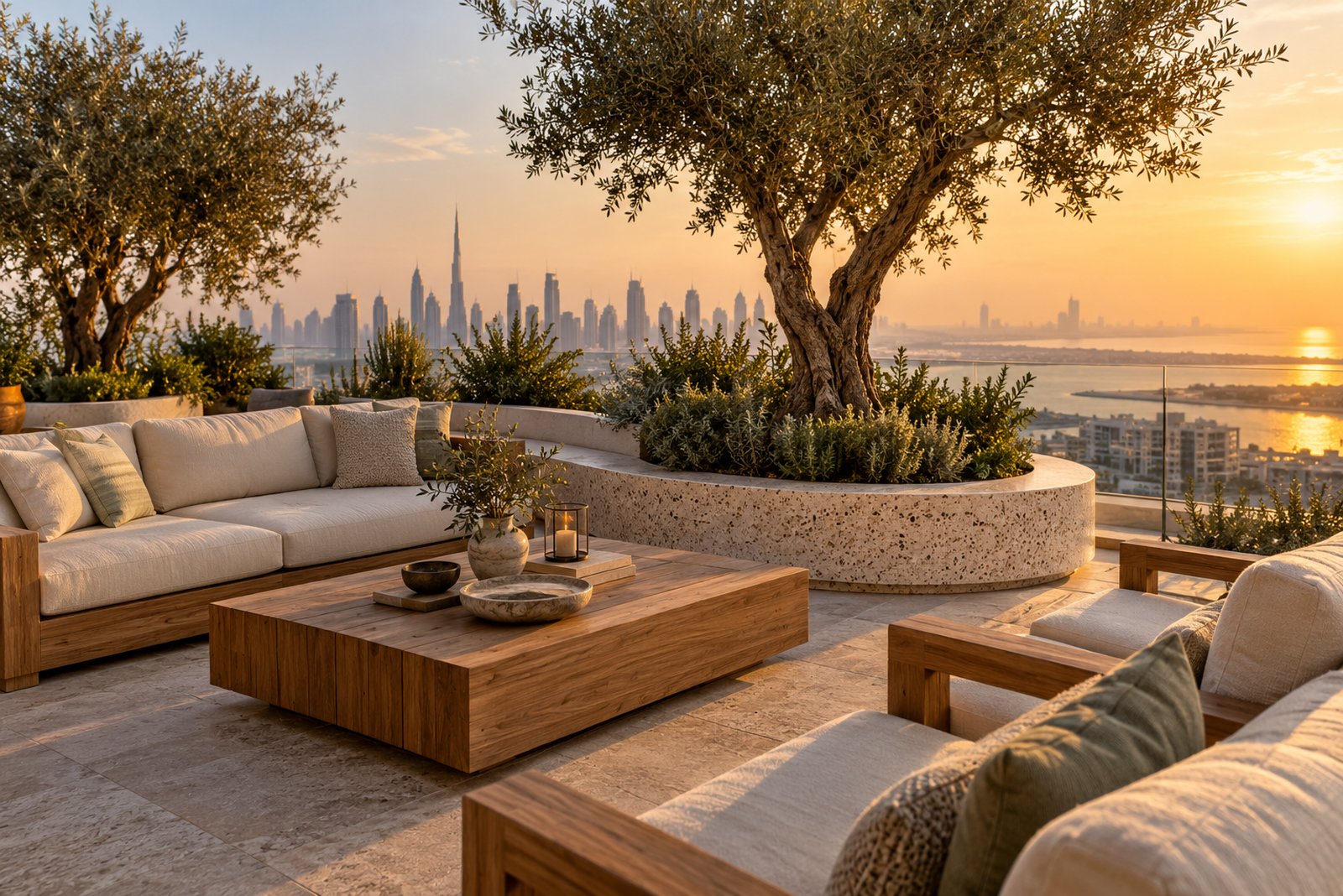
Large planters, built-in benches and counters shape most terraces, and on a rooftop their weight decides what is possible. GRP (glass-reinforced plastic) can be moulded to almost any shape and finished to look like terrazzo, granite, stone or metal, at a fraction of the weight of concrete. Precast terrazzo and stone are heavier and more robust at ground level. Whatever the shell, specify a UV-stable finish, a liner, drainage outlets and irrigation, and have the structural engineer check the loaded weight: a planter full of wet soil weighs far more than the empty shell.
Rooftop specifics
- Wind. Light chairs, umbrellas and loose cushions move at height. Use heavier pieces, fixed or weighted planters and umbrellas rated for wind, and a plan for storms.
- Slab loads and finishes. Heavy planters and counters may need to sit on structure, and fixings must not puncture the waterproofing.
- Access. Check lift car and door sizes before you design one-piece sofas and long benches.
- Glass balustrades. Keep furniture away from the edge so it cannot be climbed or blown against the glass.
A maintenance plan, agreed up front
- Daily: wipe tables and seats, bring cushions in at close if possible.
- Monthly: wash frames with fresh water to remove salt and dust (never a pressure washer on teak), and check fixings and levellers.
- Seasonally: oil or reseal teak if you want to keep the honey colour, and clean cushion covers.
- In summer: store cushions and covers, and protect frames from long afternoons in full sun.
The bottom line
A commercial terrace needs furniture that can be stacked, wiped, rearranged and left out, and still look good in its fifth season. Solid teak or quality aluminium frames, quick-dry cushions in solution-dyed fabric, sturdy bases and lightweight GRP planters will get you there. For outdoor furniture at home, see our outdoor furniture summer guide.
Furnishing a terrace or rooftop?
Send us the layout and the number of covers. We will suggest frames, fabrics and planters that suit your exposure, and price the package with delivery and installation.
Book a Consultation