Dubai's villa market has matured. The era of maximalist gold-on-gold is over — and what's replacing it is more confident, more rooted, and far more refined. After completing fit-outs across Emirates Hills, Palm Jumeirah, Dubai Hills and Tilal Al Ghaf this year, our team has noticed a clear pattern: clients are asking for spaces that feel calm, layered and unmistakably theirs.
Below are the eight luxury villa interior design trends defining Dubai homes in 2026 — and the design choices behind each one.
1. Warm minimalism, not cold minimalism
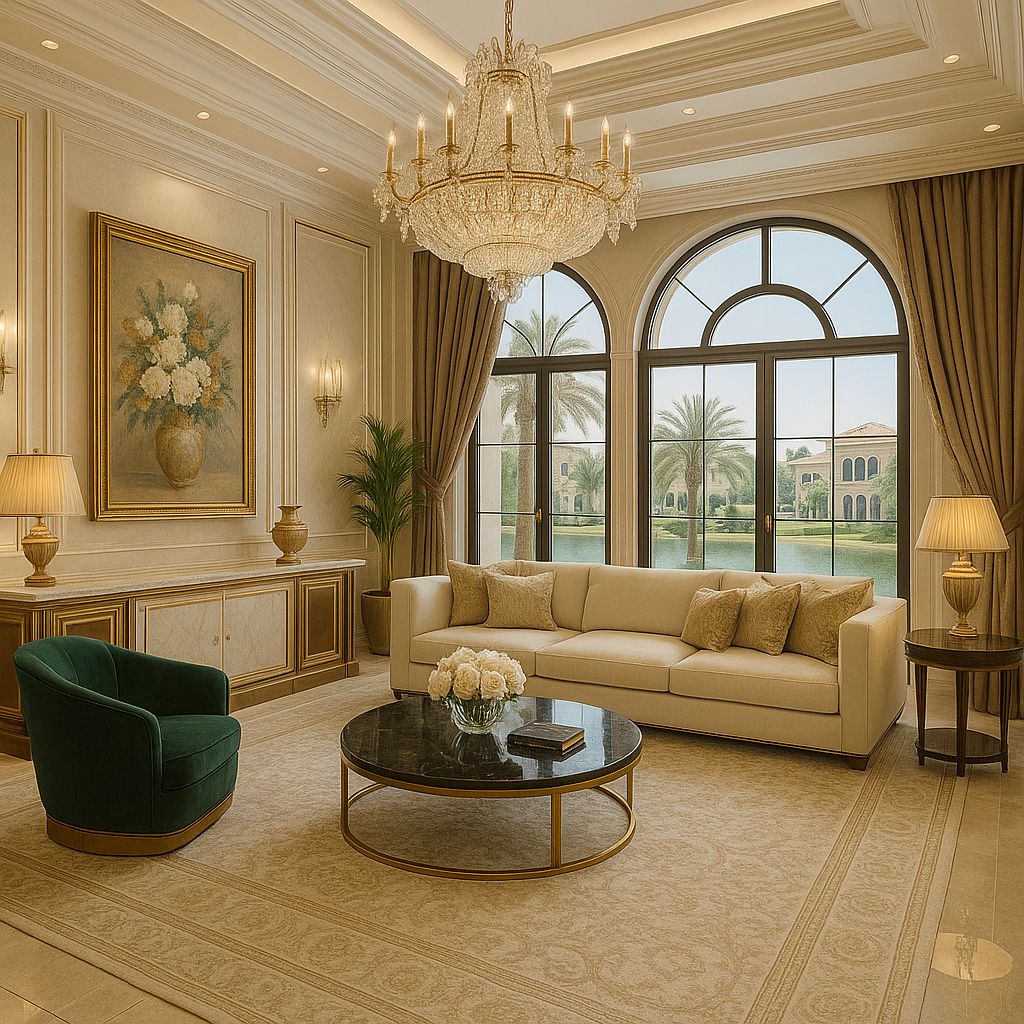
The pure-white minimalism of the 2010s has given way to a softer, warmer palette: oat, ecru, putty, sandstone, smoked oak. Clients still want clean lines and uncluttered space, but they want to feel embraced when they walk in — not chilled.
Practically, this means natural plaster walls instead of flat paint, hand-knotted wool rugs instead of synthetic, and solid timber furniture in rift-cut oak or walnut rather than high-gloss lacquer. The result reads as quietly expensive without any of the visual shouting.
2. The modern majlis, reimagined
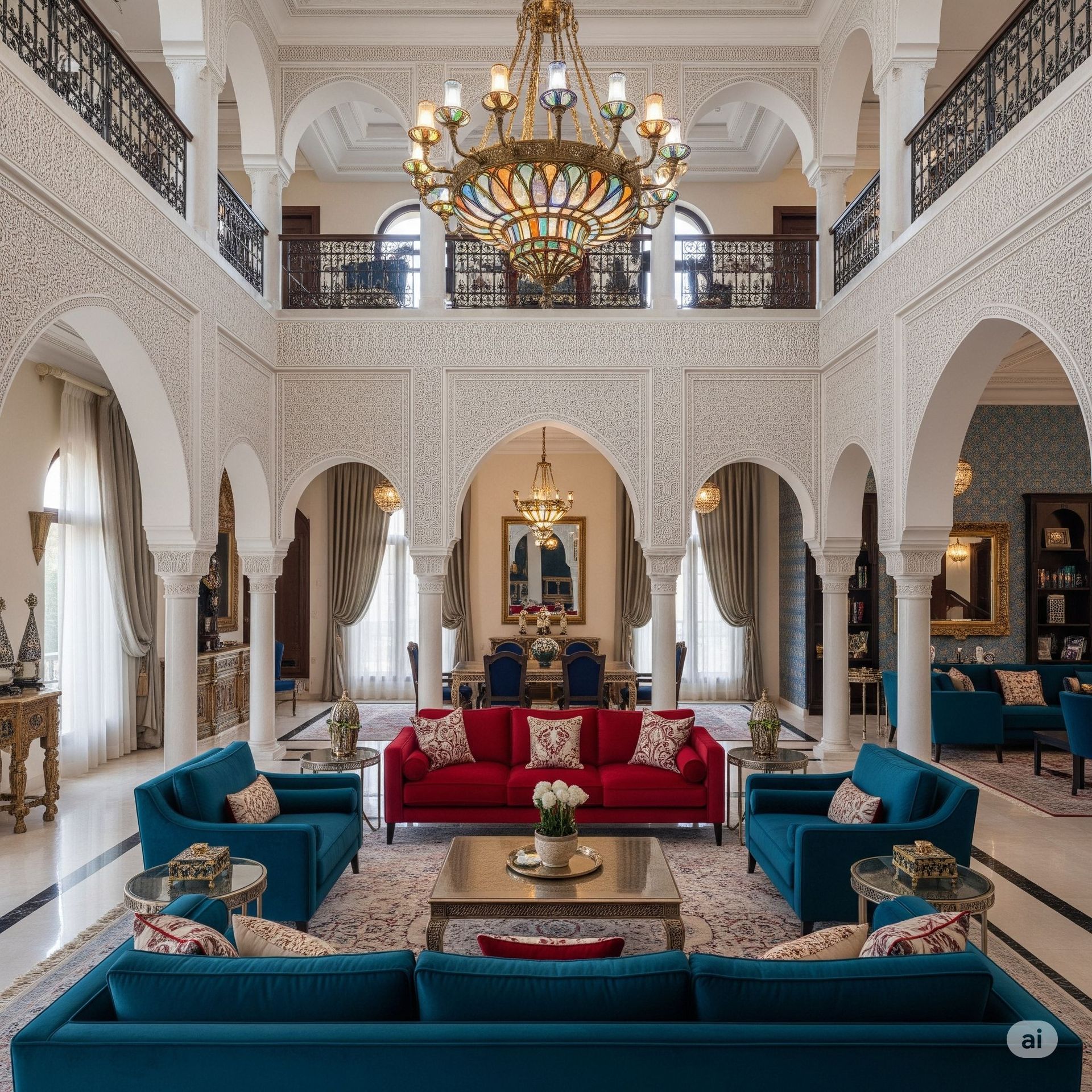
The majlis is having a moment. Younger Emirati and GCC families are commissioning majlis spaces that respect tradition — the deep seating, the symmetry, the hospitality — while shedding the heavier carved furniture of previous generations.
The 2026 majlis is lower, lighter and more architectural. Bespoke modular sofas in cream bouclé or natural linen, brass and travertine accent tables, layered Persian rugs, and a single statement chandelier. Read our deeper guide on modern majlis design for the full breakdown.
3. Statement stone — and lots of it
Travertine, onyx, calacatta viola, and book-matched marble are showing up everywhere: kitchen islands, bathroom slabs, fireplace surrounds, even bedside tables. Stone is the single biggest material story in Dubai luxury interiors right now.
The trick is restraint. One dramatic stone moment per room, paired with quieter materials elsewhere. A book-matched onyx bar in the lounge works because the surrounding millwork is calm.
4. Biophilic design built for the climate
Bringing nature indoors is harder in Dubai than almost anywhere else — AC, glare, low humidity inside and 45 °C outside. The villas getting it right in 2026 are designing landscape and interior together: shaded internal courtyards, large pivoting glass doors that open to garden majlis areas, water features that humidify, and indoor planting palettes built around species that actually thrive (ficus, monstera, palms).
5. Bespoke beds as the bedroom hero
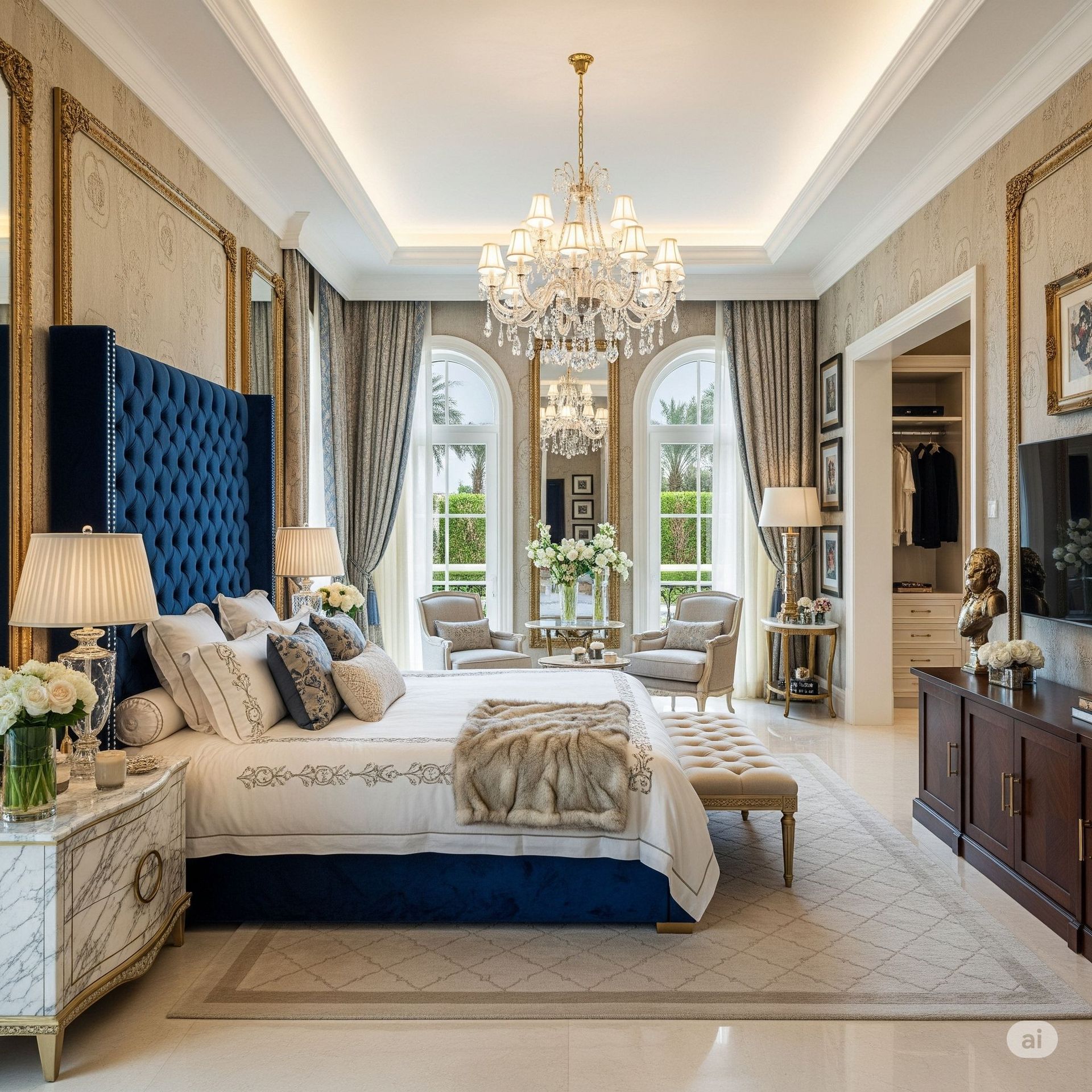
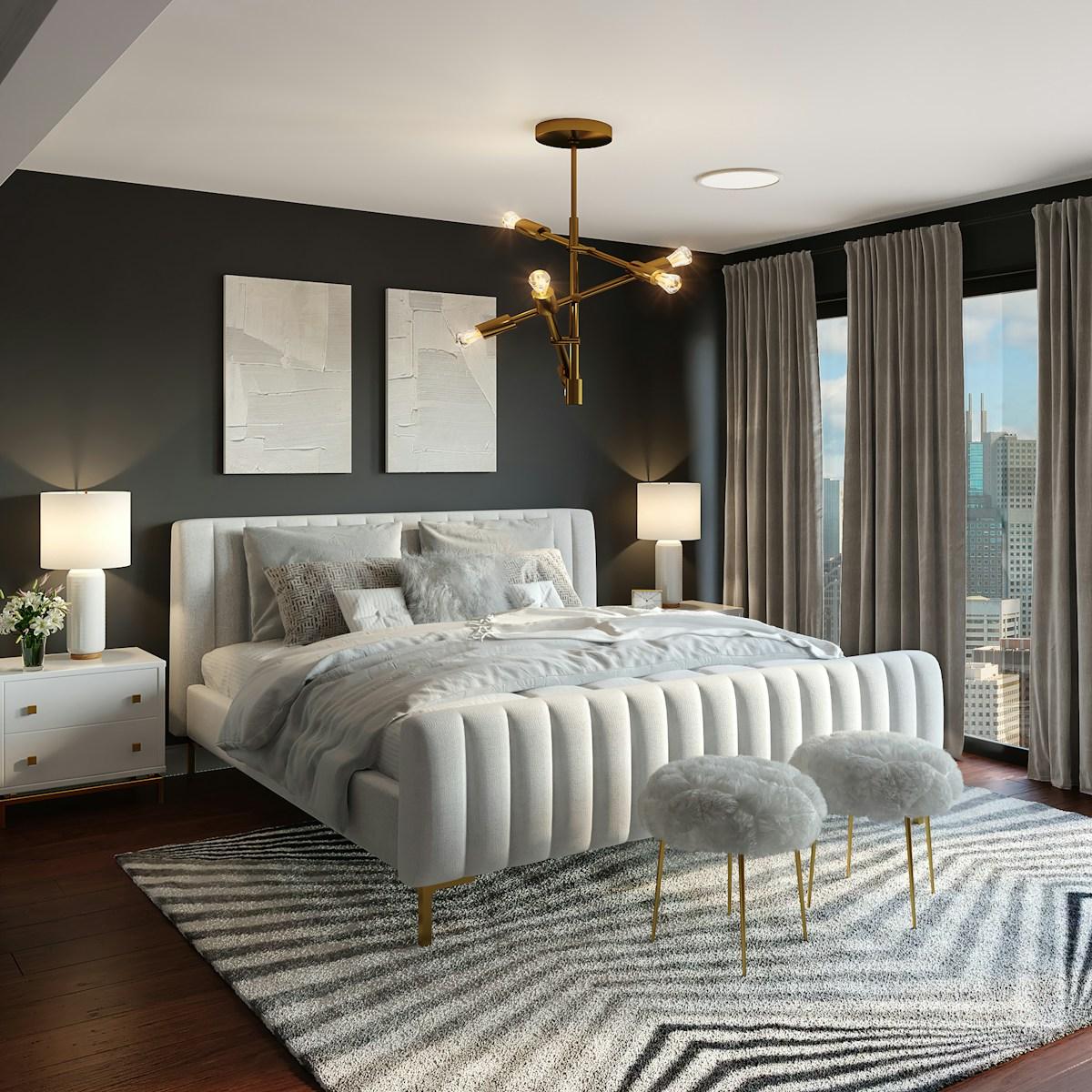
Master bedrooms are increasingly built around a single, sculptural custom bed. Tall upholstered headboards in channelled bouclé, leather, or hand-tufted velvet. Integrated bedside lighting. Custom proportions to match the room's scale — usually wider than a standard king to suit Dubai's larger primary suites.
What's changed is the willingness to invest in one beautifully made bed instead of an entire showroom set. The bed is the hero; everything else supports it.
6. Layered Arabic motifs, lightly used
Arabic geometry, mashrabiya screens, hand-pierced brass, calligraphy panels — these elements are still very present, but the application is dramatically more disciplined. Instead of an entire wall of carved geometry, you'll see a single mashrabiya partition between dining and majlis, or a slim brass inlay running through marble flooring.
The principle: heritage as accent, not as backdrop.
7. Dedicated rooms are back
Open-plan everything is fading. Dubai villa briefs in 2026 routinely include: a separate formal dining room, a private cinema, a cigar lounge or whisky room, a women-only majlis, a prayer room, and a dedicated home office. Buyers are paying for spatial generosity again.
For furniture, this means suites of pieces designed to live together in dedicated rooms — a custom dining table with matching credenza and bar; a cinema room with bespoke recliners and acoustic upholstery.
8. Quiet luxury fixtures and finishes
Brushed brass and antique bronze are replacing chrome. Hand-fired ceramic switchplates are replacing plastic. Solid brass door pulls cast in Italy. Linen wall coverings instead of paint. None of it screams — all of it adds up.
This is the single biggest difference between a villa that feels high-end and one that simply cost a lot. The detail layer is where the budget should land.
Putting it all together
The through-line for 2026 is restraint with substance. Dubai's most discerning homeowners are no longer trying to demonstrate wealth through their interiors — they're trying to live well in them. Warmth, craftsmanship, cultural confidence, and the patience to commission rather than buy off-the-shelf.
If you're planning a villa fit-out or a single-room refresh in Dubai, our team designs and manufactures every piece in-house through our partnership with Kreative Brain. Book a consultation to talk through your project, or explore recent villa projects.
Designing your villa in Dubai?
Speak to our team about a bespoke fit-out or custom furniture commission.
Book a Consultation