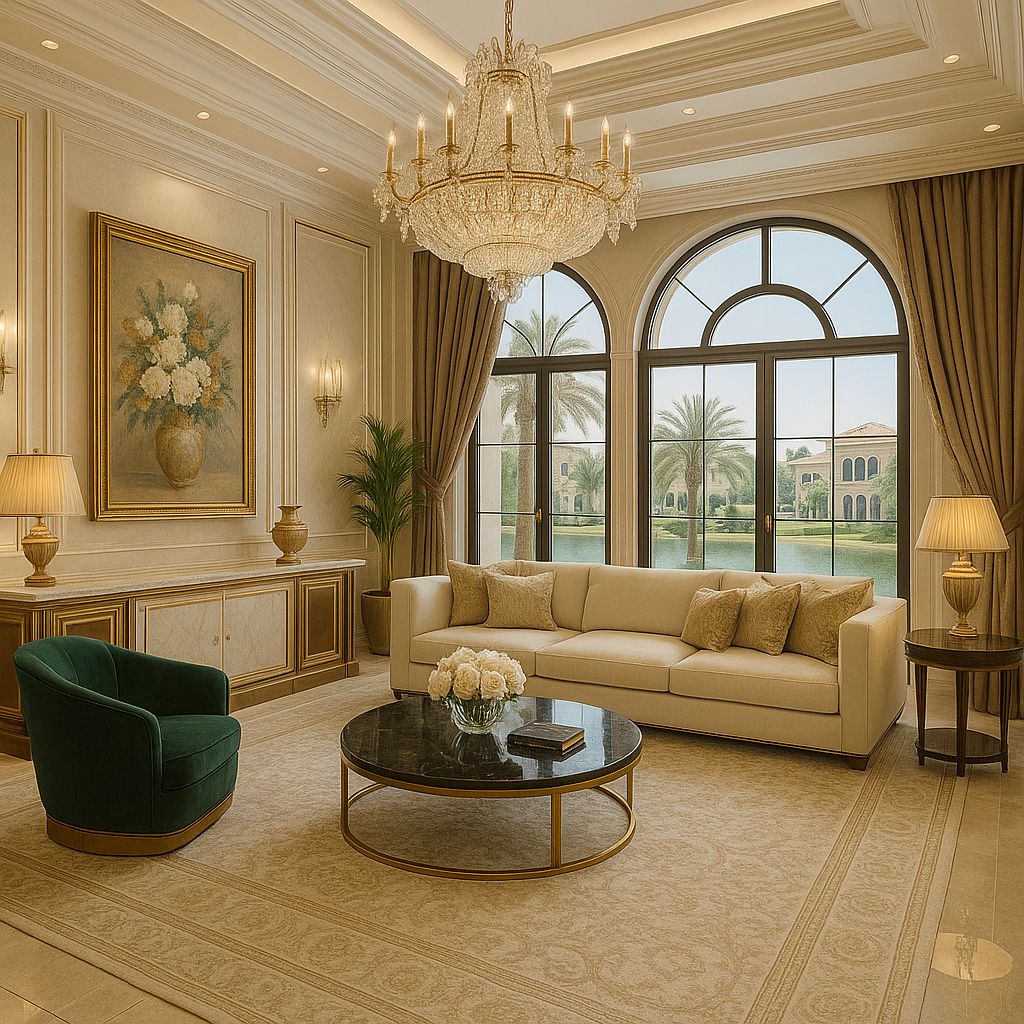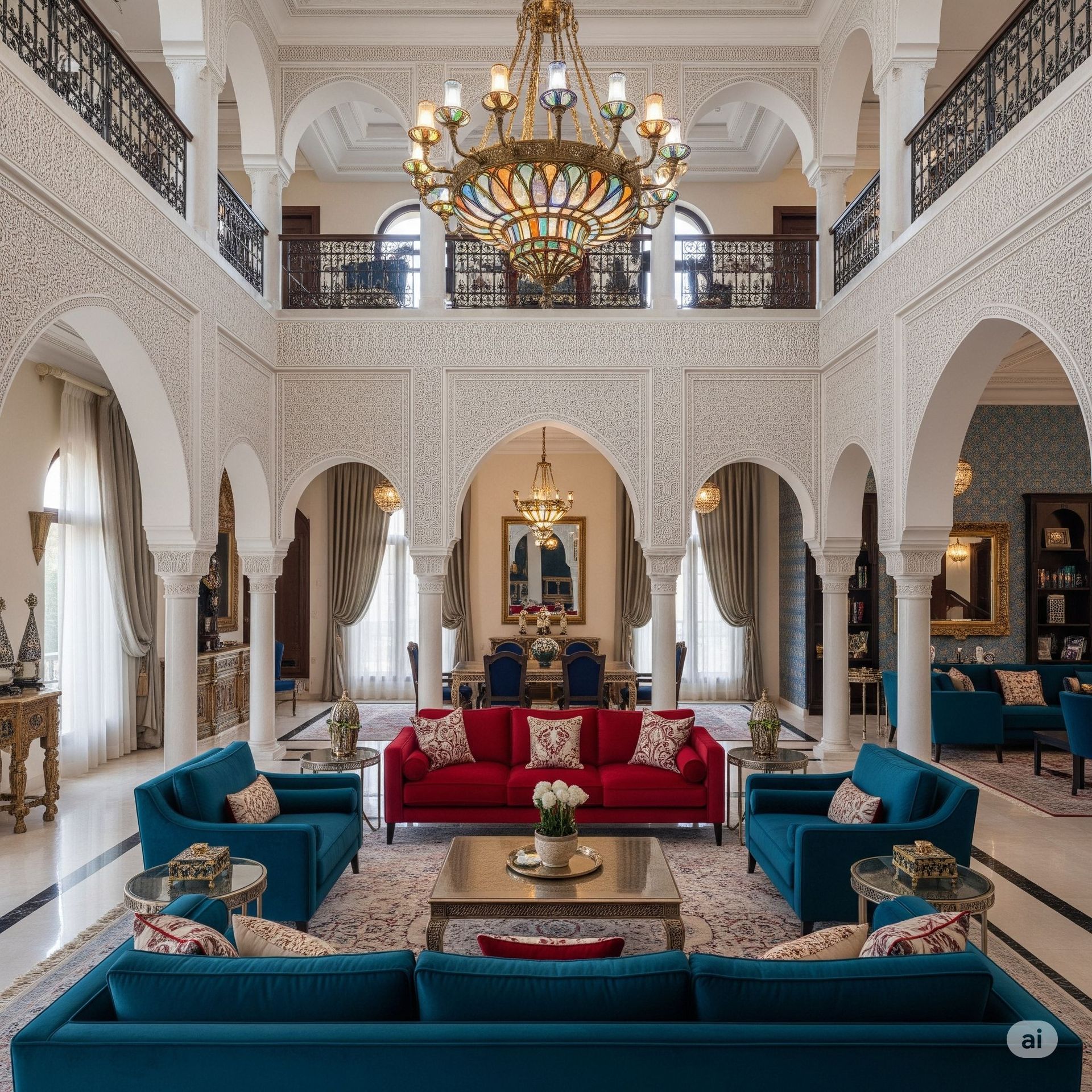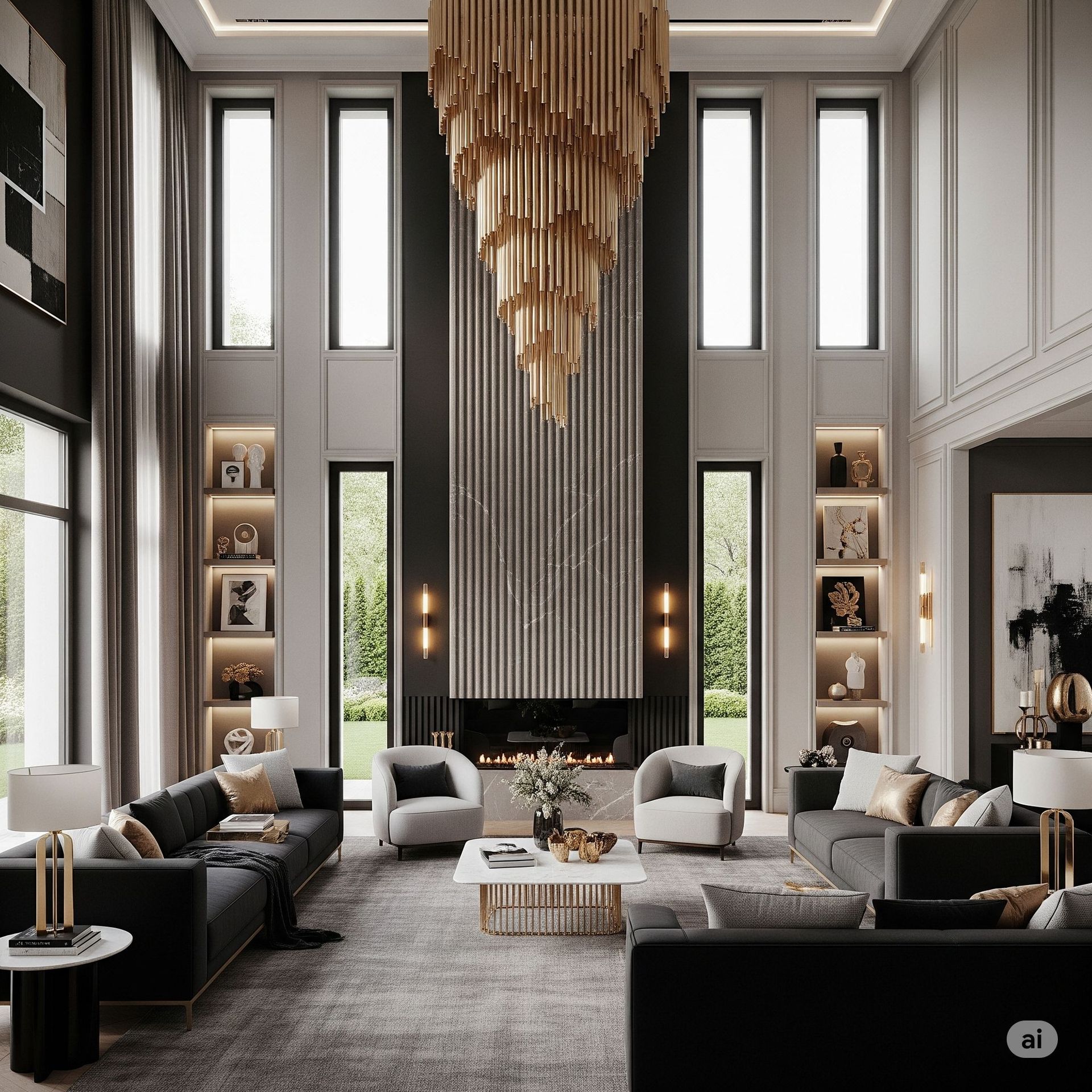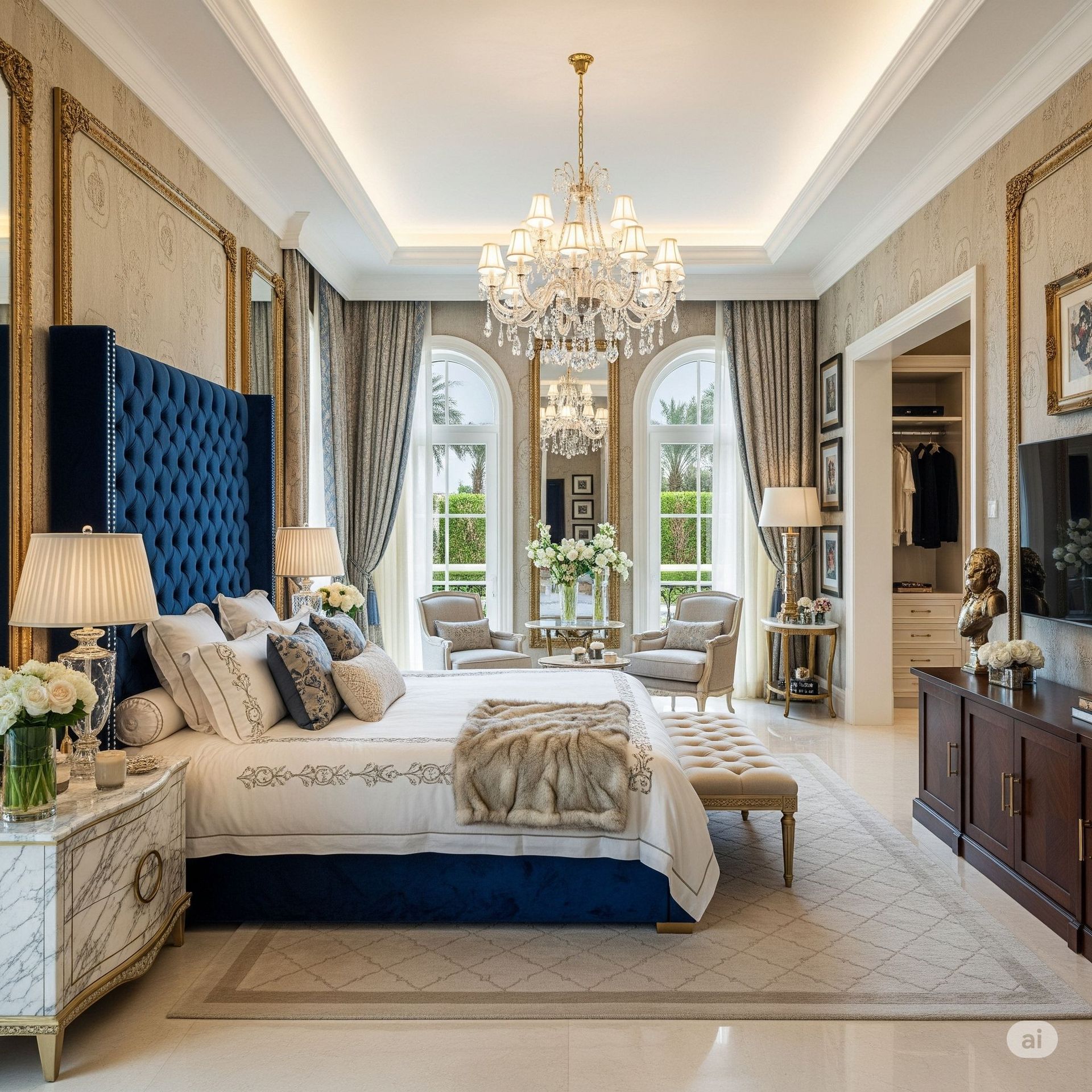
Furnishing a villa in Emirates Hills is not the same as furnishing a villa in Dubai Hills. The plot orientation is different, the architecture is different, the buyer profile is different, and the design priorities are different. Treating them as one homogenous “Dubai luxury market” is the fastest way to deliver a beautiful interior that doesn't quite fit the address.
Here's how design and furniture decisions actually shift across Dubai's most prestigious neighbourhoods, based on projects we've delivered in each.
Emirates Hills
Emirates Hills is Dubai's most established luxury villa community — large mansion-style plots, mature landscaping, golf course frontage, and an established multi-generational resident base. Many homes are 15–20 years old now, which means a wave of full renovations is happening every year.
What clients ask for
- Formal classical-contemporary balance — clean lines but with traditional touches that respect the architecture
- Generous formal majlis and dining suites for family hosting
- Full-villa fit-outs rather than single-room refreshes
- Strong material palettes — book-matched marble, walnut joinery, hand-knotted Persian rugs
- Custom master beds with sculptural headboards as the bedroom focal point
Design considerations specific to the area
Emirates Hills villas tend to have voluminous ceilings (often 4–5 metres in entry halls and lounges), which means furniture must be scaled up — standard sofas read as small. Wall-mounted art needs to be commissioned at scale. Lighting must be layered to read warm at night across the volume. And the original architecture — classical pediments, columns, archways — should be either embraced honestly or replaced wholesale, not half-hidden.
Palm Jumeirah
Palm Jumeirah villas are defined by water. Beachfront frond villas open to the sea, garden homes face inland but enjoy the climate, and signature villas anchor the trunk. The defining design problem on the Palm is humidity, salt air, and the seamless indoor-outdoor lifestyle the location demands.
What clients ask for
- A coastal-luxe palette — whites, sands, greys, weathered timber, blue accents (used carefully)
- Outdoor-quality finishes throughout the ground floor — doors and windows are open more than closed
- Bespoke outdoor furniture sets — teak loungers, weather-rated dining tables, shaded majlis areas
- Statement pool and beach pavilions as part of the brief
- Compact bedroom suites with maximum window-to-wall glazing
Design considerations specific to the area
Salt air is brutal on metals and finishes. Brushed brass tarnishes within months on the Palm; antique bronze, marine-grade stainless and powder-coated aluminium last. Untreated leather absorbs moisture; treated full-grain or performance fabrics are smarter. UV through floor-to-ceiling glazing is intense — specify UV-stable fabrics and consider solar-control films on west elevations. Read our Dubai climate materials guide for more.
Dubai Hills Estate
Dubai Hills is the newer luxury — modern architecture, contemporary plot layouts, a younger family demographic, and a strong appetite for fresh design rather than classical reinterpretation. The community is still maturing, and the design language is the most experimental of Dubai's premier addresses.
What clients ask for
- Contemporary minimalism with warmth — oat, ecru, smoked oak, natural plaster
- Open-plan ground floors with subtle zoning by furniture rather than walls
- Strong landscape integration — large pivot doors, terrace lounging, indoor-outdoor majlis
- Smart home integration as a baseline expectation, not an upgrade
- Modular living spaces that adapt to young family needs
Design considerations specific to the area
Dubai Hills villas have lower ceilings than Emirates Hills (typically 3–3.6 m on the ground floor) and more compact footprints. Furniture should be scaled accordingly — tighter silhouettes, lower backs, lighter visual weight. The architecture is contemporary enough to support quite minimal interiors; resist the urge to over-decorate. One signature stone moment, one statement light, one piece of art per room is plenty.
Al Barari
Al Barari is Dubai's botanical community — lush, low-density, designed around water features and dense landscaping. Villas are large but the design vocabulary is calmer and more naturalistic than the other top addresses.
What clients ask for
- Biophilic design — live plant walls, internal courtyards, large operable glazing onto private gardens
- Earth palettes — clay, terracotta, taupe, oxidised metals
- Natural materials at scale — live-edge timber, stone, raw linen, hand-thrown ceramics
- Wellness-led briefs — spa bathrooms, yoga rooms, meditation nooks
- Lower ceilings, more horizontal architecture — furniture follows
Mohammed Bin Rashid City (District One, MBR City)
MBR City — particularly District One, around the crystal lagoon — is Dubai's newest ultra-prime address. The architecture varies (modern Arabic, contemporary, classical reinterpretation), and the buyer profile is international and design-aware.
What clients ask for
- Globally branded interior design language — less regional, more international hotel-quality
- Hand-imported European furniture mixed with bespoke commissions
- Statement art collections — rooms designed around specific pieces
- Full-service household specifications — staff quarters, prep kitchens, separate hospitality wings
- High-spec home cinemas, cigar lounges, and wine cellars
Tilal Al Ghaf, Jumeirah Golf Estates & the new ultra-prime
Newer ultra-prime developments — Tilal Al Ghaf Lanai Islands, JGE Estates, Mira Estates, Jumeirah Bay Island — are pushing the design envelope further. Plots are more architecturally distinctive, briefs are increasingly maximalist or radically minimalist (the middle ground is less common), and budgets routinely include AED 1M+ commissioned art programs alongside furniture packages.
What stays constant across every Dubai address
Despite the differences, three principles hold across every premier Dubai villa address:
- Climate-first material selection. The wrong leather, fabric, or metal will fail regardless of postcode.
- Scale to the architecture. Furniture proportions must match ceiling heights, wall lengths, and door scales — this is why off-the-shelf rarely works.
- Hospitality at the core. Whether Emirati, GCC, expat, or international, every household in this segment hosts. The home must perform under pressure of guests.
If you're planning a villa fit-out at any of these addresses, our team has delivered in each. We design and manufacture everything in-house, from custom beds and sofas to dining suites, joinery, and full villa packages.
Furnishing a villa at one of Dubai's premier addresses?
Talk to our team about a bespoke fit-out tailored to your community, plot orientation and architectural style.
Book a Site Visit